What Is the Semantic Web and Its Limitations?
TL;DR
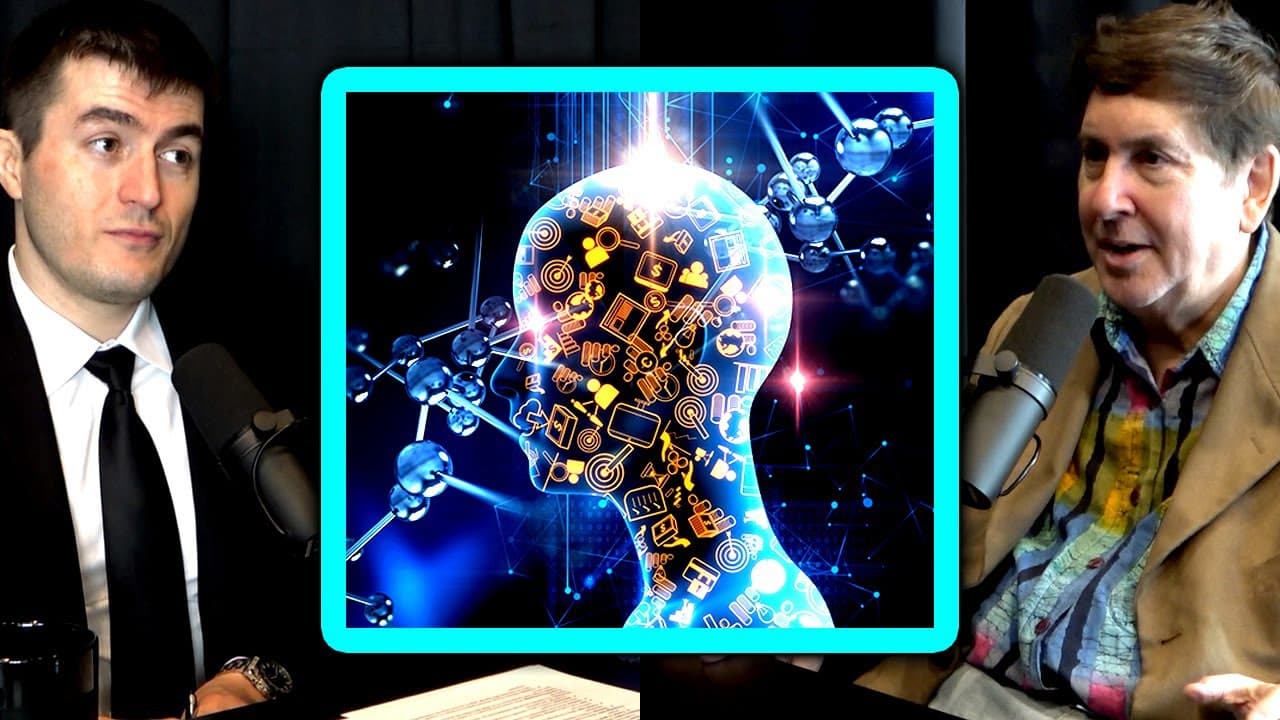
The Semantic Web aims to transform internet data into a format understandable by machines, but its current implementations, like knowledge graphs, provide only a limited comprehension of content. Achieving true understanding requires more sophisticated logical structures capable of representing complex relationships and expressions.
Transcript
there's this idea of the semantic web that when i first heard about i just fell in love with the idea it was the obvious next step for the internet sure and uh maybe you can speak about what is the semantic web what are your thoughts about it how your vision and mission and goals with psych are connected integrated like are they dance partners are ... Read More
Key Insights
- 🕸️ The Semantic Web is a vision for converting internet data into something interpretable by machines.
- 🛩️ Current implementations, like knowledge graphs, are only a small step towards true machine understanding.
- 😑 Representing and reasoning with complex expressions requires more expressive logical languages.
- 👻 Tools that allow creators to contribute to machine interpretability can enhance the capabilities of systems like the Semantic Web.
- 😃 The interface design of such systems, focused on teaching and learning, can greatly improve the efficiency and joy of user experiences.
- 👻 Educational software that allows users to play the mentor role and teaches through mistakes can facilitate deeper learning.
- 🙈 The current education system lacks the learning-by-teaching approach seen in historical models.
Install to Summarize YouTube Videos and Get Transcripts
Explore YouTube Video Summarizer or Get YouTube Transcript Extractor
Questions & Answers
Q: What is the Semantic Web and how does it relate to knowledge graphs?
The Semantic Web is a form of a knowledge graph that represents concepts and their relationships. Nodes represent concepts, and arcs connect them to show relations. It is a way of organizing information for machines to interpret.
Q: Can the Semantic Web handle complex expressions beyond simple graph structures?
Simple graph structures are useful for representing binary relations between concepts. However, complex expressions, like the beliefs and intentions of individuals, require more expressive logical languages to represent and reason with.
Q: How does the Semantic Web differ from current search engine capabilities?
Current search engines, like Google, rely on keyword search and ranking algorithms. They do not have a deep understanding of the actual content on web pages. The Semantic Web aims to change this by enabling machines to truly understand the content.
Q: Can website creators contribute to making their content more accessible to machines?
Yes, creators can play a role in making their content machine-interpretable. By using tools that partially understand their content and suggest footnotes for clarification or disambiguation, creators can help machines better understand their websites.
Summary & Key Takeaways
-
The Semantic Web is like a knowledge graph, with nodes representing concepts and arcs connecting them to show relationships.
-
Simple graph structures represent binary relations well but cannot handle complex expressions.
-
The vision for the Semantic Web is to create a deeper understanding of web content, but current implementations are only taking baby steps towards this goal.
Read in Other Languages (beta)
Share This Summary 📚
Summarize YouTube Videos and Get Video Transcripts with 1-Click
Try YouTube Summary with ChatGPT & Claude or YouTube Transcript Generator
Explore More Summaries from Lex Clips 📚
Summarize YouTube Videos and Get Video Transcripts with 1-Click
Try YouTube Summary with ChatGPT & Claude or YouTube Transcript Generator