I Found An EASIER Way To Scale Facebook Ads
TL;DR
Learn a new, effective method to scale Facebook ads.
Transcript
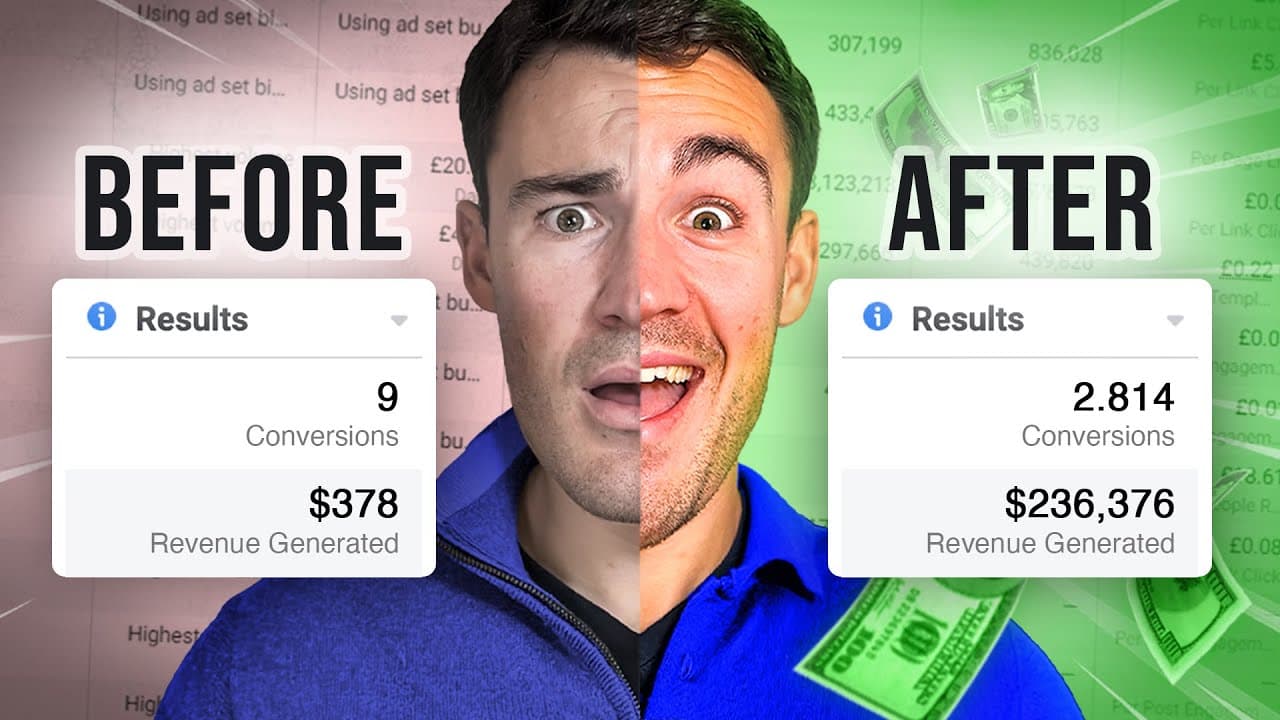
most advertisers are scaling their Facebook ads the wrong way and it is ruining their chances of success you're just ruining it you're look at my lips you're ruining it so in this video I'm going to show you a new way to scale Facebook ads one that I've never talked about before and that performs a lot better but first let's quickly go over where a... Read More
Key Insights
- Traditional scaling methods, like duplicating campaigns, often lead to auction overlap, reducing ad performance due to internal competition.
- Auction overlap prevents identical campaigns from competing simultaneously, leading to underperformance and less data for optimization.
- The retired inspect tool once helped identify auction overlap, but advertisers now need new strategies to avoid this issue.
- The new scaling method involves setting automated rules to incrementally increase budgets based on predefined performance criteria.
- Daily budget increases of 3% are recommended, allowing for dynamic scaling while preventing overspending if campaign performance declines.
- Setting a maximum daily budget cap is crucial to avoid excessive spending, especially when campaigns perform well and scale rapidly.
- Automated rules can also decrease budgets if performance worsens, maintaining a balance between cost and return on ad spend.
- This method is particularly beneficial for seasonal businesses, adapting automatically to fluctuating performance throughout the year.
Install to Summarize YouTube Videos and Get Transcripts
Explore YouTube Video Summarizer or Get YouTube Transcript Extractor
Questions & Answers
Q: What is the main issue with duplicating Facebook ad campaigns to scale?
Duplicating Facebook ad campaigns to scale often leads to auction overlap. This means the duplicated campaigns end up competing against each other in the auction, which Facebook does not allow within the same ad account. As a result, only one campaign can compete at a time, leading to underperformance and reduced data for optimization, ultimately harming the overall effectiveness of the ads.
Q: How does the new scaling technique avoid auction overlap?
The new scaling technique avoids auction overlap by not duplicating campaigns. Instead, it uses automated rules to incrementally increase the budget of existing campaigns based on their performance. By setting specific criteria for when to scale, such as cost per result being below a certain threshold, advertisers can ensure campaigns scale dynamically without creating identical copies that compete against each other.
Q: What are the benefits of using automated rules for scaling Facebook ads?
Using automated rules for scaling Facebook ads offers several benefits. It allows for precise control over budget increases, ensuring they only occur when performance criteria are met. This method reduces the need for constant manual monitoring and adjustments, freeing up time for other tasks. Additionally, it helps maintain a balance between cost and return on ad spend, as budgets can be adjusted upward or downward based on performance, optimizing ad spend efficiency.
Q: Why is setting a maximum daily budget cap important in this scaling method?
Setting a maximum daily budget cap is crucial in this scaling method to prevent overspending. As campaigns perform well and budgets increase incrementally, there's a risk of spending more than intended, especially if the scaling is automated. A budget cap ensures that even if performance is strong and the campaign scales rapidly, spending remains within a manageable limit, avoiding potential financial strain and ensuring that resources are allocated effectively.
Q: How does the scaling method accommodate seasonal businesses?
The scaling method is particularly beneficial for seasonal businesses because it automatically adjusts budgets based on real-time performance data. By using automated rules that increase or decrease budgets according to predefined criteria, businesses can scale up during peak seasons when performance is strong and scale down when performance declines. This dynamic approach ensures that ad spend is optimized throughout the year, aligning with the natural fluctuations in demand that seasonal businesses experience.
Q: What are the potential drawbacks of not using the inspect tool for auction overlap?
Without the inspect tool, advertisers may find it more challenging to identify auction overlap and preemptively address it. This could lead to campaigns underperforming due to internal competition, as identical campaigns vie for the same audience. Advertisers must now rely on alternative strategies, such as avoiding campaign duplication altogether, to mitigate the risks associated with auction overlap and ensure their ads perform optimally.
Q: How does the new method handle campaigns that start performing poorly?
The new method handles poorly performing campaigns by using automated rules to decrease budgets when performance metrics, such as cost per result, exceed a certain threshold. This approach ensures that ad spend is reduced when campaigns are not delivering desired results, allowing advertisers to conserve resources and focus on improving performance before scaling up again. This dynamic adjustment helps maintain a favorable return on ad spend.
Q: What role do performance criteria play in the new scaling technique?
Performance criteria are central to the new scaling technique, as they determine when budgets should be increased or decreased. By setting specific metrics, such as cost per result being below a target value, advertisers can automate the scaling process, ensuring that budgets are only adjusted when campaigns are performing well. This data-driven approach optimizes ad spend, enhances efficiency, and reduces the risk of overspending on underperforming campaigns.
Summary & Key Takeaways
-
The video introduces a new method to scale Facebook ads, avoiding the common pitfall of auction overlap caused by duplicating campaigns. This overlap leads to underperformance as campaigns compete against each other.
-
Instead of duplicating, the video suggests using automated rules to adjust budgets based on performance. This approach allows for incremental scaling and helps maintain optimal performance without manual intervention.
-
The method includes setting a maximum budget cap to prevent overspending and uses performance criteria to decide when to increase or decrease budgets, providing a dynamic and efficient scaling strategy.
Read in Other Languages (beta)
Share This Summary 📚
Summarize YouTube Videos and Get Video Transcripts with 1-Click
Try YouTube Summary with ChatGPT & Claude or YouTube Transcript Generator
Explore More Summaries from Ben Heath 📚


Summarize YouTube Videos and Get Video Transcripts with 1-Click
Try YouTube Summary with ChatGPT & Claude or YouTube Transcript Generator