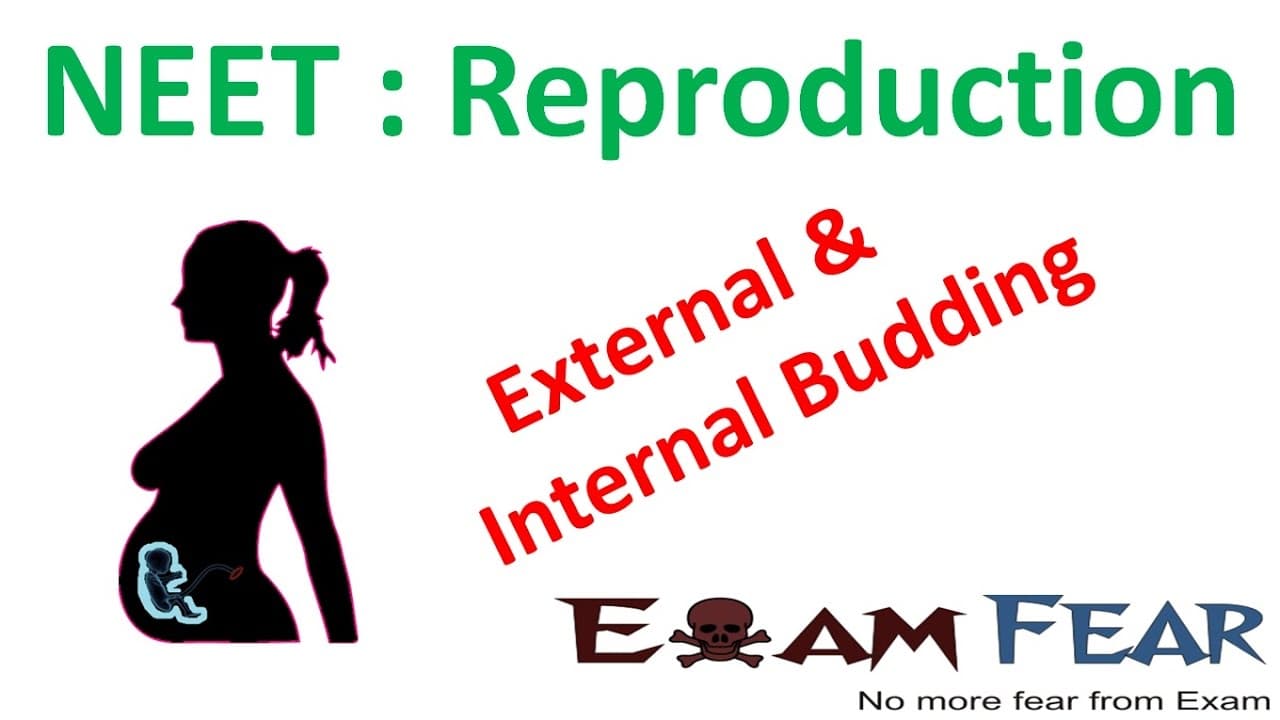
NEET Biology Reproduction : External and Internal Budding ( Gemmule Formation)
TL;DR
This video explains the concepts of external and internal budding as a form of asexual reproduction in organisms.
Transcript
hello friends this video on meat reproduction is brought to you by exam co calm no more pure from exam we have learnt about budding which is a mode of asexual reproduction now let us look at the two different types of budding the first type is external budding so in external budding a bird grows externally on the organisms body now the name is quit... Read More
Key Insights
- 💠 External budding involves the growth of a bud externally on the organism's body, while internal budding occurs inside the organism's body.
- 🫥 Hydra is a commonly cited example of external budding, with the bud visible on the surface of the organism.
- 👶 In external budding, the bud can either separate and become a new organism or remain attached to the parent organism.
- 🧽 Internal budding is also known as endogenous budding and is exemplified by gemmules in sponge algae.
- 🤙 Gemmules in sponges are composed of groups of cells called archaeocytes and are enclosed by a protective coat.
- 🧽 Gemmules enable sponges to survive unfavorable conditions and come out through a micropyle to form new sponges.
- 👪 Siphonophores are an example where external buds do not separate from the parent organism but contribute to the colony.
Install to Summarize YouTube Videos and Get Transcripts
Explore YouTube Video Summarizer or Get YouTube Transcript Extractor
Questions & Answers
Q: What is external budding?
External budding is a form of asexual reproduction where a bud grows externally on the organism's body. Examples include Hydra and yeast. The bud can either separate and become a new organism or remain attached to the parent organism.
Q: What is internal budding?
Internal budding, also known as endogenous budding, occurs when the bud grows inside the organism's body. A notable example is the gemmules found in sponge algae, consisting of groups of cells called archaeocytes enclosed by a protective coat.
Q: How do gemmules in sponges function?
Gemmules in sponges serve as a form of internal buds that allow the organism to survive in unfavorable conditions. They remain enclosed within a protective coat until favorable conditions arise, at which point they come out through an opening called a micropyle and form new sponges.
Q: Are external buds always separate from the parent organism?
No, some external buds may remain attached to the parent organism and become part of a colony. An example of this is seen in siphonophores, where the buds grow and mature but do not separate from the parent organism.
Summary & Key Takeaways
-
External budding involves the growth of a bud externally on the organism's body, such as in Hydra or yeast. The bud can either separate and become a new organism or remain attached to the parent organism.
-
Internal budding, also known as endogenous budding, occurs when the bud grows inside the organism's body. Sponge algae and their internal buds called gemmules are an example of internal budding.
-
Gemmules in sponges consist of groups of cells called archaeocytes, enclosed by a protective coat. During favorable conditions, the gemmules come out through an opening called a micropyle and form new sponges.
Read in Other Languages (beta)
Share This Summary 📚
Summarize YouTube Videos and Get Video Transcripts with 1-Click
Try YouTube Summary with ChatGPT & Claude or YouTube Transcript Generator
Explore More Summaries from LearnoHub - Class 11, 12 📚


Summarize YouTube Videos and Get Video Transcripts with 1-Click
Try YouTube Summary with ChatGPT & Claude or YouTube Transcript Generator