Criticising TRS - What BeerBiceps Did WRONG With The Political Podcasts - Honest Feedback By Analyst
TL;DR
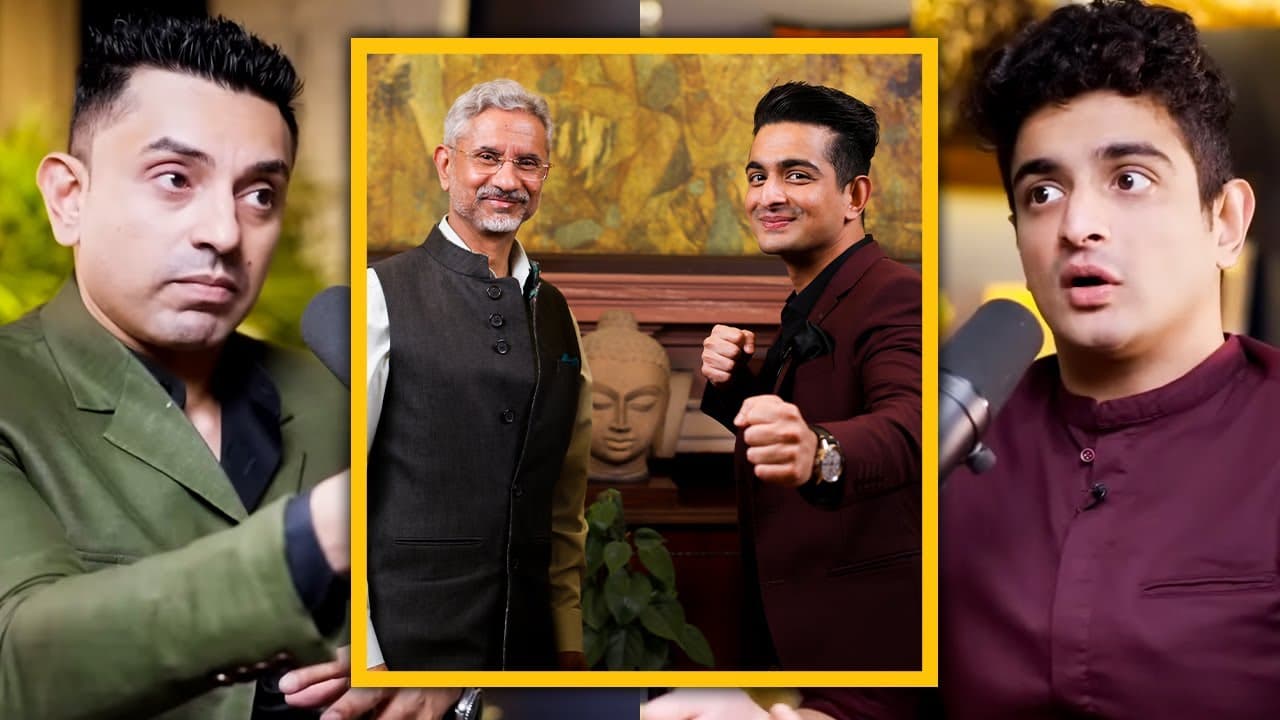
The discussion delves into the effectiveness of political podcasts and their marketing strategies.
Transcript
your friends are scrolling through short content but you my friend you're here to learn welcome to the honest clips tell me what was bad about my political podcast very straight up I want to know what sucked about it and I have my own opinions about what sucked and please be brutal I'm totally open to it uh the second part of the question is that o... Read More
Key Insights
- 💍 Politicians are increasingly leveraging popular podcasts to engage with potential voters, recognizing the changing media landscape.
- 🌍 The effectiveness of a political podcast can significantly influence electoral outcomes, even if the audience numbers seem modest compared to a national scale.
- 🍉 There is a concern about the over-simplification of complex political issues in media discussions, favoring short-term narrative over nuanced critique.
- 😷 The speaker emphasizes the importance of asking challenging questions during interviews to foster a deeper understanding of political issues.
- 🔉 Both traditional media and new media show bias, and the speaker believes this impacts how political narratives are constructed and conveyed to the public.
- 🔉 Social media algorithms reinforce existing biases, affecting how journalists and audiences perceive political discourse.
- 👾 The human side of politicians can be highlighted effectively in long-format interviews, contrasting sharply with fast-paced media.
Install to Summarize YouTube Videos and Get Transcripts
Explore YouTube Video Summarizer or Get YouTube Transcript Extractor
Questions & Answers
Q: Why does the speaker want feedback on their podcast?
The speaker is open to criticism as they recognize that improvement can stem from honest input. They believe that understanding what failed or succeeded in their podcast will help them evolve and enhance their interview techniques, particularly around political figures.
Q: What are the marketing strategies used by BJP and Congress according to the speaker?
The speaker notes that both BJP and Congress employ strong marketing strategies to influence the national narrative on social media. This includes reaching targeted demographics and utilizing viral content to sway voter opinions in crucial electoral contests.
Q: Did the speaker claim to be a journalist?
No, the speaker expressly states they do not claim to be a journalist. They prefer to approach conversations in a more informal manner, aiming to reveal the human side of politicians rather than adhering strictly to journalistic protocols.
Q: How does the speaker view government outreach to new media platforms?
The speaker views government outreach to popular podcasts positively, asserting that it allows politicians to connect with new audiences. They believe that politicians should adapt to contemporary media formats, especially if they have a substantial following like six million viewers.
Q: What criticisms did the speaker face regarding their interview style?
The speaker faced criticism for not asking more critical, in-depth questions to politicians. While acknowledging the validity of this feedback, they maintain that their goal was to create a relatable dialogue rather than a conventional investigative interview.
Q: What insights does the speaker provide regarding foreign policy?
The speaker expresses mixed feelings about the current government’s foreign policy, particularly regarding relations with Russia and Middle Eastern countries. They commend efforts made towards traditional allies while suggesting that more caution should be exercised, particularly concerning financial transactions with Russia.
Summary & Key Takeaways
-
The speaker invites brutal feedback on their political podcast, acknowledging a need for more critical questioning during interviews with politicians while recognizing the unique opportunity podcasting provides to engage with new audiences.
-
The conversation highlights how marketing strategies from political entities like BJP and Congress shape national narratives and influence voter behavior, especially in close electoral races.
-
The speaker critiques the dynamics of media bias, suggesting that both traditional journalists and new media platforms often reinforce their own biases rather than offering unbiased perspectives.
Read in Other Languages (beta)
Share This Summary 📚
Summarize YouTube Videos and Get Video Transcripts with 1-Click
Try YouTube Summary with ChatGPT & Claude or YouTube Transcript Generator
Explore More Summaries from TRS Clips 📚

Summarize YouTube Videos and Get Video Transcripts with 1-Click
Try YouTube Summary with ChatGPT & Claude or YouTube Transcript Generator