Quantifying the Impact of Autonomous Vehicles on Boston Traffic
TL;DR
A study on AVS impact expands to Boston city showing 6% efficiency gains but varying results in traffic patterns and travel time across neighborhoods.
Transcript
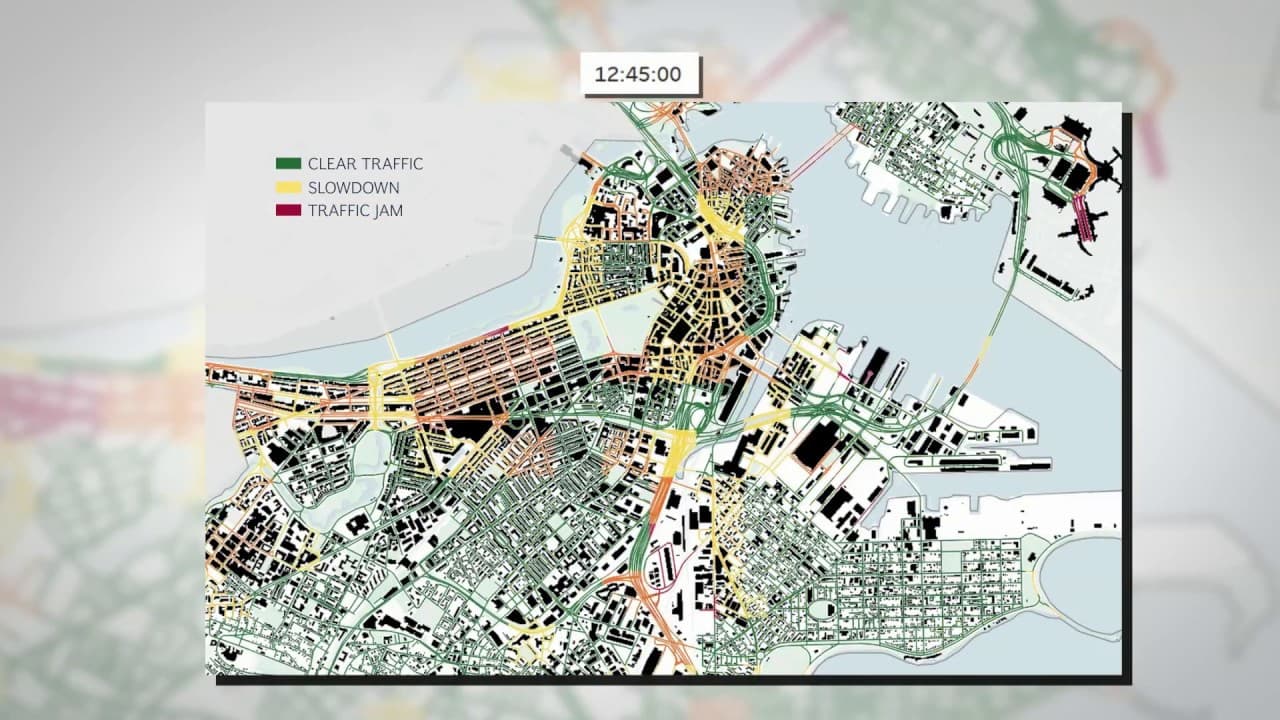
last year we studied the impact of AVS on traffic in downtown Boston this year we expanded the study along four key dimensions we expanded the geographical area by a factor of 316 from downtown to the entire city after incorporating new data sets from our partners we now simulate two million trips per day we conducted a conjoined study with 2,400 B... Read More
Key Insights
- 🚥 AVS in Boston led to 6% traffic efficiency gains, with varying traffic patterns across neighborhoods.
- 🗺️ Policy levers like occupancy-based pricing can significantly improve travel time by 15.5%.
- 👯 Cities need to rethink policies and design to prioritize people in transportation networks.
- 😀 AVS impact on traffic varies between neighborhoods, with downtown facing more congestion and slower travel times.
- 🏙️ Future cities should focus on intelligent transport strategies to improve overall transport equations.
- 🗺️ Converting street parking and dedicating AV lanes can improve travel time efficiency in cities.
- 🔒 Collaborative efforts between public and private sectors are crucial for maximizing the benefits of AVS.
Install to Summarize YouTube Videos and Get Transcripts
Explore YouTube Video Summarizer or Get YouTube Transcript Extractor
Questions & Answers
Q: How has the study on AVS impact in Boston expanded from downtown to the entire city?
The study expanded geographically to encompass the entire city, simulating two million trips per day and conducting a conjoined study with 2,400 Bostonians for a more comprehensive analysis.
Q: What were the results of the study regarding the impact of AVS on traffic efficiency in Boston?
The results showed a 6% throughput improvement with AVS. Additionally, there was a reduction in vehicle traffic by 15%, an increase in vehicle distance traveled by 16%, but only a 4% effective travel time improvement.
Q: What policy levers were simulated in the study to improve travel time in Boston?
The study simulated three policy levers: occupancy-based pricing, converting street parking to driving lanes, and dedicated AV lanes. Occupancy-based pricing showed the largest potential impact with a 15.5% travel time improvement.
Q: How can cities like Boston maximize the benefits of AVS according to the study?
The study suggests that public and private sector stakeholders should collaborate to steer people towards mass transport or flexible individual transport. Cities need to rethink policies and design to prioritize people over vehicles.
Summary & Key Takeaways
-
Study expanded to whole Boston, simulating 2M daily trips with 2400 Bostonians for future transport mix.
-
AVS led to 15% less vehicle traffic, 16% more distance traveled, but only 4% travel time improvement.
-
Policy levers like occupancy-based pricing can lead to a 15.5% travel time improvement.
Read in Other Languages (beta)
Share This Summary 📚
Summarize YouTube Videos and Get Video Transcripts with 1-Click
Try YouTube Summary with ChatGPT & Claude or YouTube Transcript Generator
Explore More Summaries from World Economic Forum 📚
Summarize YouTube Videos and Get Video Transcripts with 1-Click
Try YouTube Summary with ChatGPT & Claude or YouTube Transcript Generator