Humans lie to themselves | Annaka Harris and Lex Fridman
TL;DR
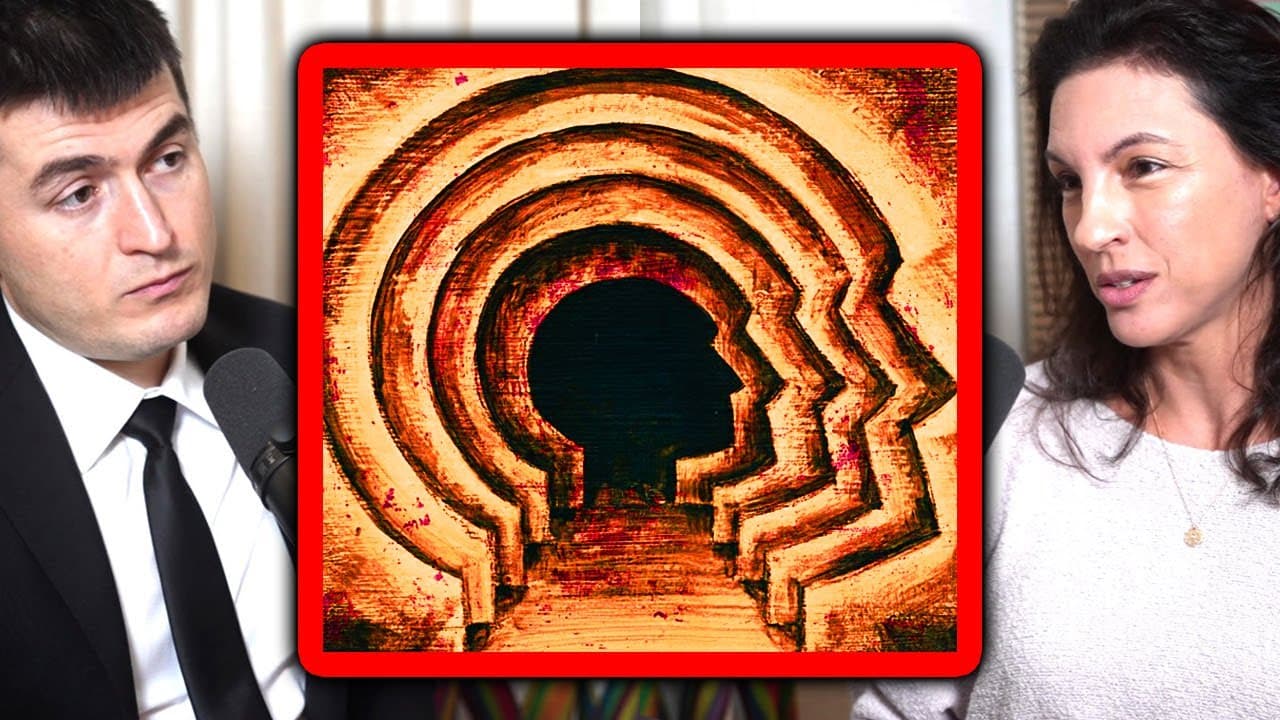
The concept of "I" and "you" as separate entities from the physical world is an illusion, shaped by cultural and linguistic factors. Memory plays a crucial role in shaping our sense of self, and its connection to time raises questions about the fundamental nature of reality.
Transcript
I and you are very useful shorthand even though at some level they're Illusions um they're very useful shorthand for the the system of my brain really and you know and my body the the whole system that I is useful for that but the illusion is when we feel like there's something outside of that system that can intervene that is free that's somehow f... Read More
Key Insights
- 🧠 The concept of "I" and "you" as separate entities from the physical world is an illusion created by the brain for convenience.
- 🥶 The feeling of conscious will is actually a result of further brain processing, not a separate entity with free will.
- 🤳 Memory is essential for the sense of self, and without the ability to lay down new memories, the sense of self begins to deteriorate.
- 🤳 Cultural and linguistic factors shape our beliefs about the self and can influence how we perceive ourselves and others.
- 🥶 Practices like meditation and psychedelics can temporarily disrupt the illusion of self and free will.
- 🍻 Memory is intricately connected to time, and exploring this link may provide insights into the nature of consciousness.
- ⌛ Some physicists propose that consciousness may be a fundamental aspect of the universe, and understanding its connection to memory and time is crucial.
Install to Summarize YouTube Videos and Get Transcripts
Explore YouTube Video Summarizer or Get YouTube Transcript Extractor
Questions & Answers
Q: How is the concept of "I" and "you" influenced by cultural and linguistic factors?
The way we speak and think about ourselves affects our intuitions and beliefs. Different cultures and languages can have varying levels of individualism or collectivism, which shapes how people perceive and talk about themselves as distinct entities.
Q: Does memory play a role in the sense of self?
Yes, memory is closely tied to the sense of self. Even in cases of amnesia, where autobiographical memories are lost, individuals still retain a basic sense of being a person. Without the ability to lay down new memories, the sense of self begins to disintegrate.
Q: Can the feeling of conscious will and a sense of self be altered or diminished?
Yes, through practices like meditation or certain drugs, such as psychedelics, the default mode network in the brain, responsible for the sense of self, can be quieted down. This often leads to a temporary loss of the illusion of self and a sense of free will.
Q: Is there a connection between memory, time, and consciousness?
Yes, memory is closely linked to time, and exploring this connection is crucial in understanding the nature of consciousness. Some physicists theorize that consciousness may be a more fundamental aspect of the universe than previously thought, and memory plays a role in this exploration.
Summary & Key Takeaways
-
The sense of self, represented by "I" and "you," is a useful shorthand for the internal system of the brain and body, but it creates an illusion of separateness from the physical world.
-
Conscious will is often attributed to the ability to make decisions independently, but it is actually a result of further brain processing and not a separate entity.
-
The feeling of conscious will and a sense of self are deeply ingrained in human beings and potentially in other complex systems navigating their environment.
Read in Other Languages (beta)
Share This Summary 📚
Summarize YouTube Videos and Get Video Transcripts with 1-Click
Try YouTube Summary with ChatGPT & Claude or YouTube Transcript Generator
Explore More Summaries from Lex Clips 📚



Summarize YouTube Videos and Get Video Transcripts with 1-Click
Try YouTube Summary with ChatGPT & Claude or YouTube Transcript Generator