How Do Algorithms Reinforce Bias in Society?
TL;DR
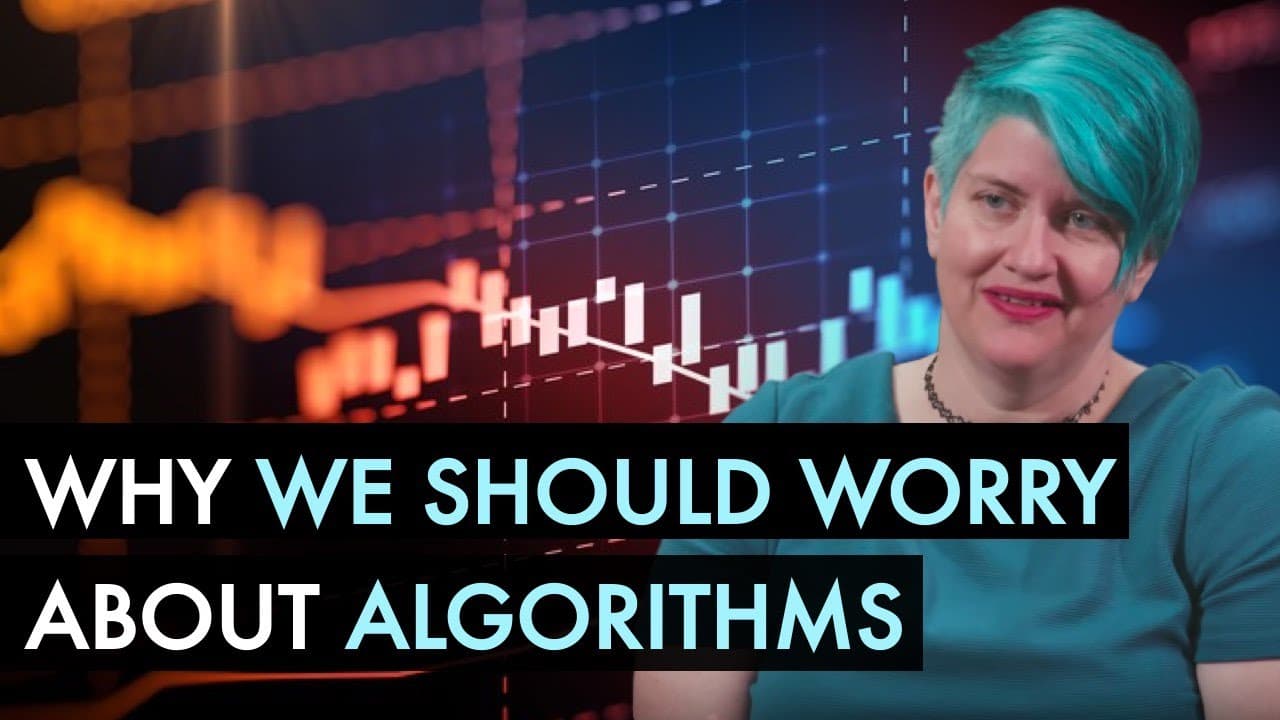
Algorithms can reinforce societal biases because they are often trained on historical data, which reflects existing inequalities. This means that if certain groups have been disadvantaged in the past, these biases can be perpetuated in algorithmic decision-making processes, such as hiring and insurance. The lack of transparency and accountability in these systems further exacerbates the issue, leaving affected individuals without recourse.
Transcript
DEE SMITH: Hello, Cathy. Good to see you. CATHY O’NEIL: Thanks for having me. DEE SMITH: Thank you for coming to visit today. I'd like to talk a little bit first about your interesting background. Because you've got a very interesting pathway that led you to where you are today with some very interesting detours and in ways, and out ways, and byway... Read More
Key Insights
- 👨⚖️ Cathy O'Neil emphasizes the need for critical examination and auditing of algorithmic systems, especially in areas where they have significant impact, such as hiring, insurance, and criminal justice.
- ⚾ Algorithmic systems are not objective or infallible. They are based on historical data, often biased, and can perpetuate discrimination and biases.
- 🖤 The lack of transparency and accountability in algorithmic systems is a significant concern, as individuals being scored or assessed have no appeals system and are often unaware of how their data is being used or evaluated.
Install to Summarize YouTube Videos and Get Transcripts
Explore YouTube Video Summarizer or Get YouTube Transcript Extractor
Questions & Answers
Q: How did Cathy O'Neil become interested in mathematics and the flaws of algorithmic systems?
Cathy O'Neil developed an interest in mathematics from a young age and was influenced by her mathematician parents. She became disillusioned with the financial industry during the 2008 financial crisis and started examining the flaws of algorithmic systems.
Q: What are predictive algorithms and how are they used in different fields?
Predictive algorithms are used to make predictions about specific events or outcomes, often relating to individuals. They are used in various fields, such as hiring, insurance, and criminal justice, to make decisions about people's creditworthiness, risk level, and job prospects.
Q: How do algorithmic systems propagate biases and discrimination?
Algorithmic systems are trained on historical data, and if this data is biased, the algorithms will learn and perpetuate those biases. For example, if a hiring algorithm is trained on data where white men were consistently chosen for jobs over women or people of color, the algorithm will reproduce that bias in its decision-making.
Q: What is the role of regulators in addressing the flaws of algorithmic systems?
Regulators are currently lagging behind in understanding and addressing the flaws of algorithmic systems. However, there is a growing need for regulation and oversight to ensure that these systems do not perpetuate discrimination or harm individuals. It is crucial for regulators to ask for transparency and hold companies accountable for the impact of their algorithms.
Summary & Key Takeaways
-
Cathy O'Neil shares her background in mathematics and how she became interested in the flaws of algorithmic systems.
-
She discusses her experience working in the financial industry during the 2008 financial crisis and the disillusionment she felt towards the expertise of finance professionals.
-
O'Neil explains the concept of predictive algorithms and how they are used in various fields, such as hiring, insurance, and criminal justice, and highlights the inherent biases and lack of transparency in these systems.
Read in Other Languages (beta)
Share This Summary 📚
Summarize YouTube Videos and Get Video Transcripts with 1-Click
Try YouTube Summary with ChatGPT & Claude or YouTube Transcript Generator
Explore More Summaries from Real Vision 📚



Summarize YouTube Videos and Get Video Transcripts with 1-Click
Try YouTube Summary with ChatGPT & Claude or YouTube Transcript Generator