Think Complexity | Allen B. Downey | Talks at Google
TL;DR
This talk explores the intersection of software and complexity science, discussing the history and development of the field and offering insights into the changing nature of scientific activity.
Transcript
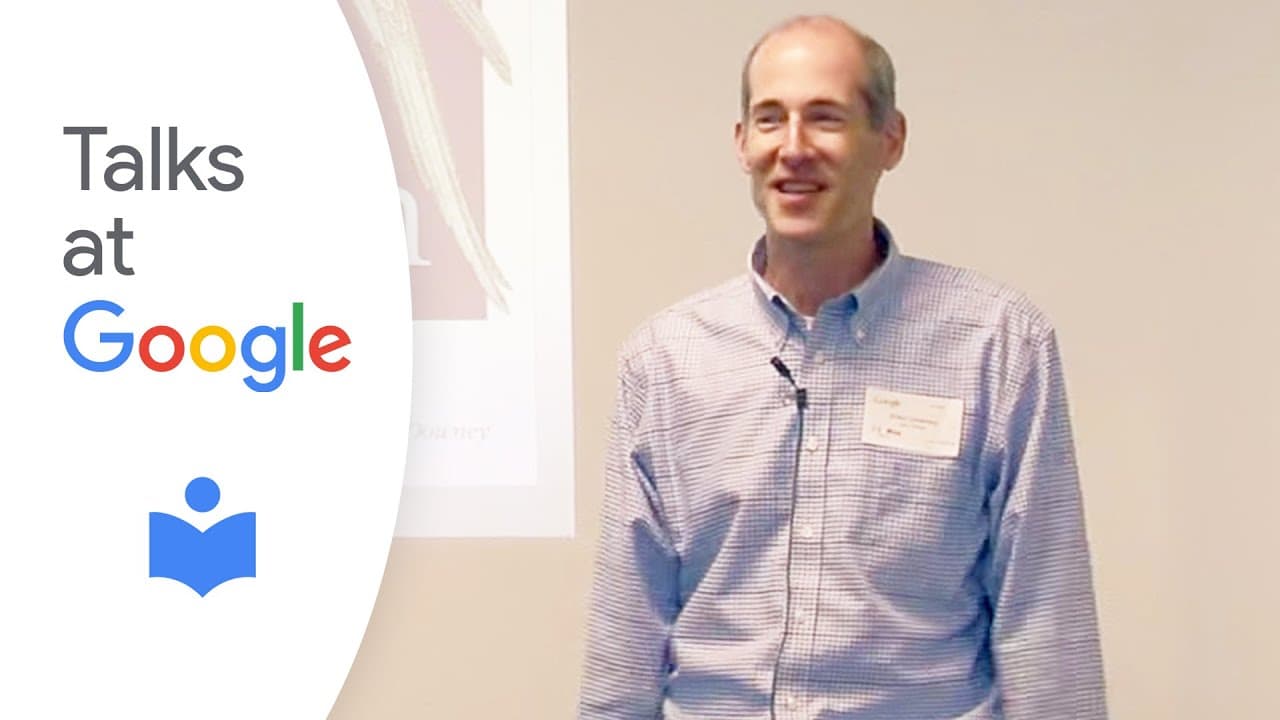
Male speaker: It is my pleasure today to introduce Allen Downey. He's a professor of Computer Science at Olin College, and a lot of us, he's also the author of at least three books for O'Reilly: Think Python, Think Stats, and Think Complexity. Looking at an intersecting world of ideas around, using software to explore other concepts. And he's a p... Read More
Key Insights
- 👶 Complexity science offers a new lens through which to study and understand complex systems.
- 🚱 There is a shifting paradigm in scientific activity towards simulation, computation, and non-linear models.
- 🖐️ Philosophy of science plays a crucial role in how we choose between different theories and models.
- 😒 Engineering is moving towards decentralized systems, increased use of computation, and a shift towards multi-valued logic.
Install to Summarize YouTube Videos and Get Transcripts
Explore YouTube Video Summarizer or Get YouTube Transcript Extractor
Questions & Answers
Q: Why is it important to include complexity science in a curriculum for engineers?
Complexity science offers a new perspective on how systems with many interacting components behave, which is vital for engineers who work with complex systems in the real world. By understanding complexity science, engineers can design more effective and efficient solutions.
Q: How does complexity science relate to software development?
Complexity science provides insights into how systems emerge from the interaction of simple components, which is highly relevant in software development. It can help software developers understand and design complex software systems that exhibit emergent behaviors.
Q: What are the key challenges in moving towards a new kind of science?
One challenge is the shift in thinking about what constitutes a "good" theory or model. This requires reevaluating criteria for theory choice and considering different factors beyond strict predictivity. Another challenge is embracing the subjective nature of theories and models, while still maintaining some objectivity and avoiding complete relativism.
Q: Is there a limit to how complex our brains can handle?
Our brains have evolved in a certain environment and have limitations in how they handle complexity. However, by utilizing tools such as software and computational models, we can augment our cognitive abilities and overcome some of these limitations. The challenge lies in understanding the strengths and weaknesses of our brains and finding ways to work around them.
Summary & Key Takeaways
-
The speaker shares the history of how the book "Think Complexity" came about, which aims to teach complexity science in a way that is accessible to students.
-
The talk discusses the shift in scientific activity towards a new kind of science that embraces simulation, computation, and non-linear models.
-
The speaker explores different topics in philosophy of science, such as theory choice, demarcation problem, and realism vs. instrumentalism.
-
The talk also touches on the changing nature of engineering and thinking, including the move towards decentralized systems, increased use of computation, and a shift towards multi-valued logic.
Read in Other Languages (beta)
Share This Summary 📚
Summarize YouTube Videos and Get Video Transcripts with 1-Click
Try YouTube Summary with ChatGPT & Claude or YouTube Transcript Generator
Explore More Summaries from Talks at Google 📚
Summarize YouTube Videos and Get Video Transcripts with 1-Click
Try YouTube Summary with ChatGPT & Claude or YouTube Transcript Generator