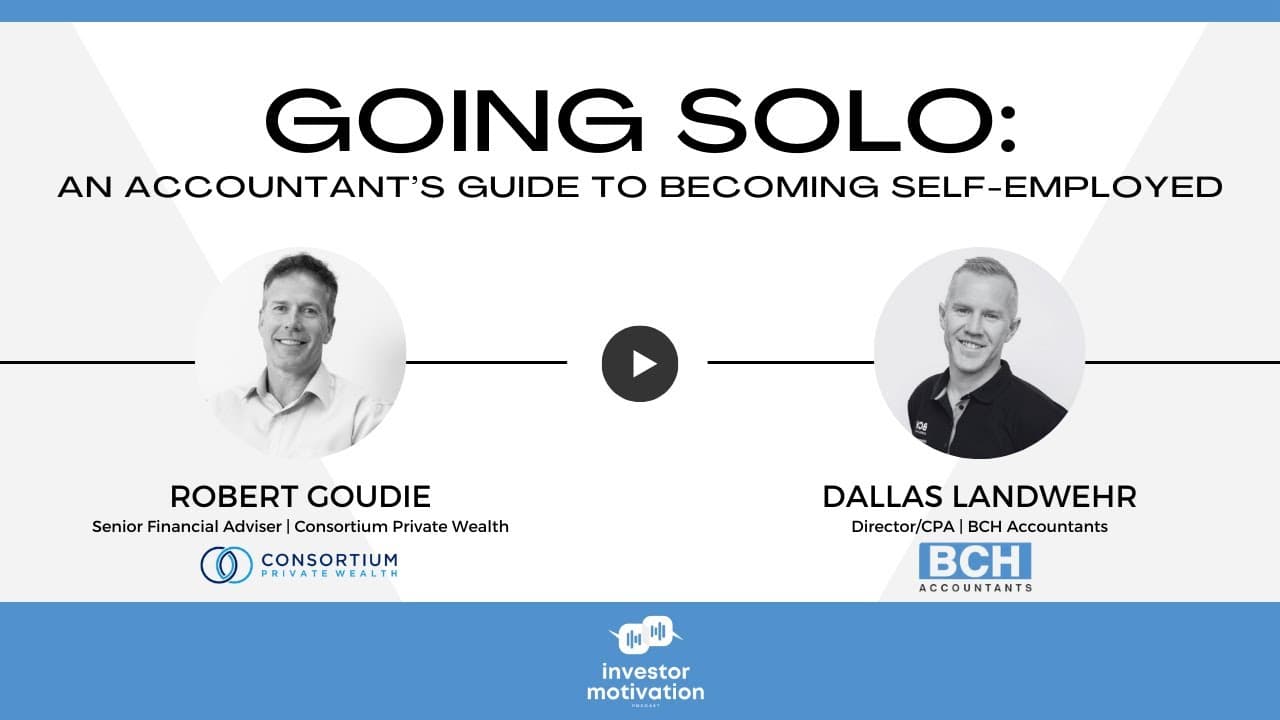
Going Solo – An Accountant’s guide to becoming self-employed
TL;DR
This podcast episode discusses important factors to consider when transitioning from being an employee to becoming self-employed, including setting up the right structures, managing cash flow, invoicing, pricing, taxes, and seeking professional advice.
Transcript
foreign and welcome to the investor motivation podcast welcome Amy hello everyone now I had a chat with Dallas landweave from bch accounts just a few moments ago all about um you know people going self-employed going from being employee to self-employed all the things you've got to think about nice including like structures and structural processes... Read More
Key Insights
- 😫 Transitioning from being an employee to self-employed comes with challenges such as managing cash flow, setting prices, and establishing efficient invoicing and payment processes.
- 📼 Seeking advice from professionals like accountants and financial planners is crucial for understanding tax obligations, setting up the right business structures, and protecting assets.
- 🤑 It is important to plan for tax obligations by setting aside money and exploring options like superannuation contributions.
- 🤳 Maintaining logbooks for vehicle expenses can help maximize tax deductions for self-employed individuals.
Install to Summarize YouTube Videos and Get Transcripts
Explore YouTube Video Summarizer or Get YouTube Transcript Extractor
Questions & Answers
Q: What are the major roadblocks faced by individuals transitioning from being an employee to self-employment?
The major roadblocks include the insecurity and risk of being self-employed, managing cash flow, setting the right prices, and dealing with the complexities of invoicing and payment processes.
Q: What is the importance of seeking advice from professionals like accountants and financial planners during this transition?
Professionals can provide guidance on setting up the right business structures for asset protection, managing taxes, and establishing efficient processes for invoicing, payment, and managing cash flow.
Q: How can self-employed individuals manage their tax obligations effectively?
Self-employed individuals should set aside a portion of their earnings for taxes, consult with accountants to understand their tax obligations, and consider making regular contributions to superannuation to plan for the future.
Q: Do self-employed individuals need to keep logbooks for their vehicle expenses?
Yes, maintaining logbooks can help with accurately claiming vehicle expenses as tax deductions. It is recommended to keep logbooks for a three-month period to ensure accurate claims.
Summary & Key Takeaways
-
The conversation centers around the roadblocks faced by individuals transitioning from being an employee to self-employment, such as the insecurity of going from a guaranteed paycheck to the uncertainties of being self-employed.
-
Key considerations and advice include setting up efficient invoicing and payment processes, managing cash flow, seeking advice from professionals like accountants and financial planners, and understanding the importance of asset protection and the right business structures.
-
The podcast also highlights the need to plan for tax obligations, including setting aside money for taxes and understanding tax deductions.
Read in Other Languages (beta)
Share This Summary 📚
Summarize YouTube Videos and Get Video Transcripts with 1-Click
Try YouTube Summary with ChatGPT & Claude or YouTube Transcript Generator
Explore More Summaries from Investor Motivation 📚




Summarize YouTube Videos and Get Video Transcripts with 1-Click
Try YouTube Summary with ChatGPT & Claude or YouTube Transcript Generator