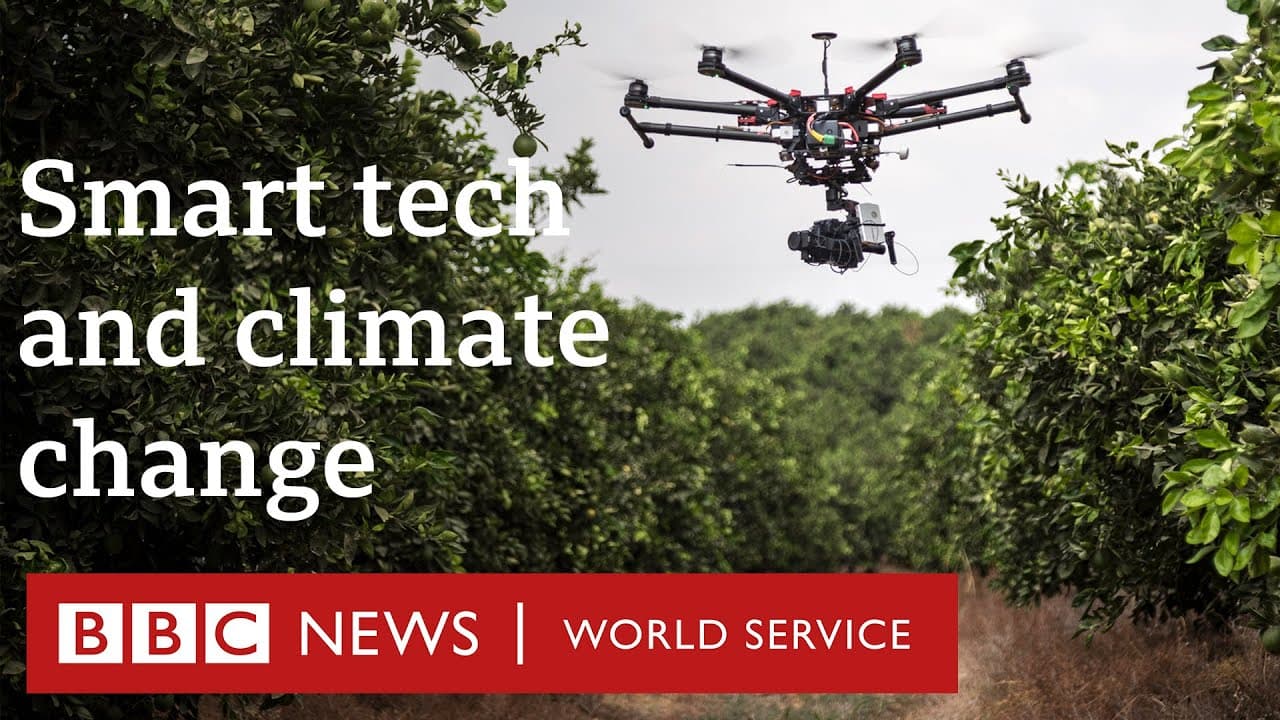
How can smart tech tackle climate change? CrowdScience - BBC World Service
TL;DR
Smart tech and AI can significantly reduce carbon emissions.
Transcript
Hello Crowd Science, it's Saugat Bolakhe here from Nepal. My question actually revolves around the most burning issue of this decade that is climate change. This is Crowd Science from the BBC World Service with me Marnie Chesterton. We're here for your science questions. We are under climate crisis and I am a complete supporter of climate movemen... Read More
Key Insights
- Climate change remains a pressing global issue, with greenhouse gas emissions contributing significantly to environmental instability.
- Digital technology and AI are identified as powerful tools to reduce fossil fuel emissions by enhancing efficiency across various sectors.
- Smart grids and digital systems can optimize energy use, allowing for better management of renewable resources like wind and solar power.
- Intelligent buildings use sensors and machine learning to reduce energy consumption, contributing to achieving net-zero emissions.
- Precision farming, aided by digital tools, can reduce waste and emissions in agriculture by optimizing resource use and timing.
- The adoption of smart tech in agriculture faces challenges in developing regions due to literacy and access to technology.
- Smart technology can transform traditional systems by integrating data analysis and AI to improve efficiency and reduce carbon footprints.
- Despite the challenges, the potential of digital technology to combat climate change is significant, offering powerful tools for sustainable development.
Install to Summarize YouTube Videos and Get Transcripts
Explore YouTube Video Summarizer or Get YouTube Transcript Extractor
Questions & Answers
Q: How can smart technology help reduce greenhouse gas emissions?
Smart technology can reduce greenhouse gas emissions by optimizing energy use and improving efficiency across various sectors. For instance, smart grids can manage energy distribution more effectively, while intelligent buildings use sensors and AI to minimize energy consumption. In agriculture, precision farming employs digital tools to optimize resource use, reducing waste and emissions.
Q: What role does AI play in renewable energy management?
AI plays a crucial role in renewable energy management by predicting energy production patterns and optimizing storage and distribution. For example, AI algorithms can forecast high wind periods, allowing excess energy to be stored as hydrogen and converted back to electricity when demand increases. This ensures efficient use of renewable resources and reduces reliance on fossil fuels.
Q: How do intelligent buildings contribute to achieving net-zero emissions?
Intelligent buildings contribute to achieving net-zero emissions by using sensors and machine learning to manage energy consumption. These buildings optimize air conditioning, lighting, and other systems based on occupancy and environmental conditions, reducing energy use. By incorporating digital technology, they help companies minimize their carbon footprint and move towards net-zero goals.
Q: What challenges exist in implementing precision farming in developing regions?
Implementing precision farming in developing regions faces challenges such as low literacy rates and limited access to technology. Many farmers rely on traditional methods and may not have the resources or knowledge to adopt digital tools. Additionally, patchy data networks in remote areas can hinder the use of precision farming apps, limiting their potential impact.
Q: How can digital technology improve efficiency in agriculture?
Digital technology can improve efficiency in agriculture by providing farmers with precise data on soil conditions, weather patterns, and crop needs. This information allows for targeted use of resources like water and fertilizers, reducing waste and emissions. By optimizing planting and harvesting times, digital tools help increase yields and lower the environmental impact of farming.
Q: What is the potential impact of smart grids on energy management?
Smart grids have the potential to revolutionize energy management by using data to optimize electricity distribution. They can respond to changes in demand and supply, storing energy when production exceeds demand and releasing it when needed. This flexibility allows for better integration of renewable energy sources, reducing reliance on fossil fuels and lowering carbon emissions.
Q: How does smart technology enhance the efficiency of wind farms?
Smart technology enhances the efficiency of wind farms by using digital twins and AI to optimize turbine performance. Engineers can model turbines on computers, identifying issues and improving designs without physical inspections. AI algorithms also help position turbines to maximize wind capture and adjust operations based on real-time data, increasing overall energy yield.
Q: What are the benefits of using hydrogen for energy storage?
Hydrogen offers significant benefits for energy storage due to its ability to store large amounts of energy for extended periods. When renewable energy production exceeds demand, electricity can be converted into hydrogen through electrolysis. This hydrogen can be stored and later converted back into electricity, providing a reliable energy source and reducing waste from renewable energy.
Summary & Key Takeaways
-
The episode discusses how digital technology and AI can help reduce carbon emissions, focusing on smart grids, intelligent buildings, and precision farming. It highlights the role of AI in optimizing renewable energy use and improving efficiency in various sectors.
-
Smart technology in buildings and agriculture can significantly reduce energy consumption and greenhouse gas emissions. Intelligent systems use data to optimize operations, while precision farming can decrease waste and enhance productivity.
-
Challenges remain in adopting smart tech in developing regions due to literacy and technology access. However, the potential for digital tools to drive sustainable development and combat climate change is substantial, offering hope for a greener future.
Read in Other Languages (beta)
Share This Summary 📚
Summarize YouTube Videos and Get Video Transcripts with 1-Click
Try YouTube Summary with ChatGPT & Claude or YouTube Transcript Generator
Explore More Summaries from BBC World Service 📚



Summarize YouTube Videos and Get Video Transcripts with 1-Click
Try YouTube Summary with ChatGPT & Claude or YouTube Transcript Generator