What Is Nuclear Fusion and How Does It Power the Sun?
TL;DR
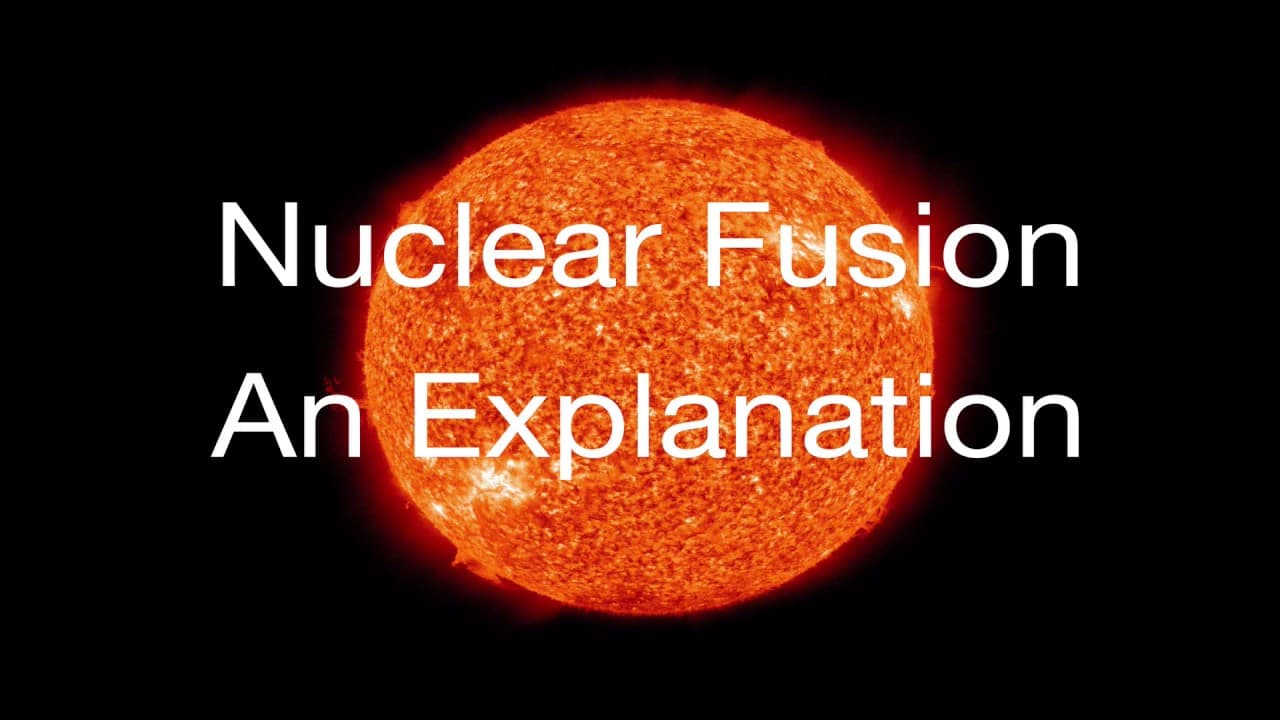
Nuclear fusion is the process in which light atomic nuclei combine to form a heavier nucleus, releasing energy. This reaction occurs in the Sun, where over 600 metric tons of hydrogen are fused into helium each second. The energy produced is a result of the mass defect, where the combined mass of the nucleus is less than the sum of its components, converting mass into binding energy.
Transcript
okay that's right you can see in today's video we are going to go over an explanation of nuclear fusion and that's right that is our Sun and then this nuclear fusion that powers our Sun and all of the stars and indeed we say that nuclear fusion is the reason the Sun actually shines so let's see what is nuclear fusion nuclear fusion is a reaction in... Read More
Key Insights
- 🤩 Nuclear fusion combines atomic nuclei, releasing energy that powers the Sun and stars.
- ✋ The strong nuclear force overcomes the repulsive Coulomb force, allowing nuclei to fuse in high-temperature, high-pressure environments like stars.
- 🥺 Mass defect in nuclei leads to the conversion of mass into binding energy, providing the energy source for nuclear fusion.
- ✋ The energy released in nuclear fusion is significantly higher than in chemical reactions, making it more energy-dense.
- 💆 Understanding the mass defect in nuclei and converting it into binding energy is crucial in calculating the energy released in nuclear fusion.
- 💄 Nuclear fusion releases megaelectronvolts of energy, making it a highly efficient energy source compared to chemical reactions.
- 🫀 Nuclear fusion involves complex calculations to determine mass defects and binding energies, showcasing the intricate nature of atomic reactions.
Install to Summarize YouTube Videos and Get Transcripts
Explore YouTube Video Summarizer or Get YouTube Transcript Extractor
Questions & Answers
Q: What is nuclear fusion and how does it power the Sun?
Nuclear fusion is a reaction where atomic nuclei combine, releasing energy that powers the Sun by converting mass into binding energy.
Q: How does the strong nuclear force play a role in nuclear fusion?
The strong nuclear force overcomes the Coulomb force of repulsion between protons, leading to the fusion of nuclei in nuclear reactions.
Q: Why is nuclear fusion more energy-dense than chemical reactions?
Nuclear fusion releases significantly more energy compared to chemical reactions due to the high binding energy from the mass defect in atomic nuclei.
Q: How is the mass defect converted into binding energy in nuclear fusion?
The mass defect in nuclear reactions is converted into binding energy through Einstein's equation (E=mc^2), powering the Sun and stars.
Summary & Key Takeaways
-
Nuclear fusion is a reaction where light atomic nuclei combine to form a heavier nucleus, releasing energy and sometimes particles.
-
The Sun fuses over 600 metric tons of hydrogen into helium every second, powering the Sun and creating elements.
-
Energy is released in nuclear fusion due to the mass defect, converting mass into binding energy.
Read in Other Languages (beta)
Share This Summary 📚
Summarize YouTube Videos and Get Video Transcripts with 1-Click
Try YouTube Summary with ChatGPT & Claude or YouTube Transcript Generator
Explore More Summaries from Step by Step Science 📚
Summarize YouTube Videos and Get Video Transcripts with 1-Click
Try YouTube Summary with ChatGPT & Claude or YouTube Transcript Generator