All 17 Megadiverse Countries
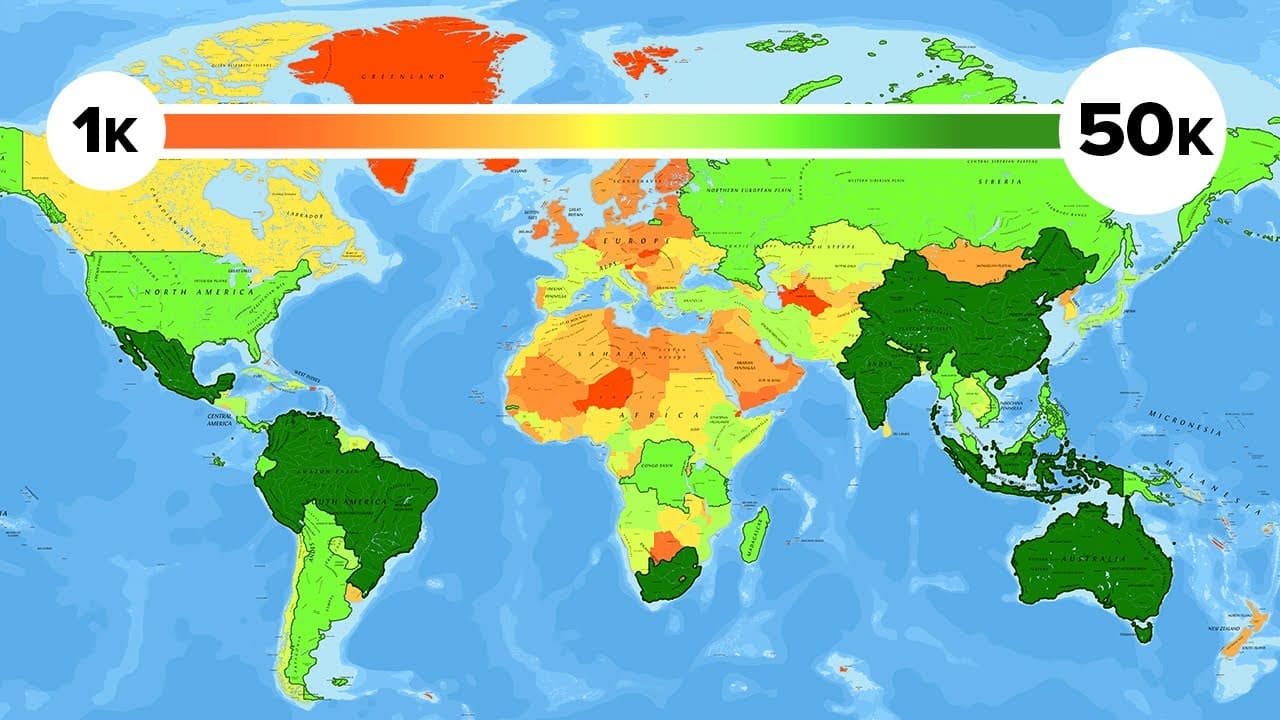
TL;DR
Mega diverse countries, such as Brazil and Madagascar, showcase high levels of biodiversity and endemism, with unique species found nowhere else on Earth.
Transcript
if biodiversity were in the Olympics Brazil would not only meddle in every single event but would capture 50 percent of the gold medals furthermore there exist only a few Nations on Earth capable of competing with the Amazonian behemoth but species count alone does not qualify a country as Mega diverse animism refers to the state of a species or ot... Read More
Key Insights
- 🖐️ Endemism, where species are unique to specific geographical regions, plays a crucial role in determining Mega diverse countries.
- ✋ Size and diverse ecosystems contribute to high biodiversity levels.
- 🏝️ Islands, such as Madagascar and the Galapagos, showcase remarkable levels of endemism.
- 🇨🇩 Rainforests, like the Amazon and Congo Basin, support a wealth of biodiversity.
- 🧑🏭 Coastlines and marine ecosystems are important factors in overall biodiversity.
- 🎭 Reptile populations often perform strongly in Mega diverse countries.
- 🇿🇦 Species-rich forests, such as South Africa's fynbos and India's tropical forests, contribute significantly to biodiversity.
Install to Summarize YouTube Videos and Get Transcripts
Explore YouTube Video Summarizer or Get YouTube Transcript Extractor
Questions & Answers
Q: Why does Brazil have the highest biodiversity among mega diverse countries?
Brazil's immense size and a significant portion of the Amazon rainforest contribute to its high biodiversity. It has the highest number of amphibians, vascular plants, and endemic species.
Q: What distinguishes Madagascar's biodiversity despite not having the highest species count?
Madagascar is known for its high levels of endemism, with 85% of animals and 90% of plant species found only on the island. It has a unique array of animals, including lemurs, and exhibits remarkable diversity in amphibians and reptiles.
Q: Why is India considered a mega diverse country?
India's vast tropical forests support a balanced profile of species diversity. It is the seventh-largest country globally and features unique fauna, including tigers, lions, and various species of bears. India also excels in reptile and bird diversity.
Q: How does China contribute to mega biodiversity?
China ranks highly across multiple categories, with a focus on mammal species diversity and varied ecosystems, including snowy plateaus and lush forests. It is home to several colorful bird species and has extensive reptilian and fish populations.
Q: What sets Papua New Guinea apart in terms of biodiversity?
Papua New Guinea, a small nation with diverse islands, showcases high levels of biodiversity, particularly in tree kangaroos, bird species with spectacular plumage, and marine life. It is part of the coral triangle, housing 76% of the world's coral species.
Q: What makes Australia unique in terms of biodiversity?
Australia's Great Barrier Reef, extensive coastline, and unique ecosystems contribute to its exceptional biodiversity. It ranks high in reptiles, fish, and frogs and exhibits impressive levels of endemism, notably in its mammal and frog species.
Q: What are the distinguishing factors of Mexico's biodiversity?
Mexico's diverse desert and tropical forest biomes support a rich reptile population, ranking it second globally. It is also home to over 500 mammal species and boasts long coastlines bordering marine biogeographic realms.
Q: How does the United States fare in terms of biodiversity?
The United States possesses a wide range of biomes, from subtropical regions to boreal forests. It excels in mammal diversity, ranking fifth globally, along with significant reptile, fish, and plant species diversity. Bird diversity is relatively lower compared to other categories.
Key Insights:
- Endemism, where species are unique to specific geographical regions, plays a crucial role in determining Mega diverse countries.
- Size and diverse ecosystems contribute to high biodiversity levels.
- Islands, such as Madagascar and the Galapagos, showcase remarkable levels of endemism.
- Rainforests, like the Amazon and Congo Basin, support a wealth of biodiversity.
- Coastlines and marine ecosystems are important factors in overall biodiversity.
- Reptile populations often perform strongly in Mega diverse countries.
- Species-rich forests, such as South Africa's fynbos and India's tropical forests, contribute significantly to biodiversity.
- Conservation efforts are vital in preserving Mega diverse countries and the unique species found within them.
Summary & Key Takeaways
-
Brazil stands out as the most biodiverse country, with the highest number of amphibians, vascular plants, and endemic species.
-
Madagascar, while not having the highest species count, exhibits remarkable levels of endemism, with 85% of animals and 90% of plant species found only on the island.
-
South Africa's diverse shrubland habitat and reptile population contribute to its Mega diverse status.
-
The Democratic Republic of Congo, with its vast rainforests and Congo River, is home to a large number of mammal and bird species.
-
India's tropical forests and varied ecosystems support a balanced profile of species diversity.
-
China boasts a high number of mammal species and is rich in reptiles and birds, particularly in its forests.
-
The Philippines excels in the fish category and is known for its marine biodiversity, particularly within the coral triangle.
-
Malaysia, sharing Borneo Island, showcases impressive marine life and diverse species of mammals.
-
Indonesia, also sharing Borneo, ranks high in mammal, bird, fish, and reptile species count, with unique fauna on different sides of its formal boundary.
-
Papua New Guinea, with its diverse terrestrial and marine ecosystems, excels in tree kangaroos and coral species.
-
Australia's Great Barrier Reef, extensive coastline, and endemic species contribute to its high rankings in reptiles, fish, and frogs.
-
The United States exhibits a wide range of biomes, with high rankings in mammals, reptiles, and fish.
-
Mexico showcases diverse reptile populations and features long coastlines bordering two marine biogeographic realms.
-
Venezuela's Caribbean coastline and forests support a variety of marine fish and vascular plant species.
-
Colombia stands out with its rich bird and amphibian diversity, along with notable reptile populations.
-
Ecuador harbors impressive levels of endemism, especially on the Galapagos Islands, and performs well in amphibian and bird species count.
-
Peru, with its Andean mountains and Amazon rainforest, excels in bird, amphibian, and mammal diversity.
-
Brazil, as the largest Amazonian nation, leads in amphibians, vascular plants, and endemic species count.
Read in Other Languages (beta)
Share This Summary 📚
Summarize YouTube Videos and Get Video Transcripts with 1-Click
Try YouTube Summary with ChatGPT & Claude or YouTube Transcript Generator
Explore More Summaries from Textbook Travel 📚

Summarize YouTube Videos and Get Video Transcripts with 1-Click
Try YouTube Summary with ChatGPT & Claude or YouTube Transcript Generator