How to Draw Dynamic Three-Quarter Figures
TL;DR
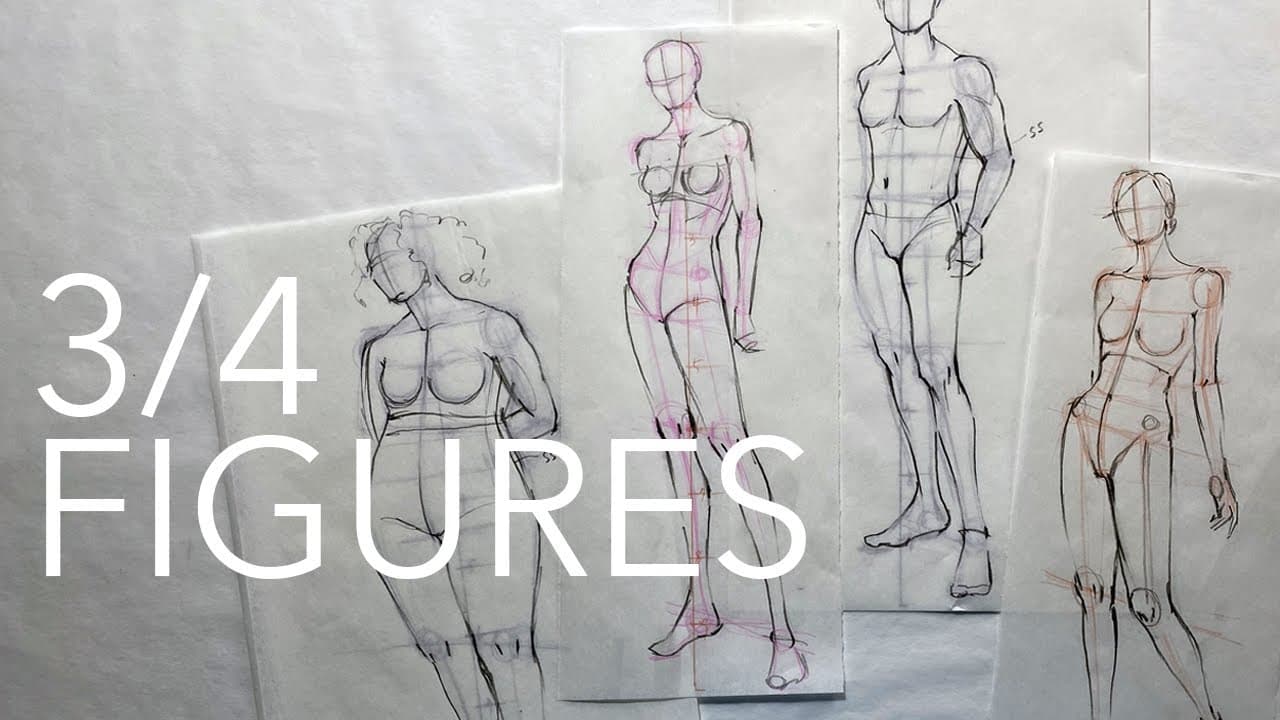
To draw effective three-quarter figures, focus on accurately capturing perspective and the correct angles of the body. Pay attention to the placement of side seams and muscle shapes in the arms and legs, as these details are crucial for achieving a convincing three-dimensional look. Elongated proportions can also be applied for fashion illustration while maintaining realistic dimensions.
Transcript
hey hey party people in this video i'm gonna go over three quarter figures three quarter figures are basically front view figures that are slightly angled away so that you do see some of the side and i love these kinds of figures for both fashion illustration because it creates dynamic energy with the pose and i also love them for fashion design be... Read More
Key Insights
- 🤔 Three-quarter figures add dynamic energy and encourage thinking about clothing from all angles.
- 🌓 Capturing correct angles and perspective is crucial for creating a convincing three-dimensional effect in three-quarter figures.
- 🌓 Paying attention to the placement of the side seam, elbow, and kneecaps helps in accurately depicting three-quarter figures.
- 🚦 Elongated figures can be achieved by extending vertical proportions while maintaining practical and realistic proportions.
- 💪 Plus size figures have wider and more curved shapes, but the basic muscle and body part proportions remain similar.
- 💪 Understanding muscle shapes, such as the vastus medialis in the thigh, helps in accurately representing three-quarter legs.
- 🕵️♂️ Proper proportions for elongated male figures include a waist at three and the bottom of the crotch at four and a half.
Install to Summarize YouTube Videos and Get Transcripts
Explore YouTube Video Summarizer or Get YouTube Transcript Extractor
Questions & Answers
Q: What makes three-quarter figures unique and beneficial for fashion design and illustration?
Three-quarter figures add dynamism and energy to illustrations, allowing designers to showcase clothing from different angles. They encourage designers to think beyond front and center designs.
Q: How can perspective be applied to drawing three-quarter figures?
Perspective is crucial in capturing the correct angles of the figure, especially in relation to the pectoral muscles or breasts. As objects recede into the distance, they appear smaller, and this principle applies to three-quarter figures as well.
Q: Where should the side seam be placed in a three-quarter figure's torso?
The side seam should be positioned in the middle of the side panel of the torso, not at the corner edge. This helps maintain the balance and symmetry of the figure.
Q: How should the placement of muscles be considered in drawing three-quarter figures?
When drawing arms, pay attention to the position of the inside of the elbow, as it determines the angle and visibility of the arm muscles. Similarly, consider the positioning of the kneecaps in order to accurately depict the leg muscles.
Q: Are there different proportions to consider when drawing elongated three-quarter figures?
Yes, elongated figures can be created by extending the vertical proportions of the figure while still maintaining a sense of realism. Male figures may have slightly different proportions to accommodate their anatomy.
Q: How does drawing plus size figures differ from drawing not plus size figures?
Drawing plus size figures involves capturing wider and more curved shapes, but the basic muscle and body part proportions remain similar. Pay attention to the placement and curvature of muscles and consider the presence of rolls if desired.
Q: How can muscle shapes be accurately represented in three-quarter legs?
The vastus medialis muscle creates a curve on the inside of the thigh, and its visibility will vary depending on the angle and pose of the leg. Observing anatomy references and understanding the specific muscle shapes will help in drawing accurate three-quarter legs.
Q: What are the recommended proportions for elongated male fashion figures?
The waist should be at three, and the bottom of the crotch should be at four and a half. The proportion between the oblique cut and the forearm is also an important consideration to achieve balanced proportions in male figures.
Summary & Key Takeaways
-
Three-quarter figures add dynamic energy to fashion illustration and encourage designers to think about clothing from all angles.
-
Capturing correct angles is crucial for creating a convincing three-dimensional effect in three-quarter figures.
-
The placement of the side seam in the torso and the positioning of muscles in arms and legs are important aspects to consider when drawing three-quarter figures.
Read in Other Languages (beta)
Share This Summary 📚
Summarize YouTube Videos and Get Video Transcripts with 1-Click
Try YouTube Summary with ChatGPT & Claude or YouTube Transcript Generator
Explore More Summaries from Zoe Hong 📚

Summarize YouTube Videos and Get Video Transcripts with 1-Click
Try YouTube Summary with ChatGPT & Claude or YouTube Transcript Generator