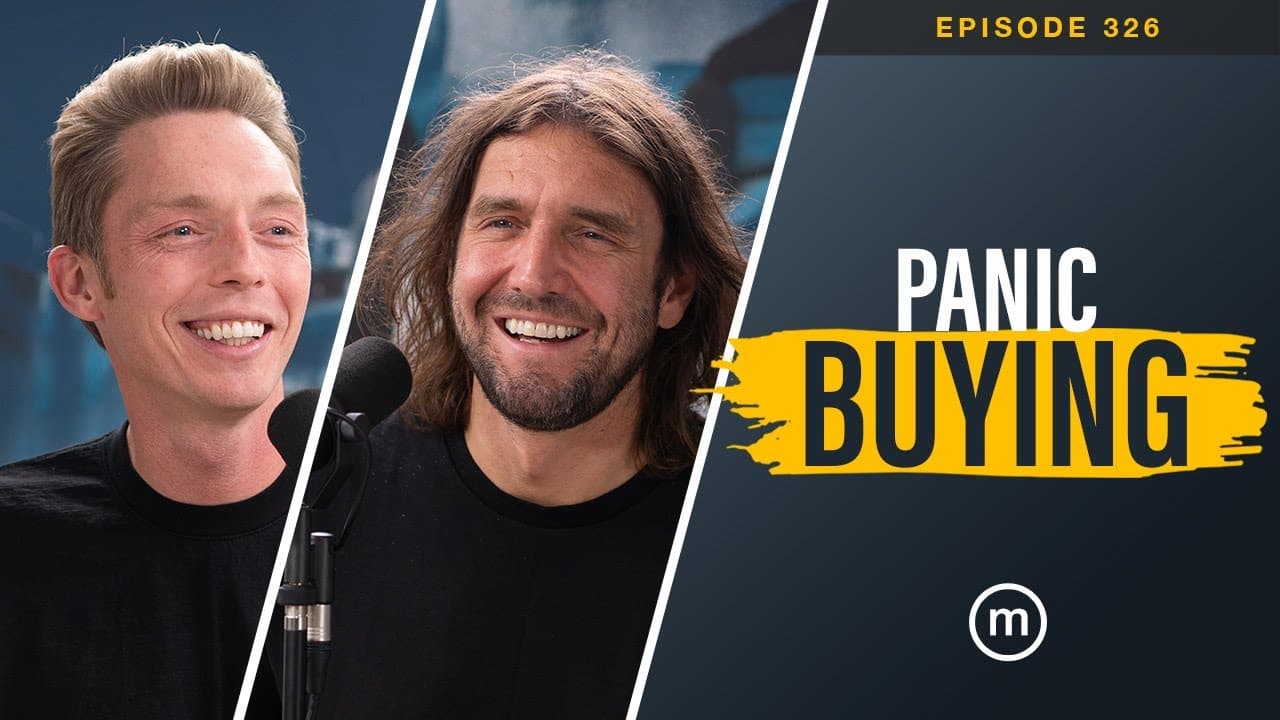
Ep. 326 | Panic Buying
TL;DR
The Minimalists explore the psychology and effects of panic buying.
Transcript
hello everybody Welcome to the minimalist podcast where we discuss what it means to live a meaningful life with less my name is Joshua Fields Milburn and I'm Ryan Nicodemus and together we are the minimalists Ryan have you noticed a lot of empty shelves at stores recently yeah the first snowflake hits the ground well not here in LA but other places... Read More
Key Insights
- Panic buying is often triggered by a perceived scarcity or fear of missing out, leading people to irrationally purchase large quantities of items.
- Supply chain disruptions can exacerbate panic buying, as any break in the logistics chain can lead to empty shelves and heightened consumer anxiety.
- Retailers sometimes create artificial urgency to boost sales, which can lead to low-level panic buying among consumers.
- Panic buying is not rational; it's an emotional response to perceived shortages and can be fueled by media reports predicting shortages.
- The fear of missing out can only be mitigated by understanding what 'enough' truly means for each individual.
- The pandemic highlighted how quickly supply chains can break down and the importance of appreciating the roles of workers like truck drivers in maintaining them.
- Media reports can act as a self-fulfilling prophecy, causing the very shortages they predict by inciting panic buying.
- Establishing boundaries and knowing what is essential can help individuals avoid the trap of panic buying and hoarding.
Install to Summarize YouTube Videos and Get Transcripts
Explore YouTube Video Summarizer or Get YouTube Transcript Extractor
Questions & Answers
Q: What causes panic buying?
Panic buying is primarily caused by a perceived scarcity or fear of missing out, often exacerbated by media reports predicting shortages. It is an emotional response where individuals buy large quantities of items irrationally, fearing they might not be available later.
Q: What are the causes of supply-chain shortages?
Supply-chain shortages can result from various factors, including disruptions in logistics, such as sick workers or transportation issues, which can lead to empty shelves. This can be further intensified by panic buying, creating a cycle of perceived scarcity and actual shortages.
Q: What have you seen purchased in recent panic-buying frenzies?
During recent panic-buying frenzies, people have purchased items like toilet paper, paper towels, and even non-essential items like cookies and liquor. These purchases often don't make sense logically but are driven by fear and the desire to stock up.
Q: When might it be appropriate to panic?
True panic is appropriate in life-threatening situations, such as being attacked or in immediate danger. However, the panic response should not be applied to situations like perceived shortages of consumer goods, where rational decision-making is more beneficial.
Q: Is it ever advisable to simply save money for medical emergencies rather than spending that money monthly on health insurance?
This depends on individual circumstances. Some people may find it more cost-effective to save for emergencies if they are generally healthy and insurance costs are high. However, insurance provides a safety net for unexpected catastrophic events that savings alone might not cover.
Q: Can everything be negotiated?
Many things, including medical bills, can be negotiated. Consumers often don't realize the flexibility in pricing and can benefit from asking for discounts or negotiating terms, especially in situations where they feel overcharged.
Q: Do other countries respond to crises with panic buying similar to the United States?
Yes, panic buying is a global phenomenon and not just limited to the United States. Countries like Australia and Japan have also experienced panic buying during crises, indicating that it's a common human response to perceived scarcity.
Q: Where is the line between preparation and hoarding?
The line between preparation and hoarding is determined by understanding personal needs and what is truly essential. Knowing what 'enough' means for you can help avoid hoarding, which often stems from fear and leads to waste.
Summary & Key Takeaways
-
The Minimalists discuss panic buying, its psychological roots, and how it is often spurred by perceived shortages and fear of missing out. They emphasize the importance of understanding what is truly essential to avoid unnecessary purchases.
-
Supply chain issues can lead to empty shelves, which in turn trigger panic buying. The Minimalists highlight the role of media in amplifying these fears and stress the need for individuals to establish their own boundaries regarding what is 'enough.'
-
The conversation also touches on how panic buying is a global issue, not just limited to the United States, and how preparation should be differentiated from hoarding by understanding personal needs and limits.
Read in Other Languages (beta)
Share This Summary 📚
Summarize YouTube Videos and Get Video Transcripts with 1-Click
Try YouTube Summary with ChatGPT & Claude or YouTube Transcript Generator
Explore More Summaries from The Minimalists Podcast 📚




Summarize YouTube Videos and Get Video Transcripts with 1-Click
Try YouTube Summary with ChatGPT & Claude or YouTube Transcript Generator