Healthcare Predictions 2025
TL;DR
Experts forecast significant trends impacting healthcare innovation and entrepreneurship by 2025.
Transcript
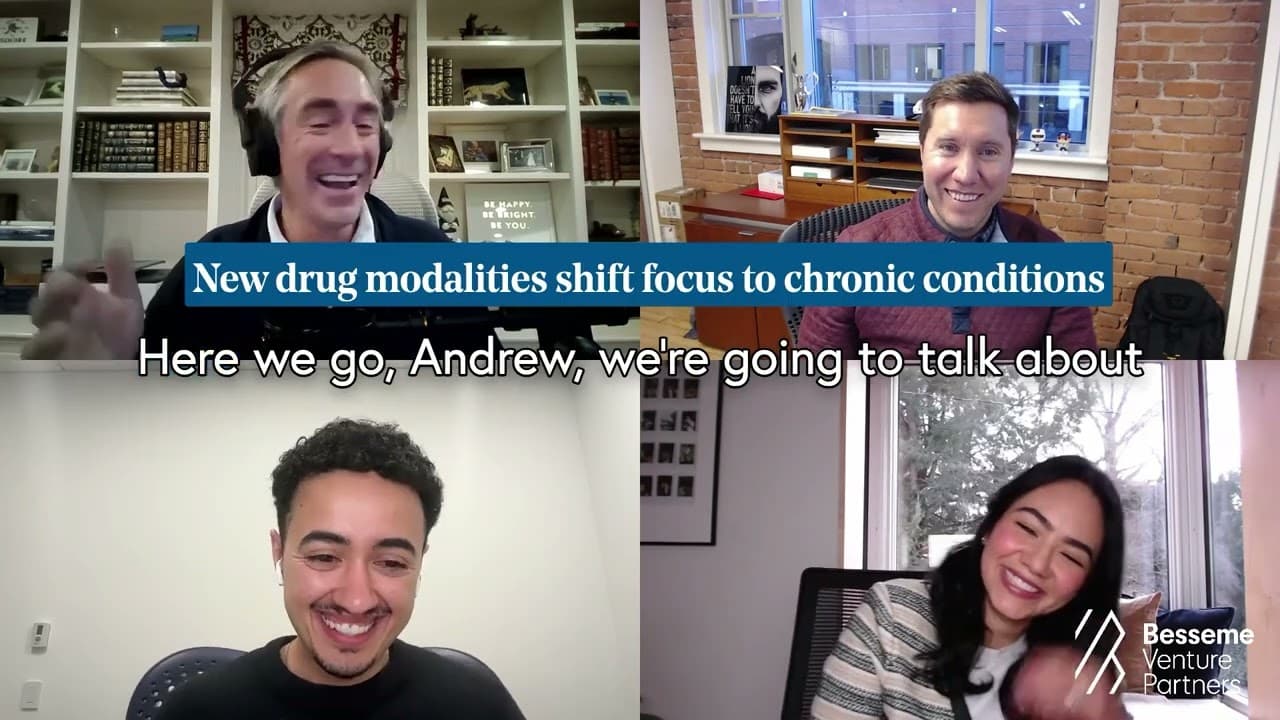
hello everyone I'm Steve Krauss a healthcare investor with besser Venture partners and I am super excited to be here today with our entire Healthcare Pharma and life science investment team Sophia Morgan and Andrew to share our annual healthc care predictions for 2025 we'll be unpacking key trends shaping the future of healthcare what entrepreneurs... Read More
Key Insights
- 🧑⚕️ Trump’s support for RRAs could unintentionally enhance Obamacare exchanges, shifting the landscape of health insurance.
- 🤕 The aging “silver tsunami” is straining caregiver resources, demanding innovation in home health support systems.
- 🥺 Market-driven forces may lead to increased consumer choice in healthcare, allowing individuals to tailor their plans.
- ❓ Significant growth in gene therapy and CRISPR technology is anticipated to broaden treatment from rare to chronic diseases by 2025.
- 😮 There’s a rising need for advanced AI tools to enable better diagnosis and treatment personalization, while commercial viability remains a challenge.
- 😨 Healthcare investors are keenly monitoring shifts in reimbursement models to adapt to technological advancements in patient care.
- 😨 Entrepreneurial opportunities abound as dissatisfaction with the existing healthcare system fuels new solutions for care delivery and management.
Install to Summarize YouTube Videos and Get Transcripts
Explore YouTube Video Summarizer or Get YouTube Transcript Extractor
Questions & Answers
Q: What are RRAs and how might they impact healthcare exchanges?
RRAs, or individual coverage healthcare reimbursement arrangements, allow employers to provide employees with tax-free funds to purchase personal health insurance. This shift could boost the usage of healthcare exchanges established under the Affordable Care Act, offering employees more choice and flexibility.
Q: Why is 2025 considered a critical year for healthcare innovation?
By 2025, the interplay between economic factors, policy shifts, and technological advancements is expected to culminate in significant transformations in the healthcare landscape, particularly regarding consumer choice, insurance structures, and caregiving amidst an aging population.
Q: How might advances in AI influence the healthcare industry by 2025?
AI is expected to revolutionize disease measurement and monitoring, integrating various data modalities for improved understanding and treatment options. However, financial barriers and reimbursement challenges may impede its widespread adoption despite its potential to enhance patient care.
Q: What challenges do aging populations present in healthcare?
The increasing number of elderly individuals is expected to stress health care systems already strained by workforce shortages, especially in home care. Innovative strategies are needed to enhance caregiver support, training, and appropriate compensation to meet growing demands.
Q: How is gene therapy evolving in the context of drug development?
There is a trend towards employing gene therapy and CRISPR technologies to treat chronic diseases rather than exclusively targeting rare diseases. This maturation phase allows for potentially widespread application and personalization in treating common health conditions.
Q: What is the main concern with the transition from rare to chronic disease focus in healthcare?
As treatment modalities shift to address chronic diseases, the industry must ensure safety and efficacy for broader populations. Entrepreneurs need to address these complexities while navigating regulatory environments and maintaining patient outcomes in mind.
Summary & Key Takeaways
-
The panel discusses how individual health insurance reimbursement arrangements (RRAs) could reshape the healthcare market, potentially expanding the Obamacare exchanges. This shift may empower consumers to choose personalized health plans.
-
Aging populations are expected to strain home and health care systems, highlighting the need for innovation in caregiver support and technology to manage these demographic changes.
-
Advances in drug development, particularly using CRISPR and gene therapy, are predicted to shift focus from rare diseases to chronic diseases, opening opportunities for personalization in treatment approaches.
Read in Other Languages (beta)
Share This Summary 📚
Summarize YouTube Videos and Get Video Transcripts with 1-Click
Try YouTube Summary with ChatGPT & Claude or YouTube Transcript Generator
Explore More Summaries from Bessemer Venture Partners 📚

Summarize YouTube Videos and Get Video Transcripts with 1-Click
Try YouTube Summary with ChatGPT & Claude or YouTube Transcript Generator