Don't Use ChatGPT for SEO Keyword Research
TL;DR
ChatGPT is not suitable for accurate SEO keyword research.
Transcript
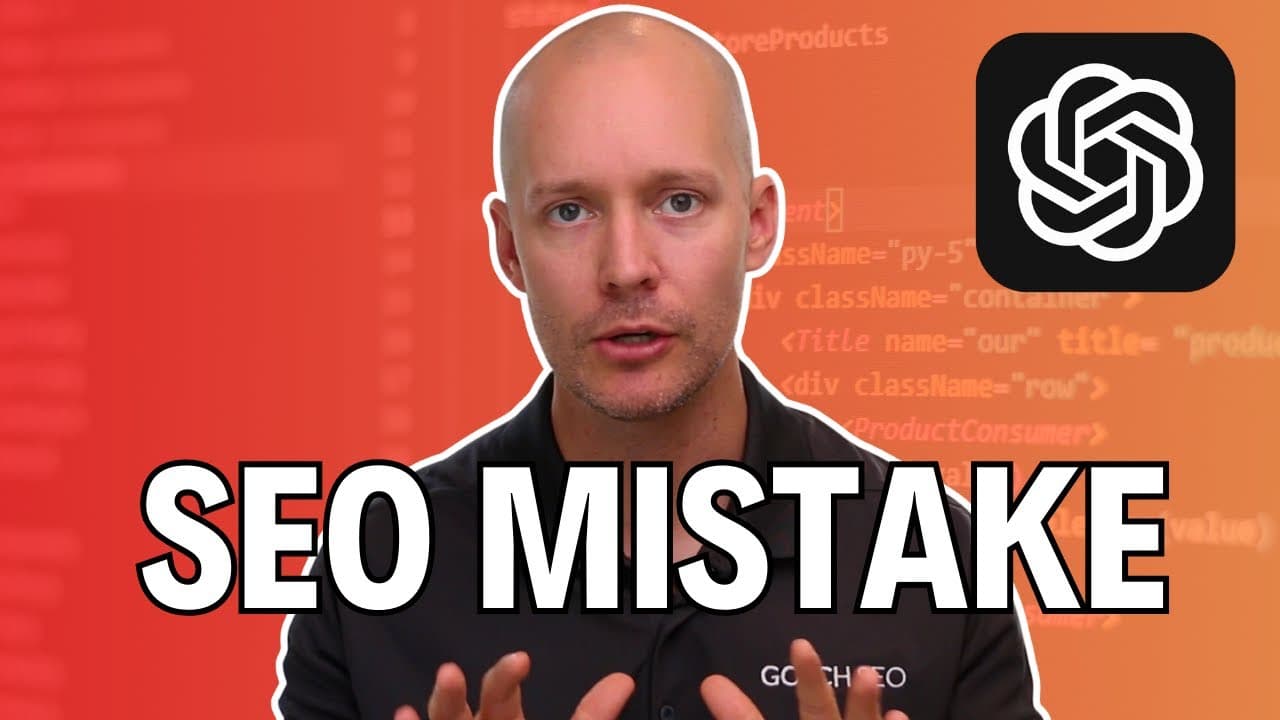
so there are tons of gurus out there pushing the idea that you should use chat gbt for SEO keyword research this is kind of true but one of their recommendations is completely wrong I'm Nathan from gotch SEO and in this video I'll show you three SEO keyword research mistakes to avoid with chat GPT and then I'll show you how to use it the right way ... Read More
Key Insights
- ChatGPT is not a replacement for traditional keyword research tools like Ahrefs or SEMrush due to its lack of real-time data and popularity metrics.
- Generating keyword ideas is only a small part of SEO keyword research; understanding search intent and competition is crucial.
- ChatGPT's data is outdated, making it unreliable for current keyword popularity and trends.
- Using ChatGPT for generating FAQs can be misleading, as it guesses rather than uses real search data.
- ChatGPT can be a useful starting point for brainstorming keyword ideas, especially in unfamiliar industries.
- The tool can classify search intent, but manual verification through Google is recommended for accuracy.
- ChatGPT can generate link bait ideas, but these should be manually assessed for relevance and feasibility.
- While useful for initial brainstorming, ChatGPT should not be relied upon for comprehensive SEO strategies.
Install to Summarize YouTube Videos and Get Transcripts
Explore YouTube Video Summarizer or Get YouTube Transcript Extractor
Questions & Answers
Q: Why shouldn't ChatGPT be used as a primary tool for SEO keyword research?
ChatGPT should not be used as a primary tool for SEO keyword research because it lacks the capability to provide real-time data and accurate keyword popularity metrics. It is a language model that predicts words rather than analyzing current trends and competition, making it unreliable for comprehensive SEO strategies.
Q: How can ChatGPT be effectively used in SEO keyword research?
ChatGPT can be effectively used in SEO keyword research as a starting point for brainstorming keyword ideas, especially in industries where you have little knowledge. It can provide semantically related keywords that can be further analyzed using traditional SEO tools like Ahrefs or SEMrush to verify their popularity, competition, and search intent.
Q: What are the limitations of using ChatGPT for generating FAQs in SEO content?
The limitations of using ChatGPT for generating FAQs in SEO content include its tendency to guess rather than use real search data. This can lead to irrelevant or ineffective FAQs that do not align with actual user queries. It is important to use tools like Google's 'People Also Ask' to ensure the FAQs are based on real user searches and data.
Q: What is the importance of search intent in SEO keyword research?
Search intent is crucial in SEO keyword research because it helps determine the type of content that should be created to meet user needs. Understanding whether a keyword is informational, commercial, or transactional allows you to tailor content to match user expectations, improving the chances of ranking higher in search results and attracting relevant traffic.
Q: How can ChatGPT assist in identifying link bait ideas?
ChatGPT can assist in identifying link bait ideas by generating a list of potential concepts based on your primary keyword or topic. These ideas can then be manually evaluated for relevance and feasibility. ChatGPT can also score these ideas based on potential linkability, although this should be used as a guide rather than a definitive measure.
Q: What are the benefits of using traditional SEO tools over ChatGPT?
The benefits of using traditional SEO tools over ChatGPT include access to real-time data, accurate keyword popularity metrics, and comprehensive analysis of competition and search trends. Tools like Ahrefs and SEMrush provide data-driven insights that help in making informed decisions, whereas ChatGPT is limited to generating ideas without quantifiable data support.
Q: Can ChatGPT classify search intent accurately?
ChatGPT can classify search intent to some extent, but it is not 100% accurate. It can provide a general classification of keywords into informational or commercial categories. However, manual verification through Google search results is recommended to ensure accuracy, as ChatGPT's classifications are based on its training data and may not reflect current search behaviors.
Q: What is the role of domain strength in keyword research?
Domain strength plays a significant role in keyword research as it helps determine the competitiveness of keywords. Analyzing the domain rating (DR) of competitors on search engine results pages (SERPs) provides insights into how difficult it may be to rank for a particular keyword. Targeting keywords with lower DR competitors can increase the chances of ranking higher, especially for new or less authoritative websites.
Summary & Key Takeaways
-
ChatGPT is a powerful tool for generating initial keyword ideas but lacks the capability to replace traditional SEO tools like Ahrefs or SEMrush. It cannot provide real-time data or accurately assess keyword popularity and trends, which are essential for effective SEO keyword research.
-
Relying solely on ChatGPT for SEO can lead to ineffective strategies, as it lacks the ability to accurately classify search intent and evaluate competition. Using it to generate FAQs can be misleading since it guesses rather than uses real search data.
-
For effective SEO, ChatGPT should be used as a starting point for brainstorming ideas, especially in unfamiliar industries. However, manual verification and the use of traditional SEO tools are necessary to ensure accuracy and effectiveness in keyword research and strategy development.
Read in Other Languages (beta)
Share This Summary 📚
Summarize YouTube Videos and Get Video Transcripts with 1-Click
Try YouTube Summary with ChatGPT & Claude or YouTube Transcript Generator
Explore More Summaries from Nathan Gotch 📚



Summarize YouTube Videos and Get Video Transcripts with 1-Click
Try YouTube Summary with ChatGPT & Claude or YouTube Transcript Generator