How to Parse Twitter for Twitter Analysis: Part 2
TL;DR
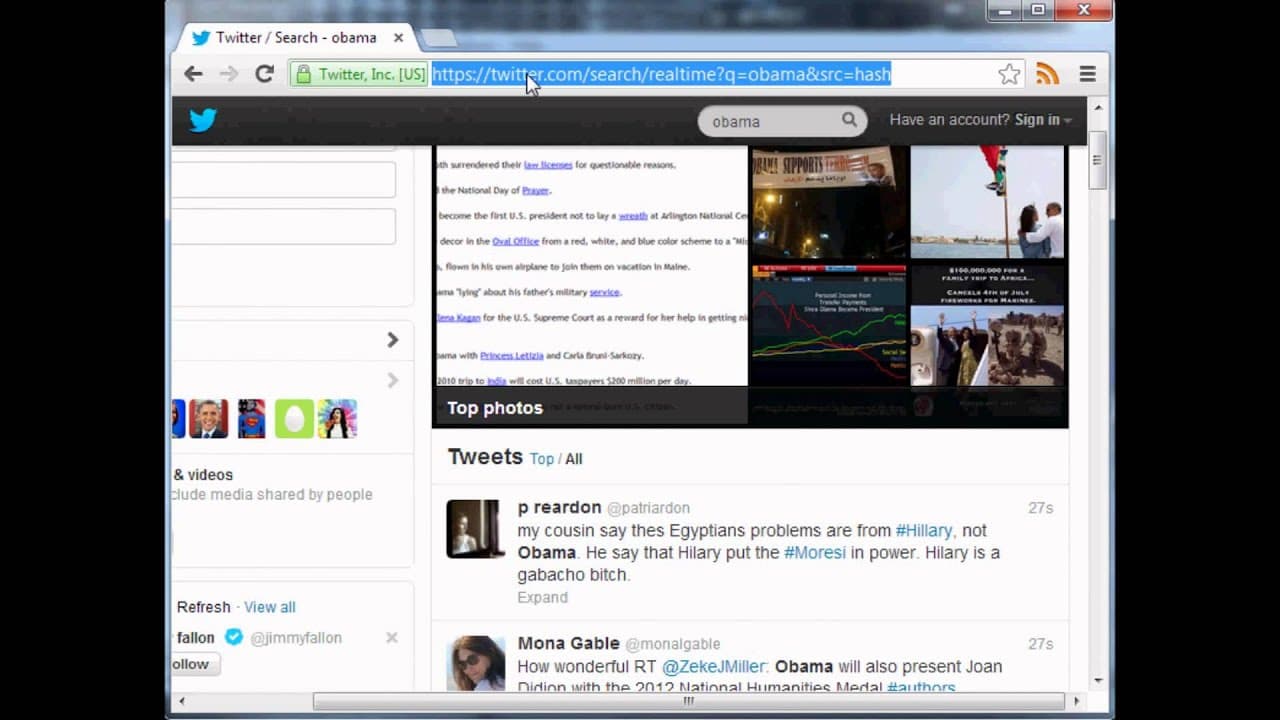
This tutorial explains how to parse and clean up individual tweets using regular expressions in Python.
Transcript
all righty everybody welcome back to another parsing Twitter tutorial this is where we left off we were just we just parsed an individual tweet to show that's how you're going to do it we added this really long wait time otherwise you know we would parse the entire page but the next thing I really want to do is clean this up because this kind of su... Read More
Key Insights
- 😑 Regular expressions can be used to clean up and extract desired content from parsed tweets.
- 👶 Refreshing the Twitter page is necessary to obtain real-time data, as the number of new tweets displayed by Twitter is often inaccurate.
- 👨🔬 Adjusting the frequency of parsing based on the volume of tweets for a specific search term can optimize data retrieval.
- ℹ️ The parsing technique demonstrated in the tutorial can be applied to other data sources, not just Twitter.
Install to Summarize YouTube Videos and Get Transcripts
Explore YouTube Video Summarizer or Get YouTube Transcript Extractor
Questions & Answers
Q: How can regular expressions be used to clean up the content of parsed tweets?
Regular expressions can be used to identify and remove unwanted tags and elements from the parsed tweet content. By using the re.sub function, specific tags can be replaced with empty strings, leaving only the desired tweet.
Q: Why is it important to refresh the Twitter page for real-time data?
Refreshing the Twitter page allows for the retrieval of the most up-to-date tweets. The video demonstrates that the number of new tweets displayed by Twitter is often inaccurate and that continuous refreshing is necessary to obtain real-time data.
Q: How can the frequency of parsing be optimized for different search terms?
The frequency of parsing can be adjusted based on the volume of tweets for a specific search term. For highly active topics like "Obama," more frequent refreshing may be required, while less active topics may require less frequent refreshing to avoid unnecessary server requests.
Q: Can this parsing technique be applied to other data sources besides Twitter?
Yes, the technique of parsing and cleaning up data using regular expressions can be applied to other data sources, such as parsing RSS feeds or extracting specific information from web pages.
Summary & Key Takeaways
-
The tutorial demonstrates how to clean up the content of parsed tweets by removing unwanted tags and extracting the desired tweet.
-
The video shows how to print and display multiple parsed tweets on a page.
-
The importance of refreshing the Twitter page for real-time data and optimizing parsing frequency is highlighted.
Read in Other Languages (beta)
Share This Summary 📚
Summarize YouTube Videos and Get Video Transcripts with 1-Click
Try YouTube Summary with ChatGPT & Claude or YouTube Transcript Generator
Explore More Summaries from sentdex 📚





Summarize YouTube Videos and Get Video Transcripts with 1-Click
Try YouTube Summary with ChatGPT & Claude or YouTube Transcript Generator