What Impact Did Harry Beck's London Tube Map Have?
TL;DR
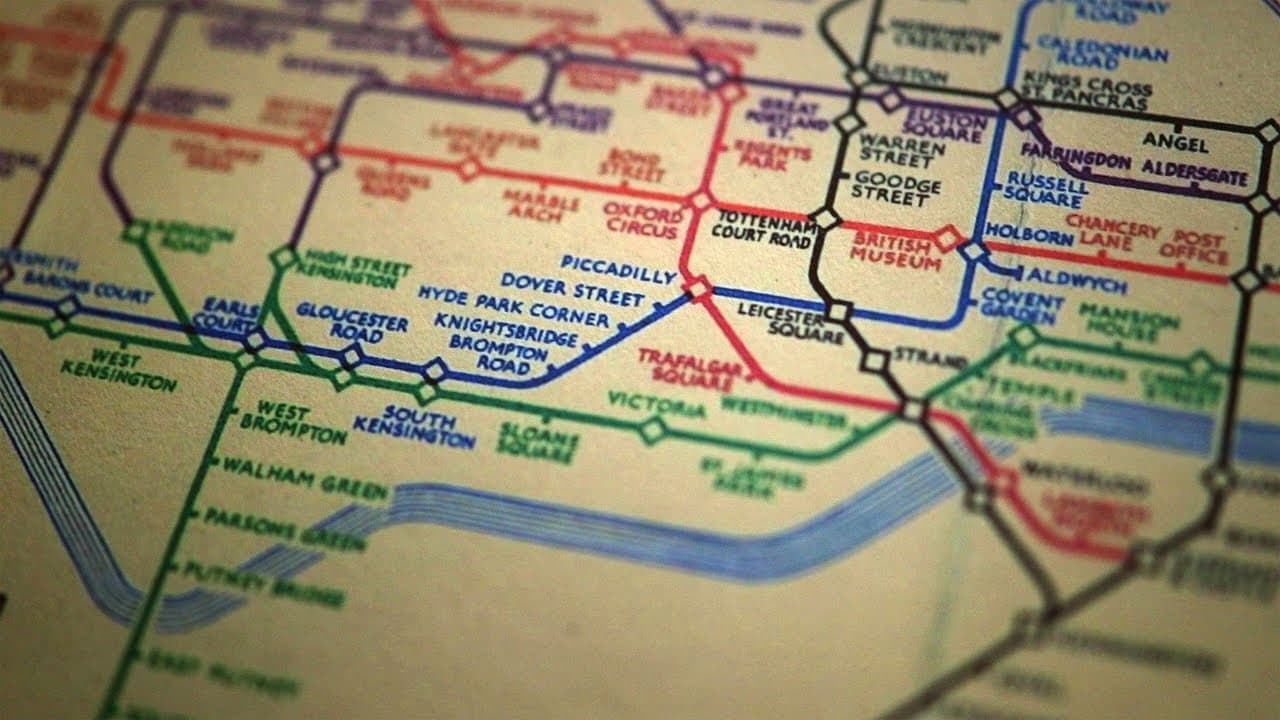
Harry Beck's redesign of the London Tube Map revolutionized public transport navigation by prioritizing functionality over geographical accuracy. His approach, which simplifies complex systems into clear diagrams for user convenience, has influenced metro map designs worldwide, showcasing the effectiveness of user-centered design principles.
Transcript
Translator: Krystian Aparta Reviewer: Camille Martínez The history of civilization, in some ways, is a history of maps: How have we come to understand the world around us? One of the most famous maps works because it really isn't a map at all. [Small thing. Big idea.] [Michael Bierut on the London Tube Map] The London Underground came together in 1... Read More
Key Insights
- 📍 The history of civilization can be understood through the evolution of maps, highlighting our quest for understanding the world around us.
- 💡 Harry Beck's redesign of the London Tube Map revolutionized the way we depict complex systems, prioritizing the system's functionality over geographical accuracy.
- 🚇 Beck's design principles, such as simplicity and focus on user needs, can be applied to various design problems, emphasizing the importance of a user-centered approach.
- 🌍 Metro maps in cities like Tokyo, Paris, Berlin, São Paulo, Sydney, and Washington, D.C. have adopted Beck's principles, converting complex geography into simple and recognizable designs.
- 🎨 Different colors and symbols are used to distinguish between lines and station types in metro maps worldwide, creating a universal language for navigation.
- 🔑 With just a pencil and an idea, Harry Beck, an engineering draftsman, transformed one of the world's most complicated systems, showcasing the power of innovative thinking.
- ⚡️ Beck's map design can be compared to a circuitry diagram, highlighting the transition from traditional maps to simplified and functional representations.
- 🤝 The cross-disciplinary approach employed by Beck, an electrical engineer, demonstrates the benefits of thinking beyond one's specific field to solve complex problems.
Install to Summarize YouTube Videos and Get Transcripts
Explore YouTube Video Summarizer or Get YouTube Transcript Extractor
Questions & Answers
Q: How did Harry Beck simplify the London Tube Map?
Harry Beck simplified the London Tube Map by recognizing that people riding underground in trains only care about getting from station to station, not about the aboveground geography. He simplified the complex system by representing the lines in only three directions (horizontal, vertical, and 45 degrees), spacing the stations equally, and using color coding to match the line color. This transformed the map into a diagram that prioritized the system rather than the geography.
Q: What was the impact of Harry Beck's map design on the London Underground?
When the London Underground decided to give Harry Beck's map a try in 1933, it became an instant success. A thousand pocket-size maps were distributed and gone within an hour. This prompted the printing of 750,000 more copies. Beck's design became the template for metro maps worldwide, as cities like Tokyo, Paris, Berlin, São Paulo, Sydney, and Washington, D.C. adopted similar principles, converting complex geography into crisp geometry.
Q: What principles did Harry Beck apply in designing the London Tube Map?
Harry Beck applied three principles in designing the London Tube Map. The first principle is focus, where he considered the needs of the riders and focused on creating a map that served them effectively. The second principle is simplicity, finding the shortest and most efficient way to deliver the necessary information. The third principle is thinking in a cross-disciplinary way, which allowed Beck, an electrical engineer, to approach the map design problem from a different perspective.
Q: How did Harry Beck's map design influence future design concepts?
Harry Beck's map design revolutionized the way we think about metro maps today. It inspired cities around the world to convert their complex geography into simpler, geometrical representations. Beck's use of color coding to distinguish between lines and simple symbols to represent different types of stations created a universal language for metro maps. His design principles of focus, simplicity, and cross-disciplinary thinking can be applied to various design problems beyond the realm of maps.
Summary & Key Takeaways
-
Harry Beck simplified the complex and geographically accurate map of the London Underground into a diagram that focused on the system rather than the geography.
-
Beck's design became the template for metro maps used in cities worldwide, converting complex geography into crisp and simple geometry.
-
Beck's approach, focusing on the user, simplicity, and cross-disciplinary thinking, can be applied to various design problems.
Read in Other Languages (beta)
Share This Summary 📚
Summarize YouTube Videos and Get Video Transcripts with 1-Click
Try YouTube Summary with ChatGPT & Claude or YouTube Transcript Generator
Explore More Summaries from TED 📚






Summarize YouTube Videos and Get Video Transcripts with 1-Click
Try YouTube Summary with ChatGPT & Claude or YouTube Transcript Generator