New Details about Interstellar Visitor on This Week @NASA – November 24, 2017

TL;DR
New data reveals the first confirmed interstellar asteroid in our solar system, a satellite is launched to improve weather forecasts, cryogenic testing for the James Webb Space Telescope is completed, Martian dark features may be caused by flowing sand and dust, and astronauts aboard the International Space Station celebrate Thanksgiving.
Transcript
“Here’s some of the stories trending This Week at NASA!” New data reveal that the interstellar asteroid that recently zipped through our solar system is rocky, cigar-shaped, and has a somewhat reddish hue. It’s the first confirmed object from another star observed in our solar system, and was discovered Oct. 19 by the University of Hawaii’s Pan-STA... Read More
Key Insights
- 🚬 'Oumuamua, the interstellar asteroid, is rocky, cigar-shaped, and has a reddish hue.
- 🚀 JPSS-1 was launched to improve weather forecasting accuracy by utilizing advanced technology.
- 🏁 The cryogenic testing of the James Webb Space Telescope was a significant milestone in its journey to the launchpad.
- ⏳ Martian dark features, previously thought to be evidence of subsurface water, are likely caused by flowing sand and dust.
Install to Summarize YouTube Videos and Get Transcripts
Explore YouTube Video Summarizer or Get YouTube Transcript Extractor
Questions & Answers
Q: What is 'Oumuamua and why is it significant?
'Oumuamua is an interstellar asteroid observed in our solar system. It is the first confirmed object from another star and may provide valuable insights into the formation of other solar systems.
Q: What is the purpose of JPSS-1?
JPSS-1 is a satellite designed to improve weather forecasts by capturing precise observations of the atmosphere, land, and waters. It aims to enhance the accuracy of forecasts up to seven days in advance.
Q: What is the James Webb Space Telescope and what is its purpose?
The James Webb Space Telescope is a future space telescope that will study every phase in the history of the Universe, starting from the first luminous glows after the Big Bang. It aims to provide groundbreaking insights into the cosmos.
Q: What causes the dark features on Mars?
Recent research suggests that the dark features on Mars, known as recurring slope lineae (RSL), are caused by flowing grains of sand and dust rather than subsurface flowing water. This challenges previous theories of liquid water on the surface of Mars.
Summary & Key Takeaways
-
An interstellar asteroid, named 'Oumuamua, was observed in our solar system and may provide insights into how other solar systems formed.
-
The Joint Polar Satellite System-1 (JPSS-1) was launched to enhance weather forecasts by capturing precise observations of the atmosphere, land, and waters.
-
Cryogenic testing for the James Webb Space Telescope, which aims to study the history of the Universe, has been completed at the Johnson Space Center.
-
Recent research suggests that dark features on Mars, previously thought to be evidence of flowing water, are actually caused by flowing sand and dust.
-
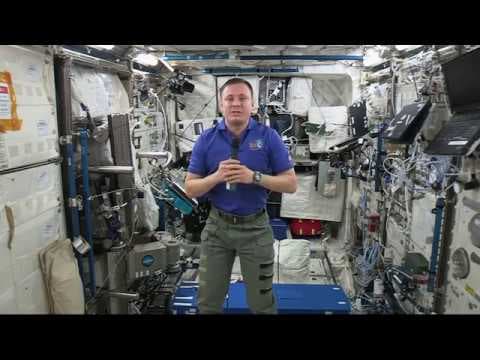
Astronauts aboard the International Space Station shared a traditional Thanksgiving meal in space.
Read in Other Languages (beta)
Share This Summary 📚
Summarize YouTube Videos and Get Video Transcripts with 1-Click
Try YouTube Summary with ChatGPT & Claude or YouTube Transcript Generator
Explore More Summaries from NASA 📚

Summarize YouTube Videos and Get Video Transcripts with 1-Click
Try YouTube Summary with ChatGPT & Claude or YouTube Transcript Generator