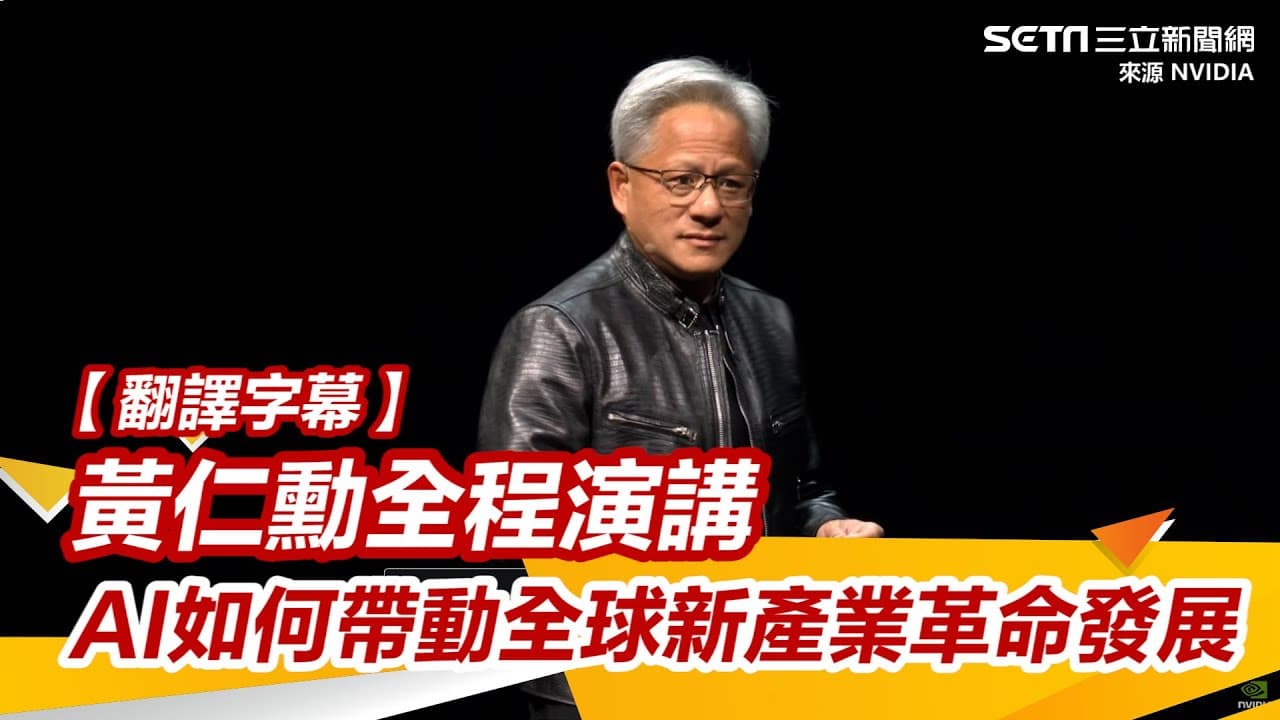
【翻譯字幕】NVIDIA執行長黃仁勳全程演講 「AI如何帶動全球新產業革命發展」|三立新聞網 SETN.com
TL;DR
Nvidia's innovations in generative AI and accelerated computing are shaping future technologies and industries.
Transcript
all right let's get started good take good take oh je okay you guys ready yeah yeah everybody thinks we make GPS I video is so much more than that this whole Kino going to be about that okay so we'll start at the top examples of the use cases and then seeing it in action that's kind of the flow it's such a compelling story I'm super nervous about t... Read More
Key Insights
- 💻 Nvidia is redefining the landscape of computing with pioneering technologies in generative AI and accelerated computing, enabling faster and more efficient data processing.
- 👶 The company's architecture supports a virtuous cycle of AI development, where reduced computing costs drive innovation and new applications in diverse industries.
- 🧡 Generative AI models are now a commodity, with potential applications in sectors ranging from healthcare to gaming, ultimately reshaping how businesses operate and engage with consumers.
- ✳️ The shift toward digital simulations in robotics, facilitated by Nvidia's Omniverse platform, is streamlining the training and deployment of autonomous systems, minimizing risks and costs.
- 👨🔬 Expansion of architectural frameworks for large-scale AI models enhances computational capabilities, further positioning Nvidia at the forefront of AI research and application development.
- ✋ The focus on energy-efficient AI solutions reflects a commitment to sustainable technology growth while maintaining high performance across data centers.
- 😀 Digital humans created by Nvidia represent a significant leap in human-computer interaction, making AI more relatable and effective in customer-facing roles.
Install to Summarize YouTube Videos and Get Transcripts
Explore YouTube Video Summarizer or Get YouTube Transcript Extractor
Questions & Answers
Q: What are the key technologies driving Nvidia's innovations?
Nvidia emphasizes accelerated computing and generative AI as foundational forces reshaping the computer industry. Accelerated computing leverages specialized processors like GPUs alongside CPUs to handle increasingly complex workloads. Generative AI enables machines to create and understand data in various formats, significantly enhancing natural language processing and image generation. This combination optimizes performance and reduces costs.
Q: How does accelerated computing address the issue of computational inflation?
Computational inflation arises when the data processing requirements exceed the capabilities of traditional CPUs. Nvidia’s accelerated computing approach, particularly through the use of GPUs, addresses this by offloading complex computations to specialized processors, significantly increasing efficiency. This shift ensures that tasks that would traditionally take a long time can be completed rapidly, effectively managing the growing data demands of modern industries.
Q: What are the implications of digital humans in the industry?
Digital humans represent a significant advancement in AI, enabling more personalized and engaging interactions in sectors like customer service and healthcare. These AI-driven entities can understand and respond to human emotions, providing empathetic interactions that enhance user experience. This technology has profound implications for automating and improving customer engagement across various industries.
Q: How is Nvidia contributing to the field of robotics?
Nvidia is at the forefront of robotics development by integrating generative AI and physical AI to create intelligent systems. Their Omniverse platform allows robots to be trained in simulated environments, reducing development time and real-world errors. This innovation is leading to more autonomous robots capable of complex tasks in manufacturing, logistics, and many other applications.
Q: Can you explain the significance of generative AI in the context of Nvidia's developments?
Generative AI is crucial for creating new types of data and uncovering previously unattainable insights through large datasets. Nvidia's advancements in this area, such as generative models and token production, allow for rapid innovation in machine-learning applications. This technology fosters an environment rich in new ideas and applications, effectively driving industries toward a new era of AI-driven solutions.
Q: What future applications do you foresee with Nvidia's technologies?
Nvidia's technologies will likely revolutionize various sectors, from autonomous vehicles to smart manufacturing and healthcare. The integration of AI into industrial processes is expected to result in fully autonomous factories and advanced customer service solutions powered by digital humans. The ongoing evolution of generative AI technologies could lead to unprecedented capabilities in creativity and problem-solving across industries.
Summary & Key Takeaways
-
Nvidia highlights the significance of accelerated computing and generative AI in reshaping the computer industry, showcasing various use cases that illustrate these technologies' impacts across sectors.
-
The company's advancements include the development of robust AI architectures and tools that enable significant performance improvements while reducing energy consumption and operational costs in data centers.
-
The introduction of digital humans and robotics powered by physical AI illustrates Nvidia's vision for the future, where AI interacts with industries and enhances efficiencies in manufacturing and customer service.
Read in Other Languages (beta)
Share This Summary 📚
Summarize YouTube Videos and Get Video Transcripts with 1-Click
Try YouTube Summary with ChatGPT & Claude or YouTube Transcript Generator