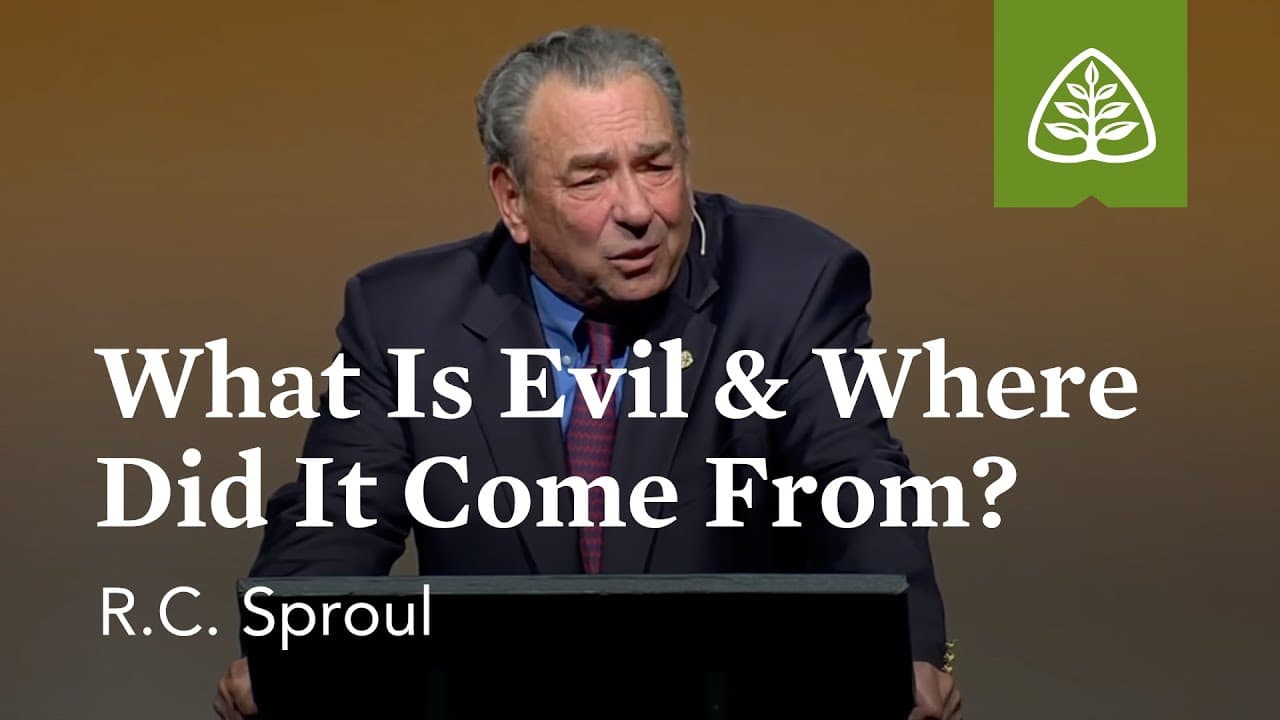
R.C. Sproul: What Is Evil & Where Did It Come From?
TL;DR
Evil has no ontological status and is not a substance or independent entity. It is defined by negation and privation, and is an action of something that is a being.
Transcript
Well, it’s not fair. I don’t dream up the themes for our conferences each year. The staff does that, and then they come to me give assignments as to what I’m supposed to address. And you notice on the board a moment ago that I had been given two questions to address, each of which would be worthy of a lengthy series to consider, and I’m supposed to... Read More
Key Insights
- 😈 Evil is not a material substance but an action or activity of something that is a being.
- 😈 The entrance of evil into the world serves a redemptive purpose, although the exact reasons may remain unknown.
- 😈 Good and evil are inseparable concepts, with the presence of evil highlighting the existence of good.
- 😈 The problem of evil is a thorny and complex issue that has challenged philosophers and theologians throughout history.
- 😒 God has sovereign power over evil and can use it for His purposes, ultimately leading to its ultimate defeat.
- 😈 While evil is a reality, it is not an excuse for our own sinful actions, as we are morally responsible for our choices.
Install to Summarize YouTube Videos and Get Transcripts
Explore YouTube Video Summarizer or Get YouTube Transcript Extractor
Questions & Answers
Q: How is evil defined in terms of negation and privation?
Evil is understood in terms of what it is not, with negation and privation defining its nature. It is the absence or lack of goodness, justice, or righteousness.
Q: Can evil be considered an illusion?
While evil is not an independent substance, it is real and has genuine effects and impact. It cannot be dismissed as an illusion, as it exists as an activity or choice that goes against the good.
Q: How does the entrance of evil into the world serve a redemptive purpose?
Though the origin of evil is still a mystery, it is evident that God has ordained its existence for a greater purpose, such as bringing about redemption and displaying His sovereign power over evil.
Q: How does the presence of evil point to the existence of good?
Evil can only be identified and understood against the backdrop of good. The existence of evil indirectly points to the reality of goodness and supports the argument for the existence of God as the author of goodness.
Key Insights:
- Evil is not a material substance but an action or activity of something that is a being.
- The entrance of evil into the world serves a redemptive purpose, although the exact reasons may remain unknown.
- Good and evil are inseparable concepts, with the presence of evil highlighting the existence of good.
- The problem of evil is a thorny and complex issue that has challenged philosophers and theologians throughout history.
- God has sovereign power over evil and can use it for His purposes, ultimately leading to its ultimate defeat.
- While evil is a reality, it is not an excuse for our own sinful actions, as we are morally responsible for our choices.
- The future holds the promise of the complete eradication of evil and the triumph of God's grace.
Summary & Key Takeaways
-
Evil is not a thing that has existence, but rather an action or activity of a being.
-
Evil is defined by negation and privation, and can only be understood against the backdrop of good.
-
The entrance of evil into the world serves a redemptive purpose and is ultimately under the sovereign control of God.
Read in Other Languages (beta)
Share This Summary 📚
Summarize YouTube Videos and Get Video Transcripts with 1-Click
Try YouTube Summary with ChatGPT & Claude or YouTube Transcript Generator
Explore More Summaries from Ligonier Ministries 📚



Summarize YouTube Videos and Get Video Transcripts with 1-Click
Try YouTube Summary with ChatGPT & Claude or YouTube Transcript Generator