What Is the Looking Glass Holographic Display?
TL;DR
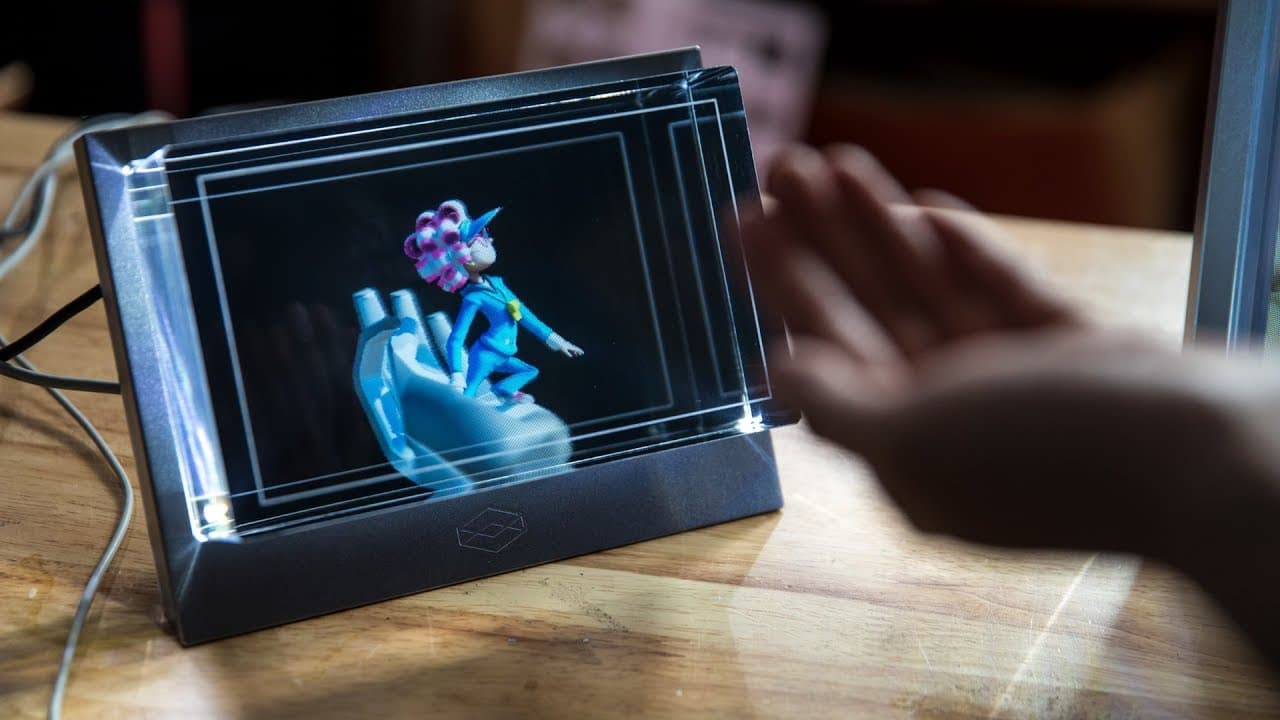
The Looking Glass is an innovative holographic display merging light field and volumetric technologies to present lifelike 3D visuals without headgear. Ideal for 3D artists, it features a 50-degree wide view for multiple users and supports various interactive peripherals. Launching on Kickstarter, it aims to transform how we engage with 3D content.
Transcript
hey everybody its norm from tested and back in our shop we have Sean frame welcome back CEO looking glass factory you have brought some interesting displays come calm displays and it was only six months ago that you came here with your hollow player1 yeah any before that in 2016 you guys at a product called volume as a company you've always... Read More
Key Insights
- The Looking Glass combines light field and volumetric display technologies to create a non-headgear hologram that can sit on a desk, offering a blend of full opacity and depth.
- It utilizes 45 different views of a 3D scene, projected simultaneously to create a realistic holographic effect without discrete planes, resembling a lenticular flipbook.
- The display's wide 50-degree field of view allows multiple viewers to experience the 3D content without needing to find a 'sweet spot' for optimal viewing.
- Manufactured with a lens overlay and a block of lucite, the Looking Glass balances hardware and software advancements to render 3D content at 60 frames per second.
- The display supports various peripheral devices for interaction, including Leap Motion and Kinect, enhancing user engagement with the holographic content.
- The Looking Glass is designed for 3D artists to visualize models from software like Unity or Maya and supports content from repositories like Sketchfab.
- Volumetric video capture is possible with professional setups, and experimental apps for consumer devices are in development, hinting at future mainstream adoption.
- The product is being launched on Kickstarter to connect with a community of 3D creators, aiming to bring the dream of accessible holography to life.
Install to Summarize YouTube Videos and Get Transcripts
Explore YouTube Video Summarizer or Get YouTube Transcript Extractor
Questions & Answers
Q: What is the main technology behind The Looking Glass?
The Looking Glass uses a combination of light field and volumetric display technologies to create a holographic effect. It projects 45 different views of a 3D scene simultaneously, creating a realistic image that appears to have depth and opacity, without the need for headgear.
Q: How does The Looking Glass differ from traditional volumetric displays?
Unlike traditional volumetric displays that use discrete planes, The Looking Glass creates a continuous holographic image by interlacing multiple views of a scene. This method eliminates the ephemeral quality of volumetric displays, resulting in a more realistic and solid appearance of 3D objects.
Q: What are the interactive capabilities of The Looking Glass?
The Looking Glass supports various interactive peripherals such as Leap Motion, Kinect, and even Joy-Con controllers. These devices allow users to interact with the holographic content in real-time, enhancing the experience and making it more engaging, especially for educational and creative applications.
Q: Who is the target audience for The Looking Glass?
The Looking Glass is primarily targeted at 3D artists, developers, and creators who use software like Unity or Maya. It is designed to help them visualize and interact with their 3D models and animations in a more immersive way, making it a valuable tool for creative professionals.
Q: How does The Looking Glass handle eye fatigue?
The Looking Glass is engineered to minimize eye fatigue by carefully controlling the depth and number of views presented. This ensures a comfortable viewing experience, allowing users of all ages to engage with the content for extended periods without discomfort.
Q: What kind of content can be displayed on The Looking Glass?
The Looking Glass can display a wide range of 3D content, including models from 3D creation software, volumetric video captures, and interactive applications. It is compatible with content from repositories like Sketchfab and supports various file formats, providing flexibility for creators.
Q: What is the future potential of The Looking Glass technology?
The Looking Glass has the potential to become a mainstream communication tool and memory storage device as volumetric capture technology becomes more accessible. Future developments could see it integrated with consumer devices, allowing users to capture and display personal memories in 3D.
Q: Why is The Looking Glass being launched on Kickstarter?
The Looking Glass is launching on Kickstarter to connect with a community of 3D creators who have previously supported similar innovative projects. The platform provides an opportunity to engage with early adopters and gather feedback, helping to refine the product and expand its reach in the creative industry.
Summary & Key Takeaways
-
The Looking Glass is a cutting-edge holographic display that merges light field and volumetric technologies to create realistic 3D images without the need for headgear. It offers a wide field of view, allowing multiple people to experience the holograms simultaneously.
-
Manufactured with advanced optical components, the display supports various interactive peripherals, making it a versatile tool for 3D artists and developers. It is particularly suited for visualizing 3D models and animations created in popular software.
-
The Looking Glass is being launched on Kickstarter to engage with a community of 3D creators, aiming to revolutionize how 3D content is displayed and interacted with. It represents a significant step towards making holographic displays a common tool in creative industries.
Read in Other Languages (beta)
Share This Summary 📚
Summarize YouTube Videos and Get Video Transcripts with 1-Click
Try YouTube Summary with ChatGPT & Claude or YouTube Transcript Generator
Explore More Summaries from Adam Savage’s Tested 📚
Summarize YouTube Videos and Get Video Transcripts with 1-Click
Try YouTube Summary with ChatGPT & Claude or YouTube Transcript Generator