How to Do Something That Should Be Easy (But...Is...Not)
TL;DR
Learn strategies to tackle emotional barriers effectively.
Transcript
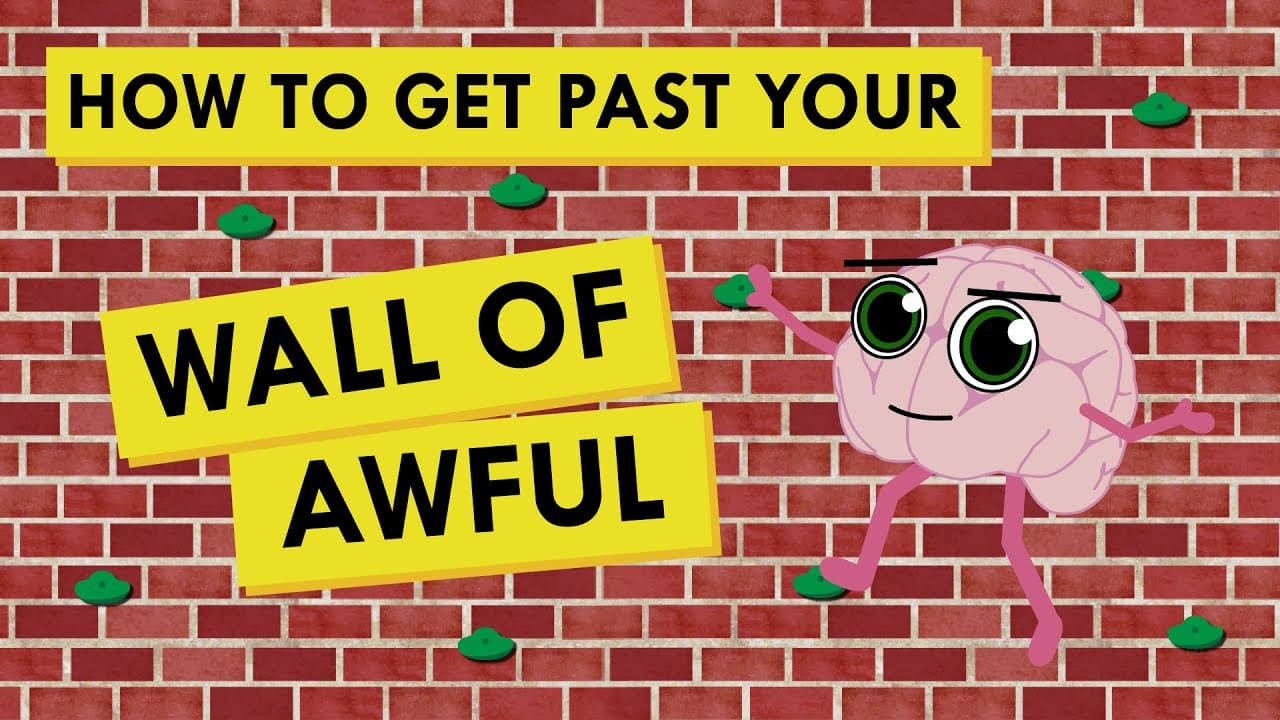
Hello Brains! Last time, we talked about the concept of the "Wall of Awful" and how to climb it. This week, we're going to talk about how to cheat. I mean...make it easier. I mean cheat! The "Wall of Awful" is a metaphor by Brendan Mahan of ADHD Essentials and I love it because it explains really well why we tend to have such a hard time with thing... Read More
Key Insights
- The 'Wall of Awful' is a metaphor for emotional barriers caused by past failures, making simple tasks feel daunting.
- Unhealthy ways to tackle the wall include avoidance and brute force, while healthier methods involve emotional state changes.
- Brendan Mahan suggests 'putting a door' in the wall by using music or dopamine-inducing activities to alter emotions.
- Exercise and novel experiences can provide temporary motivation by affecting emotional states and boosting dopamine levels.
- Long-term solutions involve creating 'handholds' by developing time management skills and setting clear goals.
- Reflection on past experiences helps build strategies to make future tasks easier, reducing the time spent overcoming barriers.
- Forgiveness and non-judgment prevent adding more emotional 'bricks' to the wall, promoting compassion and empathy.
- Transition time between tasks aids in managing anxiety and preparing mentally for upcoming activities.
Install to Summarize YouTube Videos and Get Transcripts
Explore YouTube Video Summarizer or Get YouTube Transcript Extractor
Questions & Answers
Q: What is the 'Wall of Awful'?
The 'Wall of Awful' is a metaphor created by Brendan Mahan to describe the emotional barriers that arise from past failures and negative experiences. These barriers make simple tasks feel overwhelming and challenging. The wall is composed of emotions like fear, shame, and frustration, which hinder progress and motivation.
Q: How can music help overcome the 'Wall of Awful'?
Music can help overcome the 'Wall of Awful' by altering an individual's emotional state. Listening to motivating or emotionally uplifting music can trigger a change in mood, providing a temporary boost in motivation and energy. This emotional shift can create a metaphorical 'door' in the wall, enabling individuals to tackle tasks they were previously avoiding.
Q: What are 'handholds' in the context of the 'Wall of Awful'?
'Handholds' refer to strategies that help individuals manage and reduce the impact of the 'Wall of Awful.' These include developing time management skills, setting clear and attainable goals, and allowing time for reflection and transition between tasks. Handholds provide practical tools to make tasks more manageable and reduce emotional barriers over time.
Q: Why is reflection important in overcoming the 'Wall of Awful'?
Reflection is important because it allows individuals to analyze past experiences, identify what worked and what didn't, and develop strategies for future tasks. By understanding the reasons behind successes and failures, individuals can create a plan to reduce the time and effort needed to overcome similar barriers in the future, ultimately making tasks easier to manage.
Q: How does forgiveness prevent adding more bricks to the 'Wall of Awful'?
Forgiveness prevents adding more bricks by reducing self-judgment and negative emotions associated with failures. When individuals approach challenges with empathy and understanding, they are less likely to internalize negative experiences. This compassionate mindset helps prevent the accumulation of emotional barriers, making it easier to tackle tasks without additional emotional weight.
Q: What role does dopamine play in overcoming the 'Wall of Awful'?
Dopamine plays a crucial role in motivation and reward. Activities that increase dopamine levels, such as exercise, listening to music, or engaging in novel experiences, can temporarily boost motivation and energy. This increase in dopamine helps individuals overcome the 'Wall of Awful' by providing the necessary drive to initiate and complete tasks.
Q: How can setting clear goals help with the 'Wall of Awful'?
Setting clear goals helps by providing a specific target to aim for, which reduces the ambiguity and overwhelm associated with tasks. Clear goals break down larger tasks into manageable steps, making it easier to focus and achieve progress. This clarity helps individuals navigate the 'Wall of Awful' by reducing the emotional weight of tasks.
Q: What is the significance of transition time in managing the 'Wall of Awful'?
Transition time is significant because it allows individuals to mentally prepare for upcoming tasks, reducing anxiety and stress. By allocating time to shift focus and gather thoughts, individuals can approach tasks with a clearer mindset. This preparation helps manage the emotional impact of the 'Wall of Awful,' making it easier to engage with and complete tasks effectively.
Summary & Key Takeaways
-
The 'Wall of Awful' represents emotional barriers that make simple tasks feel difficult. These barriers are built from past failures and negative emotions. Strategies to overcome them include changing emotional states through music or exercise and creating handholds with time management and goal-setting.
-
Brendan Mahan's concept of 'putting a door' in the wall involves using dopamine-inducing activities to alter emotions temporarily. While this approach offers immediate relief, it doesn't address the root causes of the barriers, which may require long-term strategies like reflection and planning.
-
Forgiveness and understanding are crucial to prevent adding more emotional bricks to the wall. By approaching challenges with empathy and non-judgment, individuals can reduce the burden of negative emotions, making it easier to tackle tasks and achieve goals.
Read in Other Languages (beta)
Share This Summary 📚
Summarize YouTube Videos and Get Video Transcripts with 1-Click
Try YouTube Summary with ChatGPT & Claude or YouTube Transcript Generator
Explore More Summaries from How to ADHD 📚


Summarize YouTube Videos and Get Video Transcripts with 1-Click
Try YouTube Summary with ChatGPT & Claude or YouTube Transcript Generator