How Did the Dutch East India Company Dominate?
TL;DR
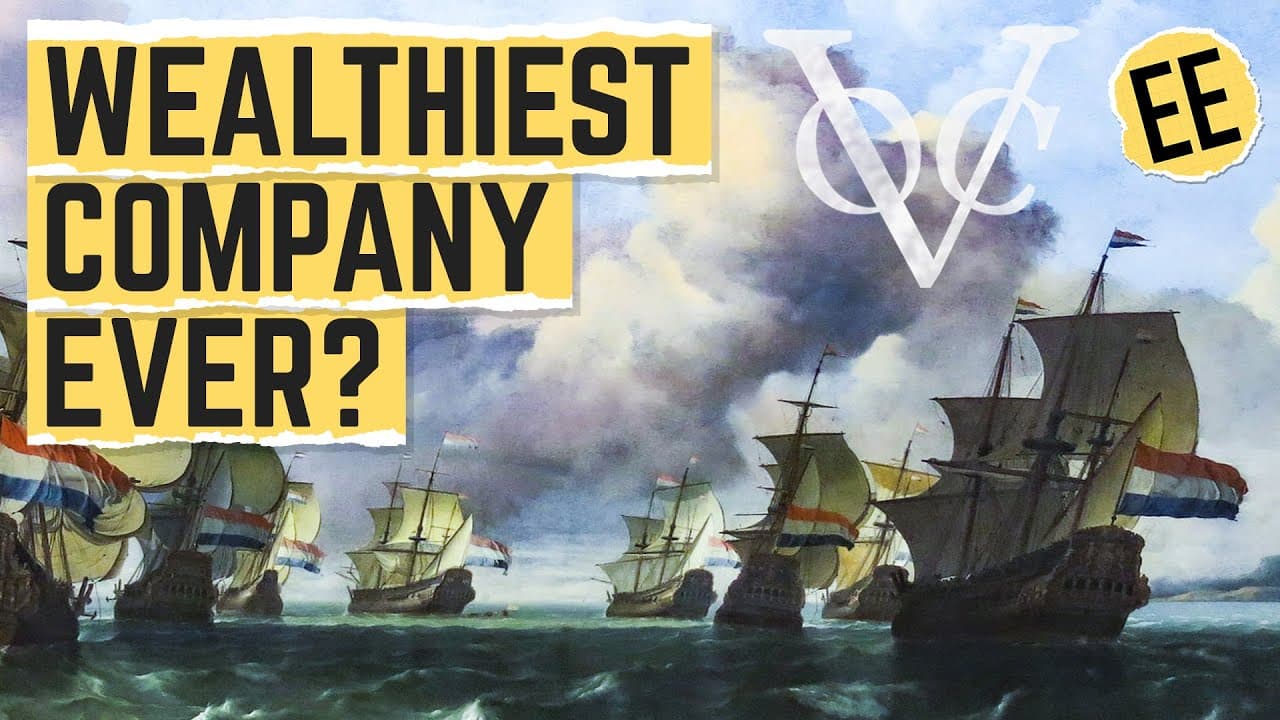
The Dutch East India Company (VOC) achieved unprecedented scale and influence by pioneering modern business practices like vertical integration and stock markets. It controlled significant global trade routes and operated with governmental powers, including a military presence. Despite its historical significance, its valuation is often misunderstood due to inflation misconceptions.
Transcript
trillion-dollar mega corporations are a very big deal these days there are about two or three of these companies that exist in the modern world and they are primarily tech companies that have achieved this status by capitalizing on cutting-edge modern technology and probably a bit of optimistic speculation but there is one corporation that has snak... Read More
Key Insights
- The Dutch East India Company was granted exclusive trading rights in the Far East, allowing it to dominate spice trade routes.
- Vertical integration allowed the company to control every aspect of production and distribution, similar to modern corporations like Tesla.
- It was one of the first companies to issue stock, enabling collective investment in high-risk ventures.
- The VOC operated with governmental powers, including the ability to wage war and enforce laws, blurring lines between corporation and state.
- At its peak, the VOC was valued at around 78 million Dutch guilders, but modern inflation calculations often overestimate its worth.
- The VOC's influence was immense, controlling a larger share of global trade than any modern corporation, despite the smaller global economy.
- The company eventually faced decline due to corruption, competition, and changing economic theories like the end of mercantilism.
- The VOC's structures and systems laid the groundwork for modern multinational corporations and global trade practices.
Install to Summarize YouTube Videos and Get Transcripts
Explore YouTube Video Summarizer or Get YouTube Transcript Extractor
Questions & Answers
Q: How did the Dutch East India Company achieve dominance in global trade?
The Dutch East India Company (VOC) achieved dominance by securing exclusive trading rights in the Far East, allowing it to control spice trade routes. It implemented vertical integration, owning ships, ports, and plantations, thus controlling the entire supply chain. This strategy, combined with governmental powers like waging war, enabled the VOC to become a powerful entity in global trade.
Q: What is vertical integration and how did VOC use it?
Vertical integration involves controlling multiple stages of production and distribution within a single company. The VOC used this strategy by owning ships, ports, and plantations, allowing it to manage the entire process of acquiring and selling spices. This reduced costs and increased control, similar to how modern companies like Tesla operate today.
Q: Why is the valuation of the Dutch East India Company often misunderstood?
The valuation of the Dutch East India Company is often misunderstood due to incorrect inflation adjustments. While some claim it was worth trillions today, this overlooks the historical context. At its peak, it was valued at 78 million Dutch guilders, which does not equate to trillions when considering historical inflation and economic conditions of the 17th century.
Q: What role did the VOC play in the development of modern corporations?
The VOC played a crucial role in developing modern corporations by pioneering practices like issuing stock and vertical integration. It also demonstrated the benefits of controlling entire supply chains and using collective investment to fund high-risk ventures. These practices laid the foundation for today's multinational corporations and global trade systems.
Q: How did the VOC's governmental powers affect its operations?
The VOC's governmental powers allowed it to operate beyond a typical corporation, with the ability to wage war, enforce laws, and claim colonies. This blurred the lines between corporation and state, enabling the VOC to protect its trade interests and exert significant influence in global politics and economics during its time.
Q: Why did the Dutch East India Company eventually decline?
The Dutch East India Company eventually declined due to internal corruption, competition from other European trading companies, and the shift away from mercantilism as economic theories evolved. These factors, along with operational challenges, led to its downfall despite its earlier success and influence in global trade.
Q: How did the VOC influence global trade practices?
The VOC influenced global trade practices by establishing systems for stock issuance and collective investment, allowing individuals to fund high-risk ventures. Its vertical integration model demonstrated the efficiency of controlling supply chains, and its governmental powers set precedents for corporate influence in political and economic arenas.
Q: What misconceptions exist about the VOC's economic impact?
Misconceptions about the VOC's economic impact include overestimating its modern-day valuation due to inflation misunderstandings. While it controlled a significant share of global trade, the overall economy was much smaller, and its influence, though substantial, is often exaggerated in terms of financial worth when compared to today's corporations.
Summary & Key Takeaways
-
The Dutch East India Company (VOC) was a pioneer in modern business practices, achieving significant influence through exclusive trading rights and vertical integration. It controlled global trade routes and operated with governmental powers, making it a powerful entity in the 17th century.
-
Despite its historical significance, the VOC's valuation is often misunderstood due to inflation misconceptions. At its peak, it was valued at 78 million Dutch guilders, but this does not translate to trillions in today's dollars.
-
The VOC eventually declined due to corruption, competition, and the end of mercantilism. Its legacy, however, includes laying the groundwork for modern multinational corporations and global trade practices.
Read in Other Languages (beta)
Share This Summary 📚
Summarize YouTube Videos and Get Video Transcripts with 1-Click
Try YouTube Summary with ChatGPT & Claude or YouTube Transcript Generator
Explore More Summaries from Economics Explained 📚

Summarize YouTube Videos and Get Video Transcripts with 1-Click
Try YouTube Summary with ChatGPT & Claude or YouTube Transcript Generator