Why Parents Remove Their Kids From School
TL;DR
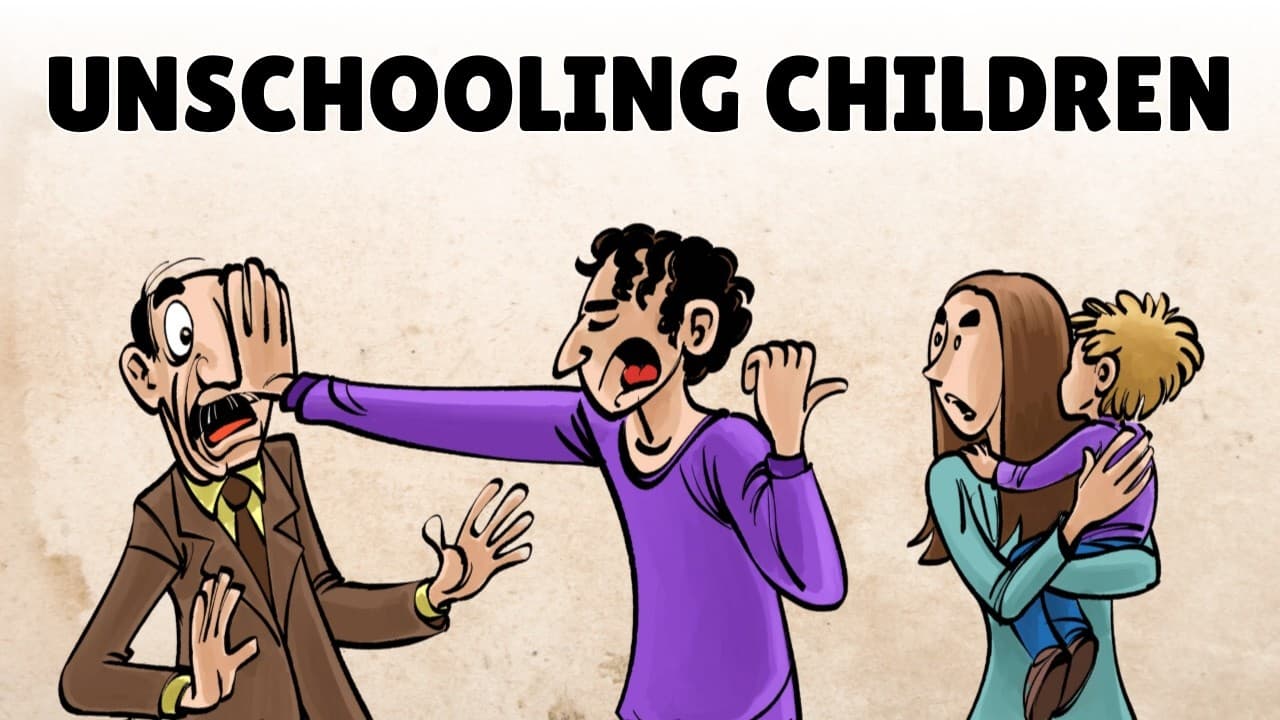
Unschooling is a form of education that prioritizes learning through life experiences and independent decision-making, offering an alternative to traditional classroom-based schooling.
Transcript
Imagine you get sent, day in and day out, to a random company to work without pay. Each workday starts with an hour-long meeting followed by another meeting, and another meeting and so on and so forth. All meetings are on different, seemingly random corporate objectives: focus on x, improve y, remember z. Your primary job: sit down, shut up, listen... Read More
Key Insights
- 🥺 Frederick the Great introduced compulsory education in 1763, leading to the development of modern factory schools.
- 👨🏫 Governments worldwide adopted state-controlled education systems, making school attendance compulsory.
- 👻 Unschooling allows for personalized learning experiences, independent decision-making, and a focus on individual interests.
- 👪 Parents who choose unschooling prioritize a stronger parent-child relationship, autonomy, critical thinking, and exploration of diverse subjects.
- 😷 Traditional schooling often emphasizes following instructions, conformity, and asking what to learn, while unschooling encourages independent thinking and asking why to learn.
- 😑 Critics of unschooling express concerns about lack of structure, socialization, standardized testing, and preparation for traditional academic institutions.
- 👶 The debate over who should decide a child's education involves arguments for parental freedom and state-imposed educational standards.
Install to Summarize YouTube Videos and Get Transcripts
Explore YouTube Video Summarizer or Get YouTube Transcript Extractor
Questions & Answers
Q: What is unschooling and how does it differ from homeschooling?
Unschooling is a form of education where learning happens through life experiences, independent decision-making, and without a formal curriculum. In contrast, homeschooling usually involves following a structured curriculum at home.
Q: Why do some parents choose unschooling over traditional schooling?
There are several reasons why parents choose unschooling. It allows for a stronger parent-child relationship, personalized learning, autonomous decision-making, questioning social norms, and exploring a broader range of interests.
Q: What are the concerns or drawbacks of unschooling?
Critics argue that unschooling may lack structure, socialization opportunities, standardized testing, and preparation for traditional academic institutions. There are also concerns about ensuring a well-rounded education and meeting educational standards set by the state.
Q: Who should have the authority to decide what is taught to children: the state or parents?
The question of who should have the ultimate say in a child's education is highly debated. Some argue that parents should have the freedom to choose their child's education, while others believe that the state should set educational standards to ensure a consistent level of education for all children.
Key Insights:
- Frederick the Great introduced compulsory education in 1763, leading to the development of modern factory schools.
- Governments worldwide adopted state-controlled education systems, making school attendance compulsory.
- Unschooling allows for personalized learning experiences, independent decision-making, and a focus on individual interests.
- Parents who choose unschooling prioritize a stronger parent-child relationship, autonomy, critical thinking, and exploration of diverse subjects.
- Traditional schooling often emphasizes following instructions, conformity, and asking what to learn, while unschooling encourages independent thinking and asking why to learn.
- Critics of unschooling express concerns about lack of structure, socialization, standardized testing, and preparation for traditional academic institutions.
- The debate over who should decide a child's education involves arguments for parental freedom and state-imposed educational standards.
- Unschooling can foster a love for learning, self-motivation, and the development of critical thinking skills.
Summary & Key Takeaways
-
Unschooling is the process of learning through life experiences outside of institutionalized classrooms, typically happening at home or in other places.
-
Unlike homeschooling, unschooling does not follow a formal curriculum, allowing children to learn through play, chores, travel, books, elective classes, internships, mentors, and living in a community.
-
Parents or tutors play a significant role in unschooling by providing resources, facilitating learning experiences, and helping children reflect on their progress.
Read in Other Languages (beta)
Share This Summary 📚
Summarize YouTube Videos and Get Video Transcripts with 1-Click
Try YouTube Summary with ChatGPT & Claude or YouTube Transcript Generator
Explore More Summaries from Sprouts 📚

Summarize YouTube Videos and Get Video Transcripts with 1-Click
Try YouTube Summary with ChatGPT & Claude or YouTube Transcript Generator