The Carnivorous Plants That Gave Up Meat for Poop
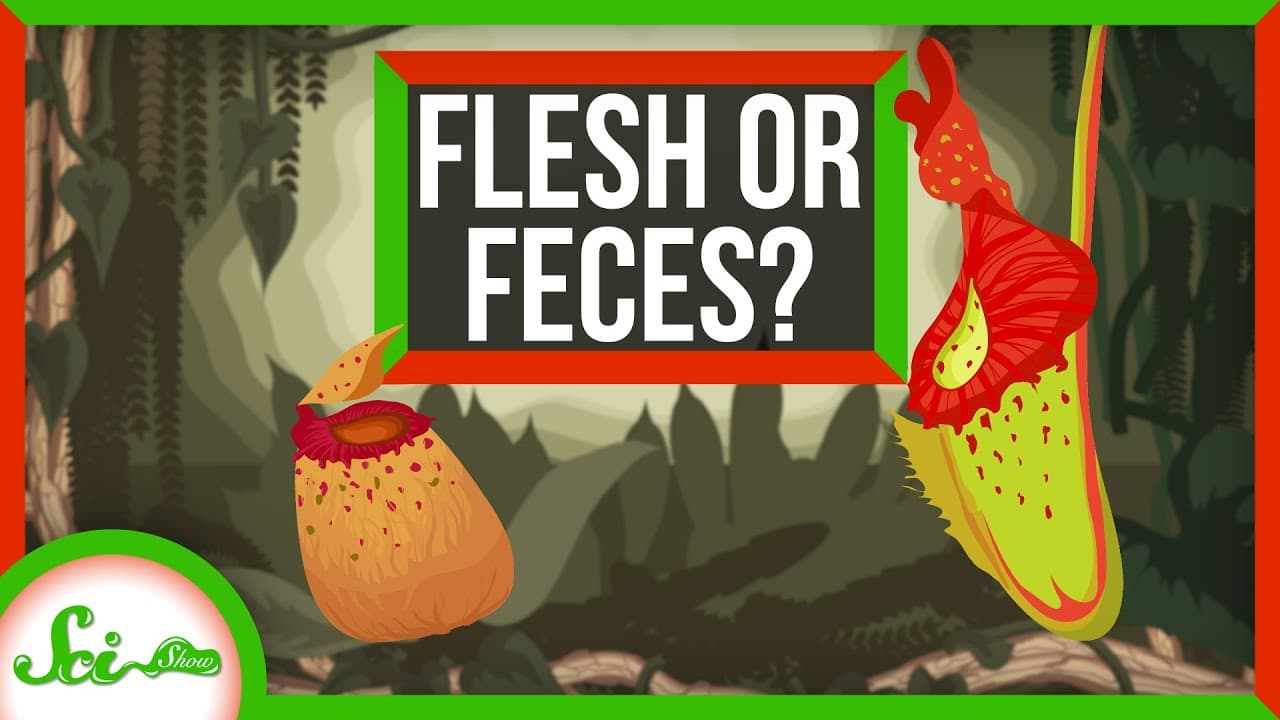
TL;DR
Some carnivorous plants in Borneo have formed partnerships with ants, tree shrews, and bats, using their waste as a source of nitrogen and nutrients to help them grow.
Transcript
[♪ INTRO] Plants get most of their food from sunlight and air, but they also need nutrients like nitrogen to survive. And in parts of the world where the soil doesn’t have a lot of nitrogen, some plants have evolved a pretty macabre way to meet their needs: they kill and eat animals. And it turns out that some carnivorous plants in Borneo go to eve... Read More
Key Insights
- 🌱 Some carnivorous plants in Borneo form partnerships with ants, tree shrews, and bats, using their waste as a source of nutrients.
- 🌱 Diving ants benefit the fanged pitcher plant by hunting other insects, dropping food into the pitcher, and pooping directly into the pitcher juice.
- 🤑 Tree shrews provide nitrogen-rich feces for pitcher plants in exchange for access to sweet nectar.
- 🌱 Pitcher plants with ear-shaped lids attract roosting bats, which provide guano for the plant.
- 💨 These unique partnerships highlight the diverse ways in which organisms obtain nutrition and the interconnectedness of ecosystems in Borneo.
- 🛀 Nepenthes pitcher plants have evolved various adaptations to benefit from these partnerships, including protective mechanisms for immature pitchers and reflective lid shapes for bat roosting.
Install to Summarize YouTube Videos and Get Transcripts
Explore YouTube Video Summarizer or Get YouTube Transcript Extractor
Questions & Answers
Q: How do diving ants benefit fanged pitcher plants?
Although diving ants live inside the pitcher plant's tendrils and steal the plant's prey, they help the plant by hunting other insects, dropping bits of food into the pitcher, and pooping directly into the pitcher juice, providing the plant with valuable nitrogen.
Q: How do pitcher plants attract tree shrews?
Low's pitcher plants produce nectar that attracts tree shrews. These shrews mark places where they find good food with poop, and as they lick off the nectar, the pitcher plant receives nitrogen and other nutrients from their droppings.
Q: Why do pitcher plants have ear-shaped lids?
Nepenthes hemsleyana has pitchers with ear-shaped lids as a perfect reflector of the ultrasound cries that Hardwicke's woolly bats use for echolocation. This allows the bats to easily locate the pitchers and roost inside, providing guano for the plant in return.
Q: How do pitcher plants protect their immature toilet pitchers from shrews?
Scientists believe that pitcher plants have evolved a mechanism to protect immature pitchers from shrews until they are sturdy enough to support the shrew's weight. Fully-mature pitchers change color and become dark purple, signaling to the shrews that the nectar toilet is open for business.
Summary & Key Takeaways
-
Carnivorous plants in Borneo, such as the fanged pitcher plant, benefit from a partnership with diving ants, which provide extra nitrogen through their feces.
-
Other plants, like Low's pitcher plants, attract mountain tree shrews with sweet nectar and receive up to 100% of their nitrogen from the shrews' poop.
-
Nepenthes hemsleyana has pitchers with ear-shaped lids that provide a roosting spot for Hardwicke's woolly bats, which in turn provide guano for the plant.
Read in Other Languages (beta)
Share This Summary 📚
Summarize YouTube Videos and Get Video Transcripts with 1-Click
Try YouTube Summary with ChatGPT & Claude or YouTube Transcript Generator
Explore More Summaries from SciShow 📚


Summarize YouTube Videos and Get Video Transcripts with 1-Click
Try YouTube Summary with ChatGPT & Claude or YouTube Transcript Generator