Products
Features
YouTube Video Summarizer
Summarize YouTube videos
Web & PDF Highlighter
Highlight web pages & PDFs
Chat with PDF
Ask any PDF questions with AI
Ask AI Clone
Chat with your highlights & memories
Audio Transcriber
Transcribe audio files to text
Glasp Reader
Read and highlight articles
Kindle Highlight Export
Export your Kindle highlights
Idea Hatch
Hatch ideas from your highlights
Integrations
Obsidian Plugin
Notion Integration
Pocket Integration
Instapaper Integration
Medium Integration
Readwise Integration
Snipd Integration
Hypothesis Integration
Apps & Extensions
Chrome Extension
Safari Extension
Edge Add-ons
Firefox Add-ons
iOS App
Android App
Discover
Discover
Ideas
Discover new ideas and insights
Articles
Curated articles and insights
Books
Book recommendations by great minds
Posts
Essays and notes from readers
Quotes
Inspiring quotes collection
Videos
Curated videos and summaries
Explore Glasp
Glasp Newsletter
Weekly insights and updates
Glasp Talk
Interview series with great minds
Glasp Blog
Latest news and articles
Glasp Use Cases
Learn how others use Glasp
Build & Support
Glasp API
Access Glasp's API for developers
MCP Connector
Connect Glasp to Claude & ChatGPT
Community
Glasp Reddit Community
Students
Student discount and benefits
FAQs
Frequently Asked Questions
AboutPricing
DashboardLog inSign up

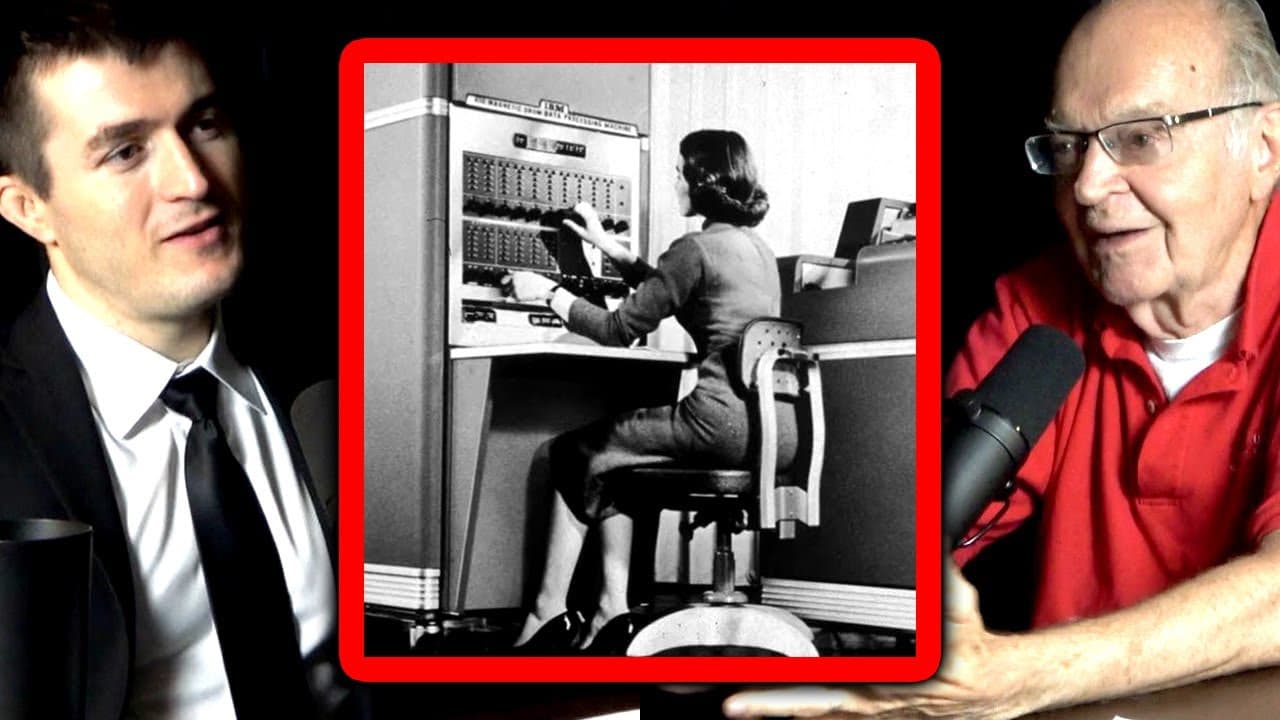
Tic Tac Toe program in the 1960's | Donald Knuth and Lex Fridman
September 18, 2021
by
Lex Clips
YouTube video player
Tic Tac Toe program in the 1960's | Donald Knuth and Lex Fridman

TL;DR

Tic-Tac-Toe is a game played on a 3x3 grid with empty spaces, Xs, and Os, and its computational representation requires 3^9 bits of memory.

Transcript

what is tic-tac-toe what are we talking about and then um right what how how is it designed right so so you've got you've got a three by three grid and each each each could be in three states it can be empty or it can have an x or an o yeah all right so three to the ninth is a uh well what is how big is it i should know um but it's 80 81 times 81 t... Read More

Key Insights

  • 🧘 Tic-Tac-Toe requires significant memory capacity due to the number of possible positions.
  • 👾 The Tic-Tac-Toe program was influenced by a demonstration at a science museum and Charles Babbage's interest in programming the game.
  • 🖐️ Brain three's learning process focused on avoiding mistakes rather than pursuing optimal play.
  • 💦 The author's interest in learning systems was inspired by Rod Brooks' work with small devices.

Install to Summarize YouTube Videos and Get Transcripts

Explore YouTube Video Summarizer or Get YouTube Transcript Extractor

Questions & Answers

Q: How is Tic-Tac-Toe designed?

Tic-Tac-Toe is played on a 3x3 grid with three possible states for each space: empty, X, or O. The game requires 3^9 bits of memory for every position.

Q: What was the computational representation limitation of the machine used for Tic-Tac-Toe?

The machine had only 2,000 10-digit words, limiting the total number of available bits and requiring efficient representation for the game.

Q: How did the author develop their Tic-Tac-Toe program?

The author created three parts to their program: brain one (random play), brain two (optimum strategy), and brain three (learning from mistakes).

Q: How did brain three learn to play Tic-Tac-Toe?

Brain three learned by avoiding mistakes instead of focusing on winning. It played against other brains until it converged to a safe draw strategy.

Summary & Key Takeaways

  • Tic-Tac-Toe is played on a 3x3 grid with empty spaces, Xs, and Os, with a total memory requirement of 3^9 bits.

  • The computation machine used for Tic-Tac-Toe had only 2,000 10-digit words, limiting the total number of bits available.

  • The author developed three parts to their Tic-Tac-Toe program: brain one (random play), brain two (optimum strategy), and brain three (learning from mistakes).


Read in Other Languages (beta)

English

Share This Summary 📚

Summarize YouTube Videos and Get Video Transcripts with 1-Click

Download browser extensions on:

Try YouTube Summary with ChatGPT & Claude or YouTube Transcript Generator

Explore More Summaries from Lex Clips 📚

Meaning of Life | Joscha Bach and Lex Fridman thumbnail
Meaning of Life | Joscha Bach and Lex Fridman
Lex Clips
Life is a battle against destruction | Paul Conti and Lex Fridman thumbnail
Life is a battle against destruction | Paul Conti and Lex Fridman
Lex Clips
An Update on Geometric Unity | Eric Weinstein and Lex Fridman thumbnail
An Update on Geometric Unity | Eric Weinstein and Lex Fridman
Lex Clips
Larry Page's vision for future of robotics | Robert Playter and Lex Fridman thumbnail
Larry Page's vision for future of robotics | Robert Playter and Lex Fridman
Lex Clips

Summarize YouTube Videos and Get Video Transcripts with 1-Click

Download browser extensions on:

Try YouTube Summary with ChatGPT & Claude or YouTube Transcript Generator

Apps & Extensions

  • Chrome Extension
  • Safari Extension
  • Edge Add-ons
  • Firefox Add-ons
  • iOS App
  • Android App

Key Features

  • YouTube Video Summarizer
  • Web & PDF Summarizer
  • Web & PDF Highlighter
  • Chat with PDF
  • Ask AI Clone
  • Audio Transcriber
  • Glasp Reader
  • Kindle Highlight Export
  • Idea Hatch

Integrations

  • Obsidian Plugin
  • Notion Integration
  • Pocket Integration
  • Instapaper Integration
  • Medium Integration
  • Readwise Integration
  • Snipd Integration
  • Hypothesis Integration

More Features

  • APIs
  • MCP Connector
  • Blog & Post
  • Embed Links
  • Image Highlight
  • Personality Test
  • Quote Shots

Company

  • About us
  • Blog
  • Community
  • FAQs
  • Job Board
  • Newsletter
  • Pricing
Terms

•

Privacy

•

Guidelines

© 2026 Glasp Inc. All rights reserved.