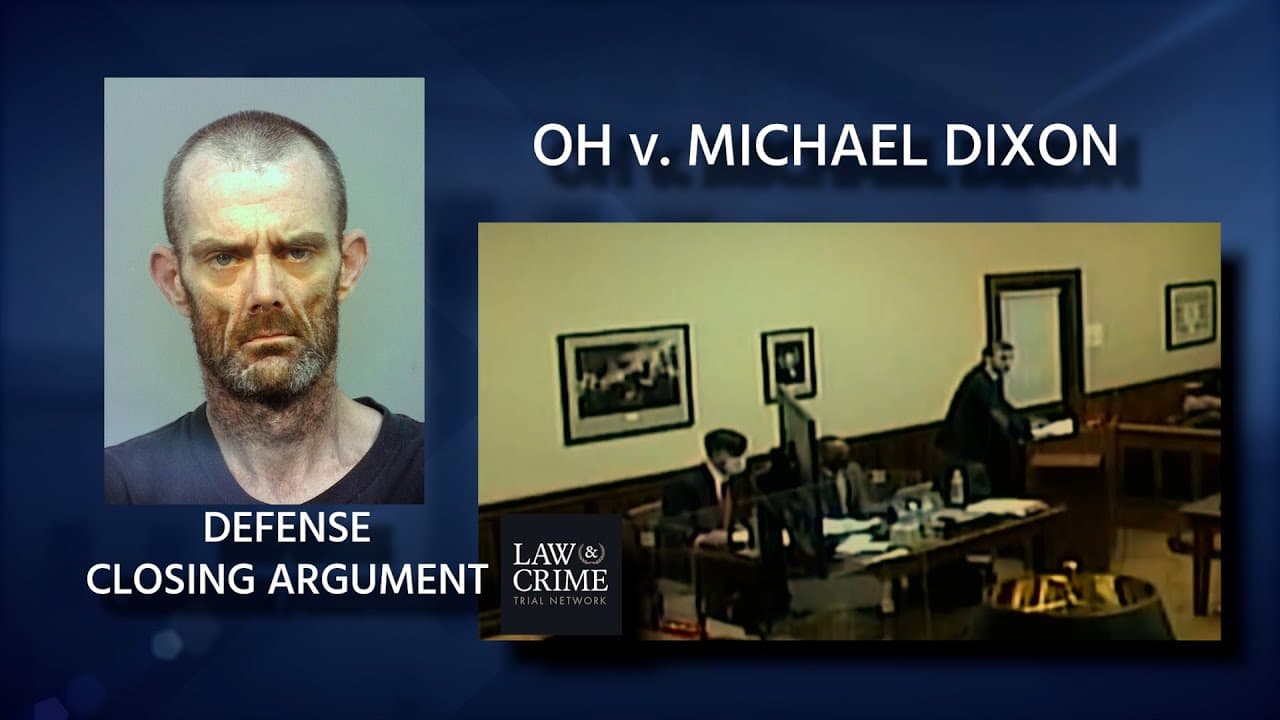
OH v. Michael Dixon Trial - Dismemberment Murder of James Whitaker - Defense Closing Argument
TL;DR
Analyzing self-defense claims and tampering charges in a criminal case with detailed evidence.
Transcript
on a defense afternoon ladies and gentlemen when i first spoke to you about this i asked you fairly simple question what would you do what would you do if you're faced with a situation in which you believe that your life the life of someone else that you cared about was in danger and here we found what mr dixon what mr michael dixon would do and th... Read More
Key Insights
- 😒 Michael Dixon's self-defense testimony revolves around perceived threats to his life and the use of a weapon for protection.
- 🤳 The defense challenges tampering charges by contrasting them with the context of self-defense and highlighting inconsistencies.
- 🤩 Motive, specifically related to self-preservation, is a key aspect addressed to explain Dixon's actions.
- 🈂️ Emphasis on evaluating charges individually and the concept of reasonable doubt in determining guilt.
- 💼 Notions of burden of proof and the importance of factual evidence in the legal analysis of criminal cases.
- 😒 Strategic use of evidence and testimony to build a narrative supporting the defense's claims.
- 🤯 Addressing inconsistencies and challenging assumptions made by the state prosecution to create doubt in the jury's minds.
Install to Summarize YouTube Videos and Get Transcripts
Explore YouTube Video Summarizer or Get YouTube Transcript Extractor
Questions & Answers
Q: How does Michael Dixon's self-defense claim align with the evidence presented?
Michael Dixon's testimony highlights repeated threats and a perceived danger to his life, leading to his decision to defend himself using a weapon. This aligns with the evidence of a potential threat from the victim, supporting his self-defense narrative.
Q: What was the significance of the tampering charges and how does the defense attorney challenge them?
The tampering charges are crucial as they allege actions taken post-incident. The defense attorney challenges these charges by emphasizing the context of self-defense and urging the jury to evaluate them individually, considering reasonable doubt.
Q: How does the defense address the lack of motive in the case?
The defense questions the lack of motive and presents a reasonable explanation for Dixon's actions based on the perceived threat to his life. They argue that self-defense is a valid motive, especially in a situation where imminent danger was present.
Q: Why does the defense focus on the concept of reasonable doubt?
The defense highlights the importance of reasonable doubt in the case, emphasizing that the burden of proof lies with the state to prove each charge beyond a reasonable doubt. By urging the jury to evaluate the evidence with this standard, they aim to cast doubt on the state's claims.
Summary & Key Takeaways
-
Michael Dixon's self-defense claim analyzed in detail, citing threats and evidence of danger.
-
Examination of tampering charges and how self-defense narrative contradicts state's claims.
-
Defense attorney urges jury to evaluate each charge individually and consider reasonable doubt.
Read in Other Languages (beta)
Share This Summary 📚
Summarize YouTube Videos and Get Video Transcripts with 1-Click
Try YouTube Summary with ChatGPT & Claude or YouTube Transcript Generator
Explore More Summaries from Law&Crime Network 📚



Summarize YouTube Videos and Get Video Transcripts with 1-Click
Try YouTube Summary with ChatGPT & Claude or YouTube Transcript Generator