Alan Flake
TL;DR
Advances in neonatal medicine, including the use of artificial placenta, aim to improve outcomes for extremely premature infants.
Transcript
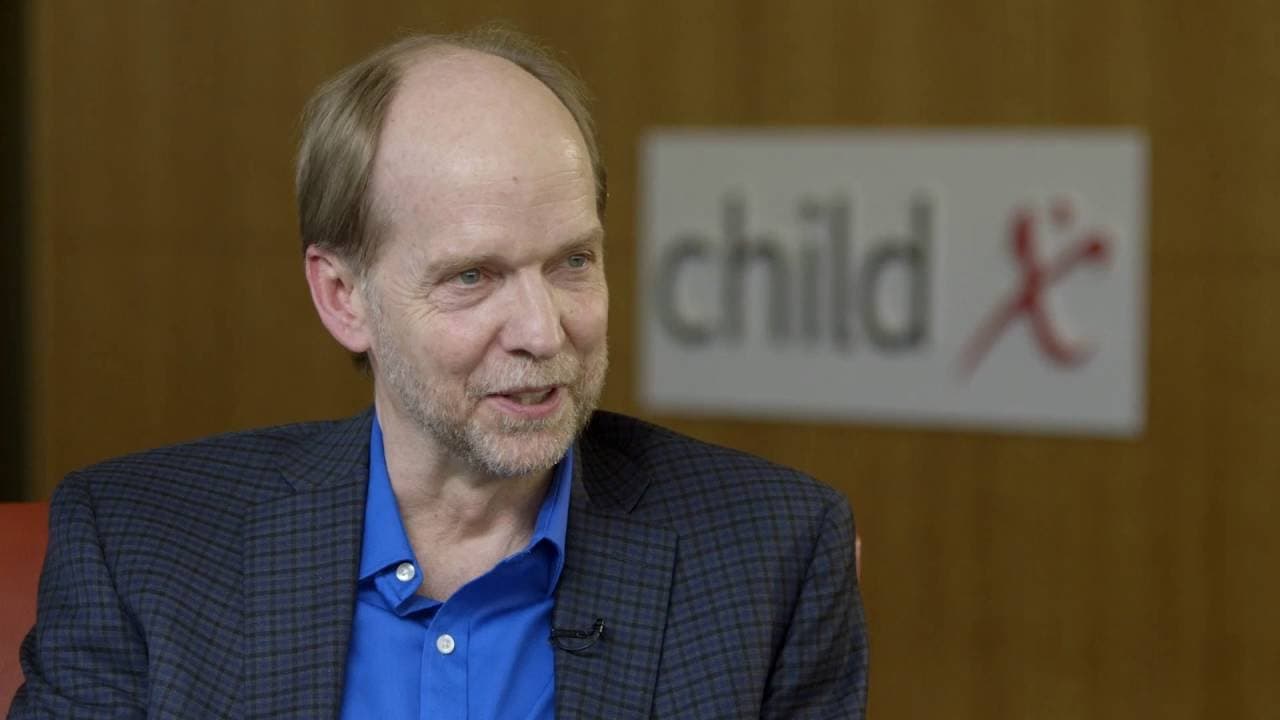
you started your presentation by saying the segue and I wondered if you could draw the you know the dots between what you heard today and then your presentation is there a Lynn is there a line connection of dots well sure I think what you heard today was a number of speakers talking about the problem of extreme prematurity and how we really haven't... Read More
Key Insights
- 💊 Extreme prematurity remains a challenge in neonatal medicine, with limited progress in improving respiratory and neurologic outcomes.
- 😌 The future of neonatal medicine may lie in providing a more normal developmental environment for premature infants.
- ❓ Understanding the placenta and its role in fetal support is crucial for improving outcomes.
- 🍉 Epigenetic changes in preterm infants separated from the mother and the placenta may have long-term consequences.
- ❓ The complexity of human development and genetic variability make achieving a "normal" state challenging.
- 👨🔬 Conferences like this provide opportunities to learn about cutting-edge research and gain insights into the future of the field.
- 🏑 Passion for fetal therapy and the desire to contribute to the field drives advancements in neonatal medicine.
Install to Summarize YouTube Videos and Get Transcripts
Explore YouTube Video Summarizer or Get YouTube Transcript Extractor
Questions & Answers
Q: What is the goal of a physiologic support system outside the womb for premature infants?
The goal is to provide a more normal developmental environment and prevent iatrogenic injuries associated with current methods of support, ultimately improving outcomes for premature infants.
Q: What controversies surround the role of the placenta in fetal support?
There are debates regarding the specific roles of the placenta versus the mother in providing necessary support, including growth factor production and hormonal regulation.
Q: How could an artificial placenta impact epigenetic changes?
By mimicking a more normal developmental environment, an artificial placenta could potentially prevent or reduce epigenetic changes that may predispose individuals to future diseases.
Q: What are the challenges in using genetic analysis and precision medicine for individualized treatment?
Although genetic tools are developing rapidly, the application of these tools to determine the most effective treatments for individuals is still in its early stages.
Summary & Key Takeaways
-
Current interventions for extreme prematurity have reached their limits in terms of improving respiratory and neurologic outcomes.
-
The proposal for a physiologic support system outside the womb aims to create a more normal developmental environment for the fetus, improving lung development and reducing iatrogenic injuries.
-
The placenta is still poorly understood, particularly in terms of hormonal and growth factor production, as well as epigenetic changes and their long-term consequences.
Read in Other Languages (beta)
Share This Summary 📚
Summarize YouTube Videos and Get Video Transcripts with 1-Click
Try YouTube Summary with ChatGPT & Claude or YouTube Transcript Generator
Explore More Summaries from Stanford 📚




Summarize YouTube Videos and Get Video Transcripts with 1-Click
Try YouTube Summary with ChatGPT & Claude or YouTube Transcript Generator