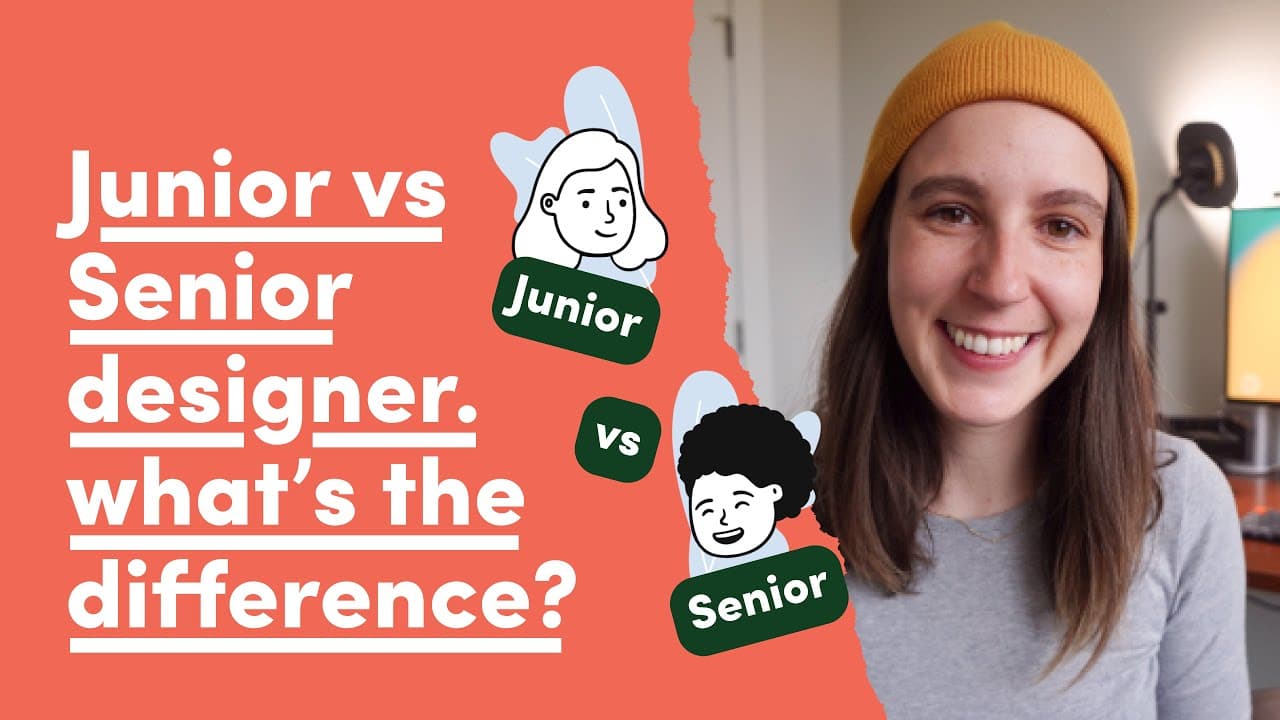
Deep dive into the difference between junior and senior product designers
TL;DR
Junior designers focus on craft, while senior designers emphasize leadership and strategic impact.
Transcript
hey friend today we're going to talk about the difference between a junior and a senior designer what sets them apart what the different responsibilities are for each role so let's get into it before we get into the topic today a few sort of announcements or things that i want to share to my regular viewers on the channel if you're not interested i... Read More
Key Insights
- 🤔 The transition from junior to senior designer involves a shift from tactical execution to strategic oversight and independent thinking.
- 👻 Junior designers typically focus on specific projects with a narrow scope, allowing for deep skill development while managing time effectively.
- 💪 Senior designers are expected to handle multiple projects simultaneously, requiring strong time and resource management skills.
- 😤 Effective communication is crucial for designers to articulate their ideas, influence decisions, and ensure alignment with team and project goals.
- ✋ Senior designers should demonstrate a high level of craft, showcasing their unique skills while also proactively seeking opportunities for impact.
- 😤 Ownership and autonomy increase as designers move into senior roles, requiring them to influence team roadmaps and project directions actively.
- 💪 Successful designers cultivate skills in building strong relationships with mentors and managers to navigate their development effectively.
Install to Summarize YouTube Videos and Get Transcripts
Explore YouTube Video Summarizer or Get YouTube Transcript Extractor
Questions & Answers
Q: What are the primary responsibilities of a junior designer?
Junior designers typically handle more focused and tactical tasks, often working on one project at a time. They concentrate on honing their design craft and skills while relying on more experienced team members for guidance. Their scope is usually limited to specific features, enabling them to develop time management and prioritization abilities effectively.
Q: How does the role of a senior designer differ from that of a junior designer?
Senior designers carry a broader set of responsibilities, demonstrating autonomy in their work with minimal oversight. They engage in higher-level thinking, often dealing with holistic projects that impact the wider ecosystem. Senior designers also need to effectively articulate design decisions, manage multiple projects, and contribute proactively to team goals and roadmaps.
Q: Why is communication important for designers?
Communication is vital as designers must articulate their design rationale, influence team decisions, and collaborate effectively with stakeholders. Senior designers, in particular, are expected to convey their ideas clearly, advocate for their design choices, and engage in meaningful discussions to ensure alignment with product goals and team objectives.
Q: What skills should a junior designer focus on developing?
Junior designers should prioritize building their craft through practice in design tools and processes. They should also focus on learning time management skills and understanding when to seek help from more experienced colleagues. Effective communication, confidence in presenting ideas, and developing a good relationship with managers for growth opportunities are equally important.
Q: What qualifies as independent thinking for senior designers?
Independent thinking for senior designers means not taking information at face value, but rather questioning and critically assessing project requirements and assumptions. They're expected to generate their own ideas and insights, collaborate closely with product managers, and proactively push for innovative solutions that align with both user and business goals.
Q: How do senior designers manage multiple projects?
Senior designers are expected to prioritize tasks effectively while managing their time and resources. They must be adept at shifting focus between various projects, maintaining a strong design process, and utilizing frameworks and methodologies strategically. It’s important for them to recognize potential challenges early and seek the necessary resources in advance.
Q: What does it mean for a designer to have a ‘superpower’?
A ‘superpower’ in design refers to a particular skill or talent that sets a designer apart, such as exceptional prototyping abilities, strong problem-solving skills, or outstanding communication with stakeholders. Senior designers are expected to identify and leverage their superpowers to influence projects positively and enhance team performance.
Q: How important is mentorship for junior designers?
Mentorship is crucial for junior designers as it provides the guidance and support needed to navigate their early careers. It helps them understand design processes, develop their skills, and gain confidence in their work. A supportive mentor can also facilitate learning opportunities, encourage initiative, and help build professional networks.
Summary & Key Takeaways
-
Junior designers typically work on narrower projects within a focused scope, allowing them to develop specific skills and manage time effectively.
-
Senior designers are expected to demonstrate a strong command of craft, independent thinking, and the ability to work on multiple projects with strategic impacts.
-
Effective communication, proactive opportunity-seeking, and managing team roadmaps become crucial responsibilities for senior designers as they advance in their careers.
Read in Other Languages (beta)
Share This Summary 📚
Summarize YouTube Videos and Get Video Transcripts with 1-Click
Try YouTube Summary with ChatGPT & Claude or YouTube Transcript Generator
Explore More Summaries from femke.design 📚


Summarize YouTube Videos and Get Video Transcripts with 1-Click
Try YouTube Summary with ChatGPT & Claude or YouTube Transcript Generator