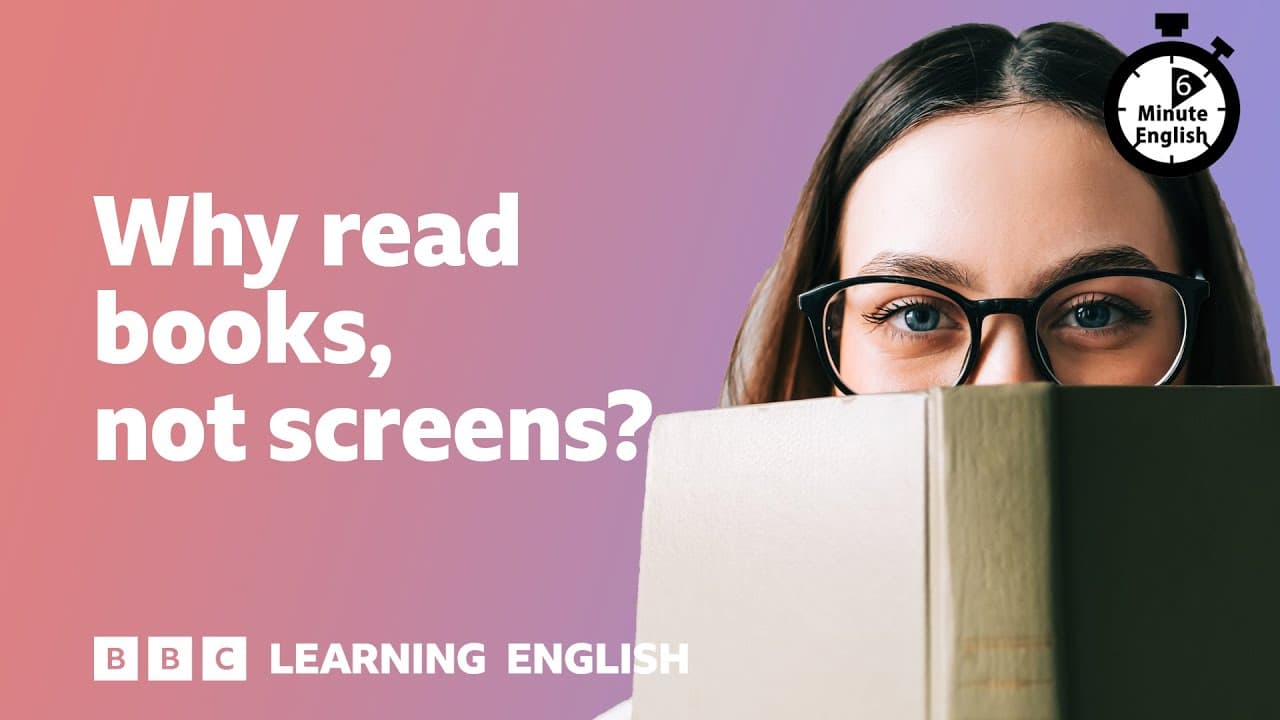
Why read books, not screens? ⏲️ 6 Minute English
TL;DR
Reading books enhances deep understanding more than screens.
Transcript
Hello, this is Six Minute English from BBC Learning English. I'm Phil. And I'm Georgie. For me, there's nothing like reading a book – I love turning the pages and the smell of the paper. But nowadays, the fact is that much of the time we read from electronic screens, not paper. Yes, like Georgie, I love books. I also find that too much screen time ... Read More
Key Insights
- Reading from books fosters deep comprehension, allowing for critical thinking, empathy, and understanding of analogies and inferences.
- Screen reading often leads to skimming, which can hinder the development of deep reading skills and critical analysis.
- The average person reads around 100,000 words daily, highlighting the importance of how, not just what, we read.
- Deep reading activates more areas of the brain, enhancing cognitive skills and emotional intelligence.
- Literacy is linked to economic success and social well-being, with benefits including higher chances of home ownership and civic participation.
- Digital screens bombard users with notifications, which can shorten attention spans and reduce focus.
- Reading for pleasure, or 'for the joy of it,' can lead to lifelong benefits, including creativity and intelligence.
- The sheer volume of digital content encourages superficial reading, impacting comprehension and retention negatively.
Install to Summarize YouTube Videos and Get Transcripts
Explore YouTube Video Summarizer or Get YouTube Transcript Extractor
Questions & Answers
Q: What are the benefits of reading books over screens?
Reading books promotes deep reading, which involves critical thinking, empathy, and understanding complex ideas. This type of reading activates more areas of the brain, fostering cognitive and emotional development. In contrast, screens often lead to skimming, which can hinder these skills.
Q: How does screen reading affect attention span?
Screen reading can negatively impact attention span due to the constant bombardment of notifications and the sheer volume of content. This environment encourages skimming rather than deep reading, making it harder for individuals to concentrate and fully engage with the material.
Q: What role does deep reading play in literacy?
Deep reading is crucial for literacy as it involves analyzing texts for deeper meanings, fostering critical thinking and empathy. This skill is linked to cognitive development and is better developed through reading books, which engage more brain areas than superficial screen reading.
Q: Why is reading for pleasure important for children?
Reading for pleasure is vital for children's development as it enhances creativity, intelligence, and empathy. It is linked to future economic success and social well-being, increasing the likelihood of home ownership and civic participation. Enjoyable reading experiences foster lifelong literacy habits.
Q: What is the impact of digital content volume on reading habits?
The vast volume of digital content encourages skimming, as readers are often overwhelmed by the amount of information. This habit can lead to superficial understanding and reduced retention, as readers focus on quickly absorbing information rather than deeply engaging with and analyzing the material.
Q: How does reading from screens differ cognitively from reading books?
Cognitively, reading from screens often involves surface-level processing due to distractions and content volume. In contrast, reading books engages deeper cognitive processes, activating more brain areas and promoting skills like critical thinking and empathy. Books encourage a more immersive and focused reading experience.
Q: What are the economic benefits of literacy?
Literacy offers significant economic benefits, including higher chances of employment, home ownership, and civic participation. Individuals with strong literacy skills are less likely to be incarcerated and more likely to vote, highlighting the broad societal and personal advantages of literacy.
Q: How does the average word count read daily reflect on modern reading habits?
The average modern person reads around 100,000 words daily, reflecting an increase in reading volume due to digital content. This trend emphasizes the importance of developing effective reading habits, as the sheer amount of information can encourage skimming rather than deep, meaningful engagement with texts.
Summary & Key Takeaways
-
The discussion explores the differences between reading from books and screens, emphasizing the benefits of deep reading from physical books. Screens often lead to skimming, which can hinder comprehension and critical thinking. Literacy, especially through books, is linked to personal and economic benefits.
-
Professor Maryanne Wolf highlights that deep reading involves using more of the cerebral cortex, fostering empathy and critical analysis. In contrast, screen reading tends to be superficial due to the high volume of content and frequent distractions from notifications.
-
Cressida Cowell notes that reading for enjoyment is crucial for children's development, linking it to future success. The program concludes that while reading any content is beneficial, the medium and depth of reading significantly impact cognitive and emotional development.
Read in Other Languages (beta)
Share This Summary 📚
Summarize YouTube Videos and Get Video Transcripts with 1-Click
Try YouTube Summary with ChatGPT & Claude or YouTube Transcript Generator
Explore More Summaries from BBC Learning English 📚
Summarize YouTube Videos and Get Video Transcripts with 1-Click
Try YouTube Summary with ChatGPT & Claude or YouTube Transcript Generator