Greetings in Portuguese
TL;DR
Learn basic Portuguese greetings for different times and contexts.
Transcript
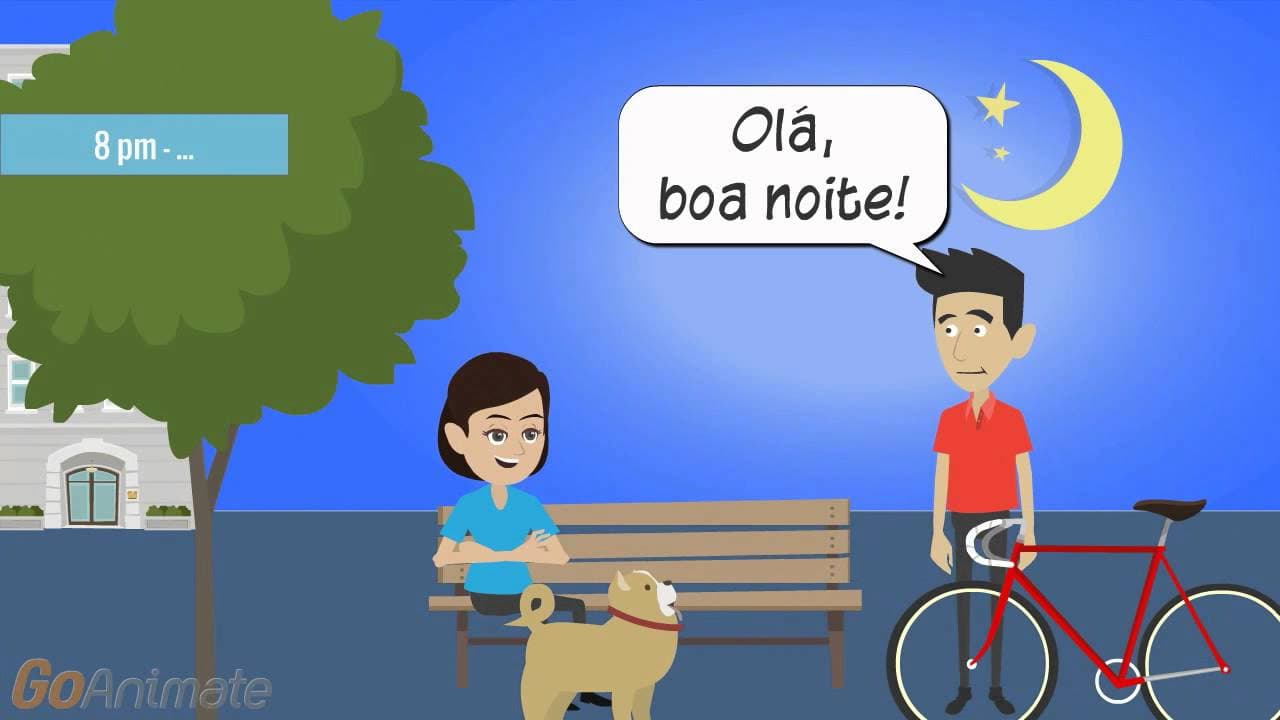
We are going to start by learning how to greet someone. Remember, the microphone symbol tells you when to speak. Hola. Hola. Now you try to respond to Pedro. The speech bubble with a microphone will help you. Hola. Well done. Now we can add the greeting according to the time of day. We will start with the morning. Now it's your turn to respond to P... Read More
Key Insights
- The content focuses on teaching basic greetings in Portuguese, starting with 'Hola' and expanding to time-specific greetings.
- It emphasizes practice through interactive exercises, encouraging learners to respond to greetings from a character named Pedro.
- The lesson includes informal greetings, suitable for friends, family, and coworkers, and formal greetings for more official contexts.
- Formal greetings require using titles like Mr. or Miss followed by the last name, noting gender-specific endings.
- The content stresses the importance of adapting greetings based on the time of day, covering morning, afternoon, and evening.
- Learners are guided to add names to greetings for personalization, enhancing communication in both informal and formal settings.
- The lesson encourages self-assessment by asking learners to respond without assistance after initial practice.
- Additional resources for learning Portuguese are provided, including online courses and simple stories for beginners.
Install to Summarize YouTube Videos and Get Transcripts
Explore YouTube Video Summarizer or Get YouTube Transcript Extractor
Questions & Answers
Q: What is the first greeting taught in the lesson?
The first greeting taught in the lesson is 'Hola,' which is a basic and informal way to say hello in Portuguese. It serves as the foundation for learning more complex greetings and helps learners start practicing their pronunciation and interaction skills in the language.
Q: How does the lesson incorporate practice for learners?
The lesson incorporates practice by using interactive exercises where learners respond to greetings from a character named Pedro. This method encourages active participation and helps learners become more comfortable with speaking and responding in Portuguese, reinforcing their learning through repetition and engagement.
Q: What is the difference between informal and formal greetings in the lesson?
Informal greetings are used with friends, family, and coworkers, often just using 'Hola' followed by a name. Formal greetings, on the other hand, require addressing someone with a title like Mr. or Miss followed by their last name, and are used in more official or respectful contexts, highlighting the importance of formality.
Q: How does the lesson address greetings based on the time of day?
The lesson teaches learners to adapt greetings according to the time of day, covering morning, afternoon, and evening scenarios. This approach helps learners understand cultural nuances and ensures they use appropriate expressions, making their interactions more relevant and contextually accurate in Portuguese-speaking environments.
Q: Why is adding names to greetings emphasized in the lesson?
Adding names to greetings is emphasized to personalize communication, making interactions more friendly and engaging. This practice helps learners build rapport and shows respect and recognition, which are important social skills in any language. It also aids in memorizing vocabulary by associating names with phrases.
Q: What resources are suggested for further learning?
The lesson suggests additional resources for further learning, including online courses from the Portuguese Lab Academy and simple Portuguese stories for beginners. These resources provide structured learning paths, real-world practice, and personalized support, catering to different learning preferences and helping learners progress from beginner to upper-intermediate levels.
Q: How does the lesson encourage self-assessment?
The lesson encourages self-assessment by asking learners to respond to greetings without assistance after initial guided practice. This approach allows learners to evaluate their understanding and retention of the material, promoting independent learning and confidence in their ability to communicate effectively in Portuguese.
Q: What is the significance of gender-specific endings in formal greetings?
Gender-specific endings in formal greetings are significant because they reflect the gender of the person being addressed, which is an important aspect of politeness and respect in Portuguese. Using the correct form shows cultural awareness and sensitivity, ensuring that communication is respectful and appropriate in formal settings.
Summary & Key Takeaways
-
The lesson introduces basic Portuguese greetings, starting with 'Hola' and expanding to include time-specific greetings. It emphasizes practice through interactive exercises, encouraging learners to respond to a character named Pedro. The lesson covers both informal and formal greetings, with tips on personalization and gender-specific titles.
-
Informal greetings are suitable for friends, family, and coworkers, while formal greetings require using titles like Mr. or Miss followed by the last name. The content stresses adapting greetings based on the time of day, covering morning, afternoon, and evening scenarios.
-
Learners are encouraged to add names to greetings for personalization, enhancing communication in both informal and formal settings. The lesson promotes self-assessment by asking learners to respond without assistance. Additional resources for learning Portuguese, including online courses and simple stories, are also provided.
Read in Other Languages (beta)
Share This Summary 📚
Summarize YouTube Videos and Get Video Transcripts with 1-Click
Try YouTube Summary with ChatGPT & Claude or YouTube Transcript Generator
Explore More Summaries from Portuguese Lab 📚


Summarize YouTube Videos and Get Video Transcripts with 1-Click
Try YouTube Summary with ChatGPT & Claude or YouTube Transcript Generator