NVIDIA's AI Creates Beautiful Images From Your Sketches! ✏️
TL;DR
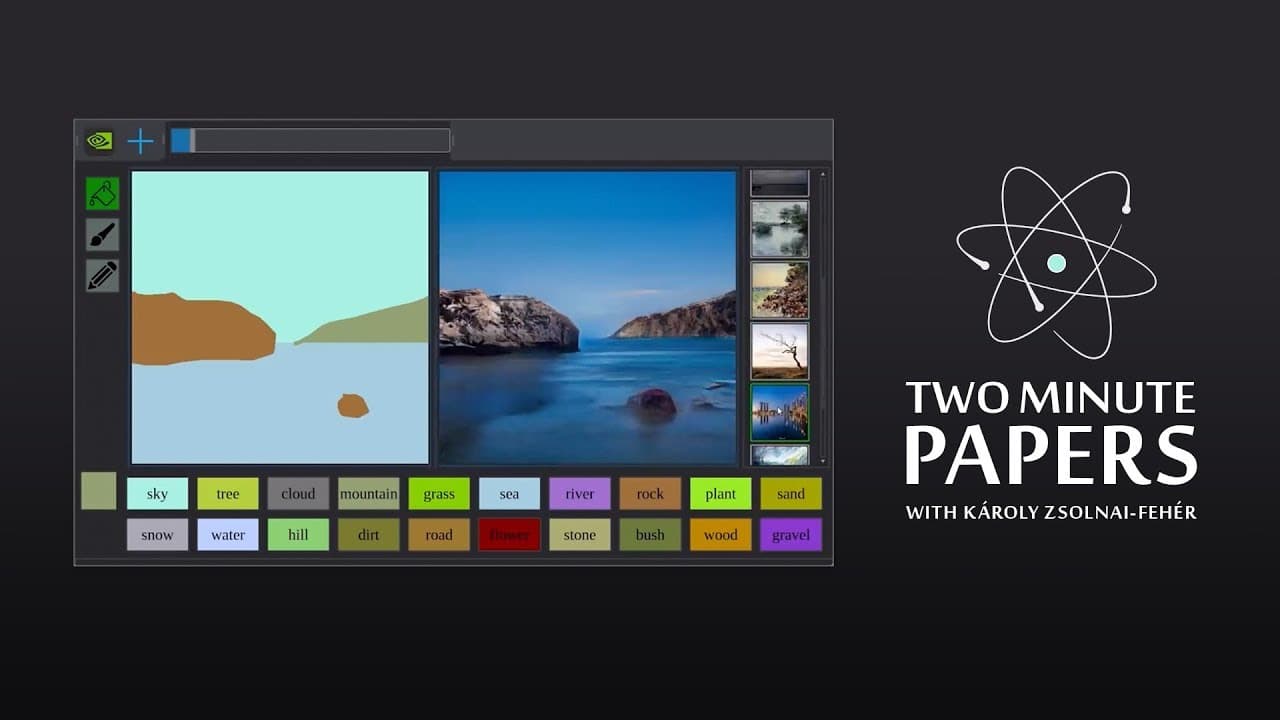
A new image translation technique is introduced, allowing for the generation of high-resolution, photorealistic images based on input labels.
Transcript
Dear Fellow Scholars, this is Two Minute Papers with Károly Zsolnai-Fehér. I know for a fact that some of you remember our first video on image translation, which was approximately 3 years and 250 episodes ago. This was a technique where we took an input painting, and a labeling of this image that shows what kind of objects are depicted, and then, ... Read More
Key Insights
- 🏷️ Image translation techniques have evolved from requiring input paintings to synthesizing images from labels.
- 👻 The new technique allows for the generation of high-resolution images with added detail.
- 🏛️ Built-in input styles make it easier to control the artistic goals of the generated images.
- 🏷️ Utilizing existing algorithms to create labels from photorealistic images eliminates the need for manually drawing and filling in labels.
- 👶 The new kind of layer used for normalizing information in the neural network improves the quality and fidelity of the generated images.
- 🍉 The algorithm surpasses previous approaches in terms of visual fidelity and alignment with input labels.
- 👨💻 The source code for the technique will be released, enabling wider access and usage.
Install to Summarize YouTube Videos and Get Transcripts
Explore YouTube Video Summarizer or Get YouTube Transcript Extractor
Questions & Answers
Q: How does the new image translation technique work?
The technique takes input labels and generates photorealistic images based on these labels. It utilizes a new kind of layer for normalizing information within the neural network, resulting in more crisp outputs and preservation of semantic information.
Q: How is the generation of training data for the algorithm achieved?
Instead of manually drawing labels and filling them in, the algorithm takes a set of photorealistic images and uses existing algorithms to create the corresponding labels. This generates a large dataset for training the neural network.
Q: What sets this image translation technique apart from previous approaches?
The technique offers superior visual fidelity and alignment with input labels compared to previous approaches. The use of the new normalization layer contributes to the improved quality of the generated images.
Q: Will the source code for this technique be available?
Yes, the source code is expected to be released soon, allowing anyone to utilize the algorithm and generate their own photorealistic images.
Summary & Key Takeaways
-
Image translation techniques have evolved over the years, with the ability to generate realistic images from labels.
-
This new technique allows for the synthesis of high-resolution images with added detail.
-
The algorithm provides built-in input styles, making it easier to control the artistic goals of the generated images.
Read in Other Languages (beta)
Share This Summary 📚
Summarize YouTube Videos and Get Video Transcripts with 1-Click
Try YouTube Summary with ChatGPT & Claude or YouTube Transcript Generator
Explore More Summaries from Two Minute Papers 📚
Summarize YouTube Videos and Get Video Transcripts with 1-Click
Try YouTube Summary with ChatGPT & Claude or YouTube Transcript Generator