Why Humans May Actually Be Fish
TL;DR
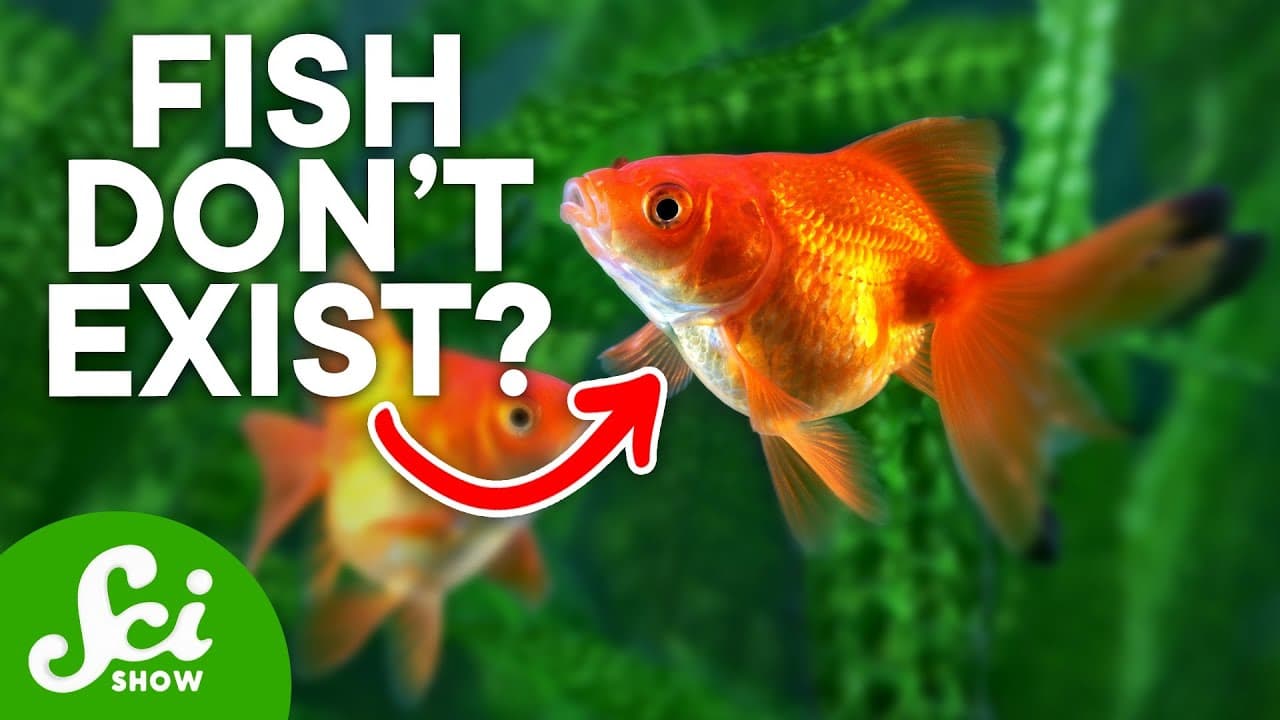
The way we classify animals is more complex than you might think, and it's not clear whether beavers should be considered fish or not.
Transcript
Thanks to the Monterey Bay Aquarium for partnering with us on this episode of SciShow. They hope you find it fin-teresting! [♪ INTRO] There’s a funny story about beavers. In the 1700s, a Canadian bishop asked the Catholic church if it was okay to eat beaver during Lent, a period of time when Catholics abstain from eating meat. But eating fish was... Read More
Key Insights
- 🐟 The classification of animals has evolved over time, and traditional categories like "fish" are no longer sufficient.
- 👻 Cladistics allows scientists to group animals based on their evolutionary history, providing a more accurate representation of their relatedness.
- 😫 The classification of animals is not set in stone and can be adjusted as new information emerges.
- ❓ Language is used differently in scientific contexts to ensure accuracy and precision in communication.
Install to Summarize YouTube Videos and Get Transcripts
Explore YouTube Video Summarizer or Get YouTube Transcript Extractor
Questions & Answers
Q: Why did the Catholic church consider beavers to be fish?
The Catholic church classified beavers as fish during Lent because they spent a lot of time in the water, a characteristic traditionally associated with fish.
Q: What is cladistics?
Cladistics is a scientific method of grouping animals based on their evolutionary history and how closely related they are, rather than superficial characteristics.
Q: Are beavers descended from fish?
Yes, beavers are descended from the same vertebrate ancestor as fish, making their evolutionary journey similar to that of fish.
Q: Are humans fish?
In the cladistic approach to classification, humans are categorized as tetrapods, a group that includes all land-dwelling vertebrates. While we share a common ancestor with fish, we are not classified as fish.
Summary & Key Takeaways
-
The Catholic church once classified beavers as fish so that they could be eaten during Lent.
-
The traditional way of grouping animals based on body plan or lifestyle is no longer effective, leading to the development of cladistics.
-
Cladistics groups animals based on their evolutionary history and relatedness, challenging the idea of a clear definition for certain categories like "fish."
Read in Other Languages (beta)
Share This Summary 📚
Summarize YouTube Videos and Get Video Transcripts with 1-Click
Try YouTube Summary with ChatGPT & Claude or YouTube Transcript Generator
Explore More Summaries from SciShow 📚


Summarize YouTube Videos and Get Video Transcripts with 1-Click
Try YouTube Summary with ChatGPT & Claude or YouTube Transcript Generator