Classical liberalism #1: What is classical liberalism? | Emily Chamlee-Wright | Big Think
TL;DR
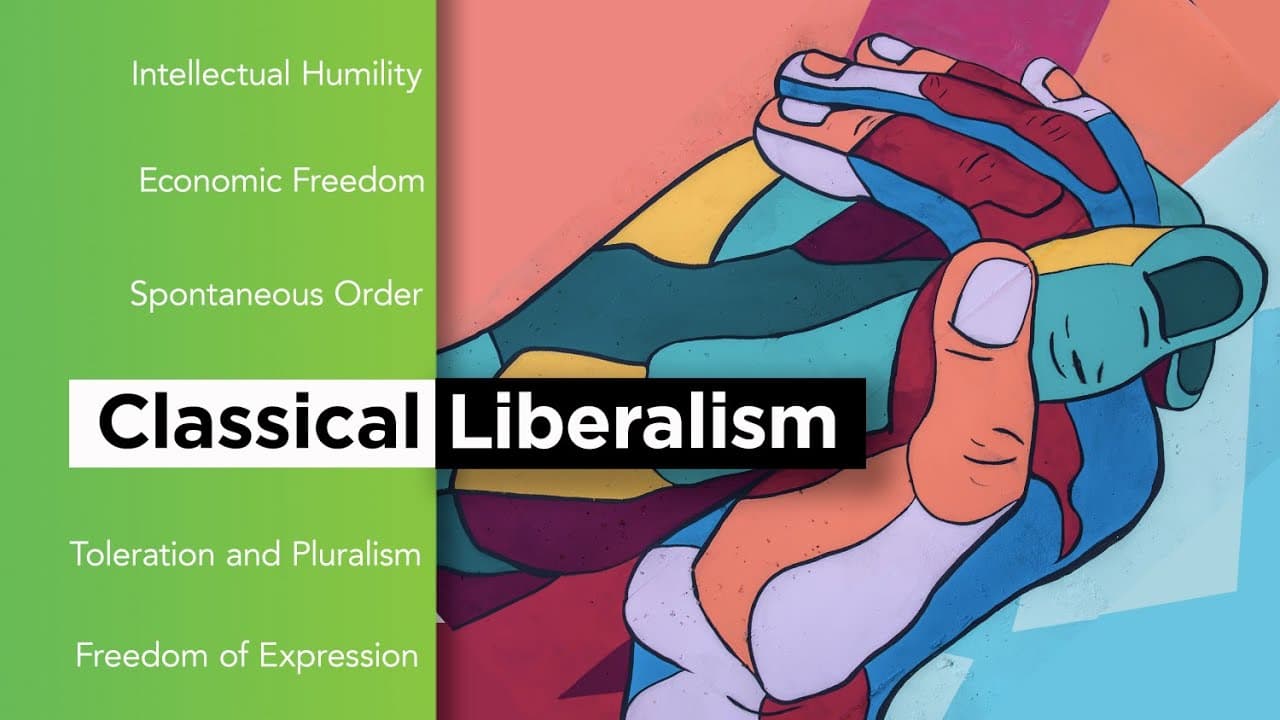
Liberalism values human dignity, individual liberty, justice, and equality as core principles shaping a tolerant and progressive society.
Transcript
Liberalism in the classical sense of the word is a moral and political philosophy. And it's built around a core set of ideas, probably the most important of which is the recognition that all human beings possess, inherently possess, dignity and should be respected. And respecting human beings means giving them some space, giving them freedom to pur... Read More
Key Insights
- 👨⚖️ Liberalism prioritizes human dignity, individual liberty, justice, and equality for societal cohesion.
- 💝 Classical liberal ideas of the late 17th and 18th centuries shaped foundational documents like the U.S. Constitution.
- 🤗 A liberal society fosters progress, engagement, and cooperation through open-mindedness and respect for individual rights.
- 🫡 Liberalism values peaceful voluntary engagement and societal flourishing through communal respect and shared norms.
- 😌 The essence of liberalism lies in striking a balance between individual freedom and societal cooperation for the greater good.
- ❓ An essential aspect of liberalism is the provision of a realistic exit option, distinguishing it from illiberal societies.
- 👻 Liberalism encourages experimentation, learning from successes and failures, while allowing individuals the freedom to choose.
Install to Summarize YouTube Videos and Get Transcripts
Explore YouTube Video Summarizer or Get YouTube Transcript Extractor
Questions & Answers
Q: What are the core ideas of liberalism?
Liberalism is built on principles of human dignity, individual liberty, justice, and equality that shape a just and tolerant society.
Q: How does liberalism impact societal progress?
Liberalism's focus on openness and individual rights fosters economic and intellectual progress in a flourishing society.
Q: How does liberalism balance individuality and community?
Liberalism, while emphasizing the individual, also values societal engagement, cooperative rules, and respect for communal values.
Q: What sets a liberal society apart from an illiberal one?
A key difference lies in the presence of a realistic exit option in a liberal society, allowing individuals to freely associate or disassociate.
Summary & Key Takeaways
-
Liberalism centers on human dignity and individual liberty, leading to justice and equality.
-
Its roots trace back to ancient philosophy but took shape in the 17th and 18th centuries.
-
Liberalism values tolerance, progress, and peaceful engagement for societal flourishing.
Read in Other Languages (beta)
Share This Summary 📚
Summarize YouTube Videos and Get Video Transcripts with 1-Click
Try YouTube Summary with ChatGPT & Claude or YouTube Transcript Generator
Explore More Summaries from Big Think 📚




Summarize YouTube Videos and Get Video Transcripts with 1-Click
Try YouTube Summary with ChatGPT & Claude or YouTube Transcript Generator