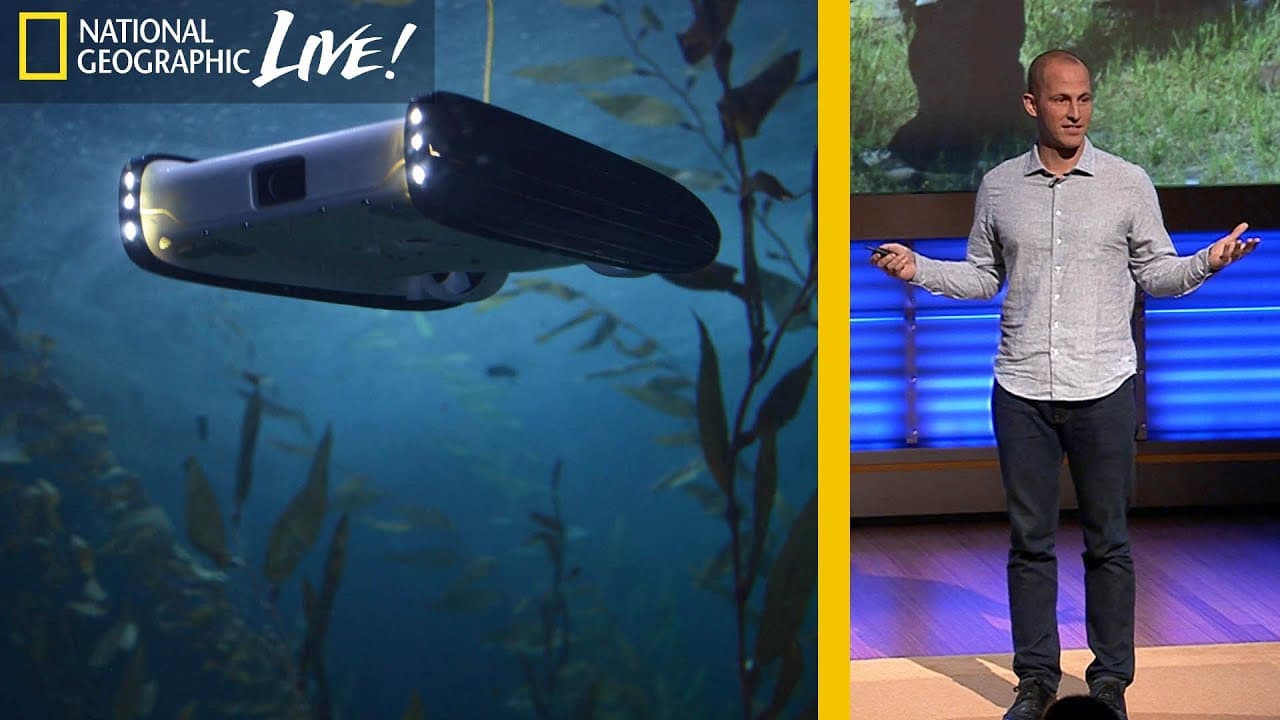
This Low-Cost Robot Can Help You Explore the Ocean | Nat Geo Live
TL;DR
Two men start a global community of ocean explorers through citizen science and low-cost underwater robots.
Transcript
DAVID LANG:A few years ago, I had this big epiphany. How do we shift from just something we're building together to all of these ways that we could be exploring together? We're building the largest ocean observation network in the world and we're doing it with other people. It's powered by citizens. So I'm gonna start my story four ye... Read More
Key Insights
- 😘 Citizen science is revolutionizing ocean exploration through community involvement and low-cost technology.
- 🥺 Collaborative efforts between individuals and the online community can lead to groundbreaking discoveries in environmental research.
- 😒 The use of digital fabrication tools and maker spaces is enabling individuals to participate in citizen science projects worldwide.
- 😘 DIY technologies, such as low-cost drones and microscopes, are being utilized for conservation and scientific research in diverse regions.
- 🫥 The emergence of citizen science projects is blurring the lines between traditional research institutions and grassroots community efforts.
- 🥺 Engaging citizens as explorers fosters a sense of agency and curiosity, leading to innovative discoveries and solutions to environmental challenges.
- 🥺 Legislative action and scientific breakthroughs can stem from citizen-led initiatives focused on monitoring and addressing environmental issues.
Install to Summarize YouTube Videos and Get Transcripts
Explore YouTube Video Summarizer or Get YouTube Transcript Extractor
Questions & Answers
Q: How did David Lang and Eric Stackpole start their journey into ocean exploration?
David Lang and Eric Stackpole began their ocean exploration journey by meeting and sharing stories about underwater caves and treasure hunters. Eric introduced the idea of using underwater robots for exploration, and together, they sought help from the internet to develop the technology.
Q: What was the significance of creating OpenROV.com?
OpenROV.com was created by David Lang and Eric Stackpole to seek feedback and guidance from the online community to improve their underwater robot designs. This collaborative effort led to the development of a low-cost underwater robot kit that gained immense popularity.
Q: How did citizen science play a role in the discovery and monitoring of environmental issues?
Citizen science initiatives like those led by Laura James and Professor Mark Edwards have been instrumental in identifying and addressing environmental issues. Through community involvement, citizens have contributed data that has led to scientific breakthroughs and even prompted legislative action.
Q: What role do digital fabrication tools and maker spaces play in citizen science projects?
Digital fabrication tools like 3D printers and maker spaces have democratized access to technology, allowing individuals to create sophisticated tools for scientific exploration. This accessibility has empowered citizens to engage in citizen science projects and contribute meaningfully to research efforts.
Summary & Key Takeaways
-
David Lang and Eric Stackpole started a global community of ocean explorers with citizen science.
-
They developed low-cost underwater robots for exploration.
-
Their success led to the largest ocean observation network involving citizens worldwide.
Read in Other Languages (beta)
Share This Summary 📚
Summarize YouTube Videos and Get Video Transcripts with 1-Click
Try YouTube Summary with ChatGPT & Claude or YouTube Transcript Generator
Explore More Summaries from National Geographic 📚

Summarize YouTube Videos and Get Video Transcripts with 1-Click
Try YouTube Summary with ChatGPT & Claude or YouTube Transcript Generator