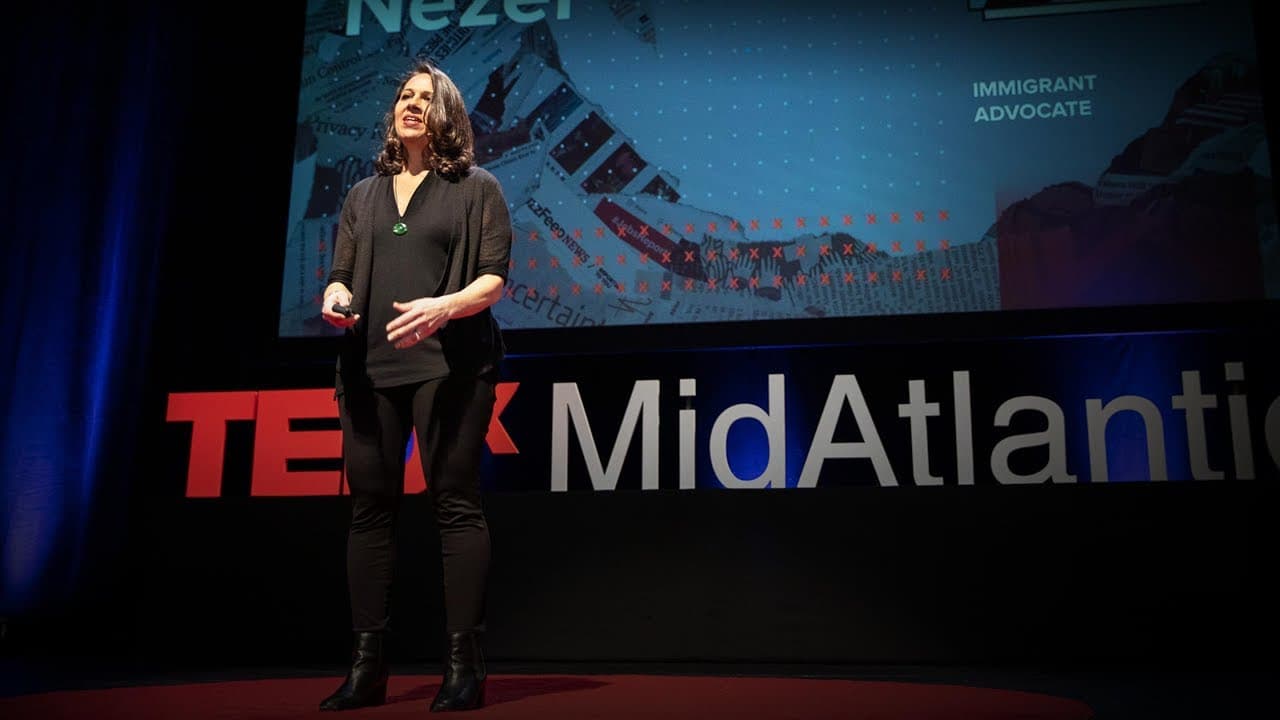
The fundamental right to seek asylum | Melanie Nezer
TL;DR
In this powerful talk, the speaker reflects on her personal experiences and shares stories of refugees, urging for a compassionate and pragmatic approach to immigration.
Transcript
Last summer, I got a call from a woman named Ellie. And she had heard about the family separations at the southern border and wanted to know what she could do to help. She told me the story of her grandfather and his father. When they were kids in Poland, their father, fearing for his son's safety, gave them a little bit of money and told them to w... Read More
Key Insights
- 🙏 Taking action: The speaker shares a story of a woman named Ellie who was moved by the family separations at the southern border and wanted to help. This highlights the importance of individuals feeling compelled to take action in response to humanitarian issues.
- 💔 Unnecessary suffering: The speaker emphasizes that some policies intended to make us safer actually cause tremendous and unnecessary suffering. This suggests a need for a critical evaluation of policies that may inadvertently harm vulnerable populations.
- 🌎 Central American refugees: Most immigrants and refugees at the southern border are coming from Guatemala, Honduras, and El Salvador, countries consistently ranked among the most violent in the world. This demonstrates the dire conditions that push people to seek safety elsewhere.
- 🔍 Historical context: The current spike in families and children at the southern border is not an unprecedented crisis. People have been fleeing Central America for generations due to civil wars in the 1980s, in which the US was involved. This highlights the long-standing nature of the issue.
- 🧳 Seeking asylum: Seeking asylum is a fundamental right under US and international law. The speaker stresses the importance of recognizing and upholding this right, as individuals and families are simply trying to keep themselves and their loved ones safe.
- ⚖️ Unfair treatment: It has become increasingly difficult for asylum seekers to seek protection in the US. Border guards are turning people away, claiming the country is full, which is illegal. The introduction of programs like the "Migrant Protection Protocols" forces refugees to wait in unsafe conditions in Mexico without access to legal representation.
- 💔 Humanitarian crisis: The speaker highlights the inhumanity of detaining over 3,000 children and separating them from their parents at the border. This practice, along with the billions spent on detainment and the lack of a humane asylum system, reveals the alarming state of our current immigration system.
- 🗳️ Taking a stand: Despite efforts to block immigration and keep refugees out, polls show that support for refugees and immigrants in the US has never been higher. Organizations like HIAS and other humanitarian and faith-based organizations provide opportunities for individuals to take a stand and support policies aligned with compassion and pragmatism.
Install to Summarize YouTube Videos and Get Transcripts
Explore YouTube Video Summarizer or Get YouTube Transcript Extractor
Questions & Answers
Q: What inspired Ellie to reach out for help?
Ellie reached out for help after hearing about the family separations at the southern border. She was reminded of the story of her grandfather and his brother who walked across Europe to seek safety and could relate their journey to the current stories of teens walking across Mexico.
Q: Why are people showing up at the southern border?
Most immigrants and refugees coming to the southern border are fleeing from Guatemala, Honduras, and El Salvador. These countries are known for their high levels of violence, making it difficult for people to feel safe or build a future for themselves and their families. The pervasive violence against women and girls further adds to the reasons why people are leaving.
Q: What is the legal right of asylum seekers?
Seeking asylum is a fundamental right protected by both US and international law. It is legal to seek asylum, and it is a process that allows individuals to prove that they meet the definition of a refugee. Seeking asylum is a way for people to escape persecution and violence in their home countries.
Q: How has the US government's immigration system changed?
The US government has implemented policies such as detention, family separation, and restrictions on seeking asylum that have caused unnecessary suffering. Under the "Migrant Protection Protocols," refugees are forced to wait in Mexico, with limited access to lawyers, while their cases progress in US courts. Additionally, the US resettled fewer refugees last year than ever before, despite the global increase in refugees.
Q: How can the US address the immigration crisis and support refugees?
To address the immigration crisis and support refugees, the US needs to dial back the toxic rhetoric surrounding the issue and focus on policies that align with the country's values. Global cooperation and humanitarian aid are essential. Additionally, the US can invest in a more humane asylum system by hiring more judges, providing legal representation for asylum seekers, and resettling more refugees. Taking action through organizations like HIAS can make a difference.
Summary & Key Takeaways
-
A woman named Ellie was inspired by her family's immigrant history and wanted to help families at the southern border. She was reminded of her grandfather and great-uncle's journey from Poland to America.
-
The violence and lack of safety in countries like Guatemala, Honduras, and El Salvador are driving people to flee and seek asylum at the southern border.
-
The current policies and treatment of refugees and asylum seekers at the border are causing unnecessary suffering, and the United States should prioritize compassion and pragmatic solutions.
Read in Other Languages (beta)
Share This Summary 📚
Summarize YouTube Videos and Get Video Transcripts with 1-Click
Try YouTube Summary with ChatGPT & Claude or YouTube Transcript Generator
Explore More Summaries from TED 📚






Summarize YouTube Videos and Get Video Transcripts with 1-Click
Try YouTube Summary with ChatGPT & Claude or YouTube Transcript Generator