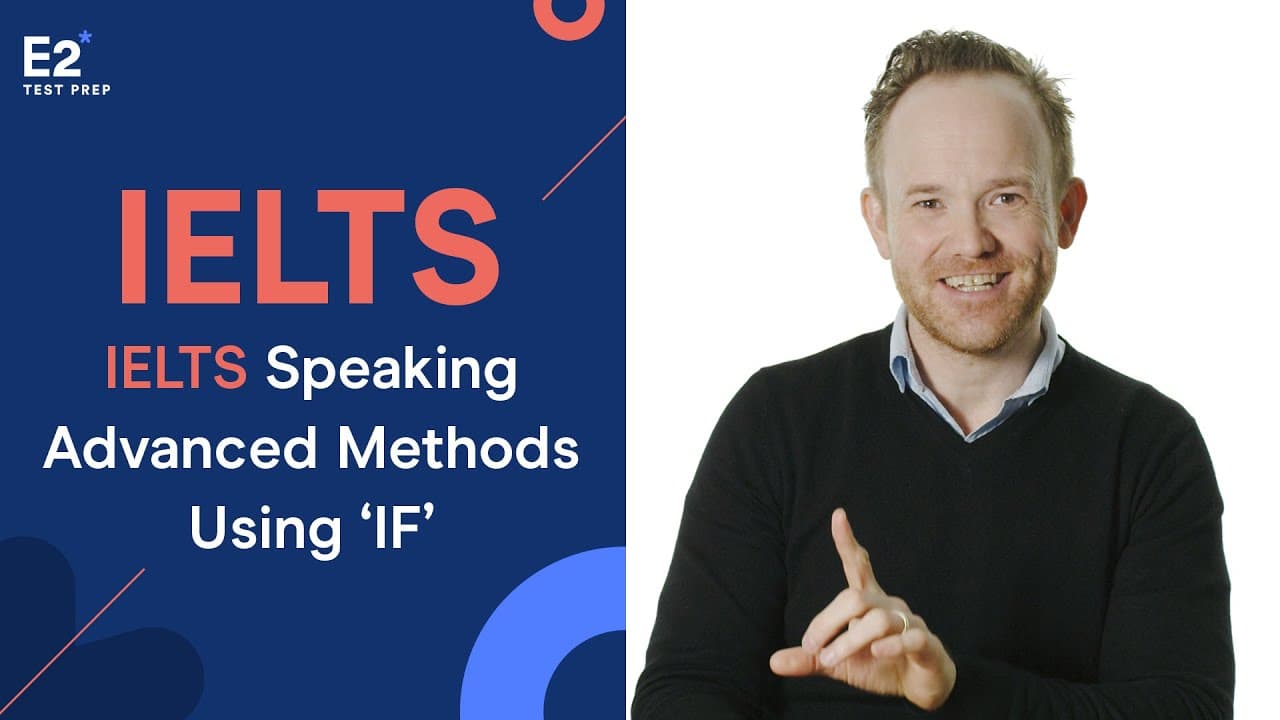
Advanced Methods for IELTS Speaking using 'IF'
TL;DR
Learn how to extend ideas and use a wider range of grammar in your IELTS speaking test by effectively using the word 'if'.
Transcript
Okay, you're in your IELTS class and your teacher gives you this feedback. You need to extend your ideas more, you need to use a wider range of grammar when you speak. Today, we will look at how we can use one word to accomplish both of these things. Today, we're going to look at three ways you can use the word 'if' to extend your ideas. Now, hold ... Read More
Key Insights
- 🙊 Using the word 'if' in the IELTS speaking test can help extend ideas, show different positions, and demonstrate cause and effect relationships.
- 😒 Proper use of sentence stress with 'if' can improve pronunciation score.
- ✋ The advanced technique of reflection using 'if' showcases a higher level of language proficiency.
- 💡 The focus should be on effectively extending ideas and using accurate and varied grammar structures, rather than solely relying on the word 'if'.
- 🗣️ Practicing and receiving feedback from an IELTS expert can greatly enhance your speaking skills.
Install to Summarize YouTube Videos and Get Transcripts
Explore YouTube Video Summarizer or Get YouTube Transcript Extractor
Questions & Answers
Q: How can using the word 'if' help improve your IELTS speaking score?
Using 'if' allows you to extend your ideas, show different positions, and demonstrate cause and effect relationships, which can improve fluency, coherence, and grammar in your speaking test.
Q: Is it necessary to use 'if' in every sentence during the speaking test?
No, it is not necessary to use 'if' in every sentence. The focus should be on effectively extending your ideas and using accurate and varied grammar structures.
Q: Can using sentence stress on the word 'if' improve pronunciation score?
Yes, adding sentence stress to the word 'if' can demonstrate effective pronunciation skills and contribute to a higher pronunciation score.
Q: How can the advanced technique of reflection using 'if' be used in the speaking test?
The advanced technique of reflection using 'if' allows you to reflect on past situations and their impact on the present. It demonstrates a more advanced level of language proficiency and can enhance your score.
Key Insights:
- Using the word 'if' in the IELTS speaking test can help extend ideas, show different positions, and demonstrate cause and effect relationships.
- Proper use of sentence stress with 'if' can improve pronunciation score.
- The advanced technique of reflection using 'if' showcases a higher level of language proficiency.
- The focus should be on effectively extending ideas and using accurate and varied grammar structures, rather than solely relying on the word 'if'.
- Practicing and receiving feedback from an IELTS expert can greatly enhance your speaking skills.
- Reading and listening to English materials can also contribute to improving your language proficiency for the speaking test.
Summary & Key Takeaways
-
Using the word 'if' can help improve your IELTS speaking score by extending your ideas and using a wider range of grammar.
-
Method One: Use 'if' to explain different positions in response to a question, improving fluency, coherence, and pronunciation.
-
Method Two: Use 'if' to show cause and effect relationships, extending your ideas and demonstrating a range of grammar.
-
Method Three: Use 'if' to present the opposite effect or reversal of a previous idea, further developing your response and showing variety in grammar.
Read in Other Languages (beta)
Share This Summary 📚
Summarize YouTube Videos and Get Video Transcripts with 1-Click
Try YouTube Summary with ChatGPT & Claude or YouTube Transcript Generator
Explore More Summaries from E2 IELTS 📚

Summarize YouTube Videos and Get Video Transcripts with 1-Click
Try YouTube Summary with ChatGPT & Claude or YouTube Transcript Generator