What Is Elasticity of Demand and Why Is It Important?
TL;DR
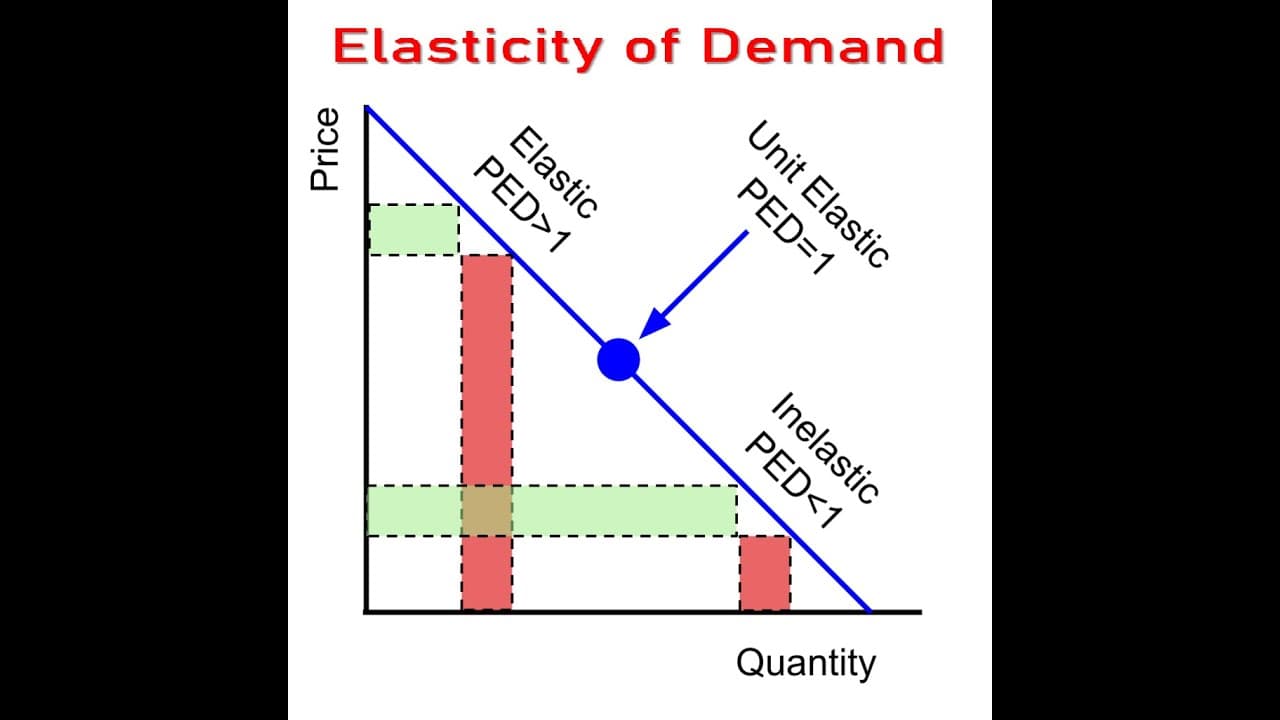
Elasticity of demand measures how much the quantity demanded of a good changes in response to price changes. It helps managers understand how pricing affects total revenue: elastic demand means raising prices could lower revenue, while inelastic demand means raising prices could increase revenue. This concept plays a crucial role in pricing strategies and market behavior.
Transcript
hello everybody and welcome to this session today we are going to discuss about the elasticity of first let us see what does elasticity of demand mean previously we have discussed about demand demand is the amount or the quantity that is needed by the customers or the consumers and law of demand states that people might buy more when the price beco... Read More
Key Insights
- 👮 Demand follows the law of demand, stating an inverse relationship between price and quantity demanded.
- 💱 Elasticity of demand measures the extent to which quantity demanded will change in response to a change in price.
- 😵 Different types of demand elasticity include price elasticity, cross elasticity, income elasticity, and elasticity of expectations.
- 🧑🏭 Factors such as brand strength, necessity, habits, availability of substitutes, and time influence price elasticity of demand.
- 🥺 Total revenue is affected by the elasticity of demand, with elastic demand leading to a decrease in total revenue when price increases, and inelastic demand leading to an increase in total revenue.
- 💄 Managers should consider the relationship between price and total revenue when making pricing decisions.
- 🤨 The decision to raise or decrease prices depends on the elasticity of demand.
Install to Summarize YouTube Videos and Get Transcripts
Explore YouTube Video Summarizer or Get YouTube Transcript Extractor
Questions & Answers
Q: What is elasticity of demand?
Elasticity of demand measures the responsiveness of quantity demanded to changes in price. It tells us how much and to what extent demand will change in response to a price change.
Q: How is price elasticity calculated?
Price elasticity can be calculated by dividing the percentage change in quantity by the percentage change in price, using the formula: (percentage change in quantity)/(percentage change in price).
Q: What factors influence price elasticity of demand?
Factors such as brand strength, necessity of the good, consumer habits, availability of substitutes, and the time horizon influence price elasticity of demand. Strong brands and necessity goods tend to be less elastic, while availability of substitutes and longer time horizons make demand more elastic.
Q: How does elasticity of demand affect total revenue?
If demand is elastic, an increase in price will lead to a decrease in total revenue. If demand is inelastic, an increase in price will lead to an increase in total revenue. If demand is unitary, total revenue will remain the same.
Summary & Key Takeaways
-
Demand is the quantity needed by consumers and follows the law of demand, which states an inverse relationship between price and quantity demanded.
-
Elasticity of demand measures the extent to which quantity demanded will change in response to a change in price.
-
Price elasticity, cross elasticity, income elasticity, and elasticity of expectations are different types of demand elasticity.
Read in Other Languages (beta)
Share This Summary 📚
Summarize YouTube Videos and Get Video Transcripts with 1-Click
Try YouTube Summary with ChatGPT & Claude or YouTube Transcript Generator
Explore More Summaries from Solomon Getachew 📚






Summarize YouTube Videos and Get Video Transcripts with 1-Click
Try YouTube Summary with ChatGPT & Claude or YouTube Transcript Generator