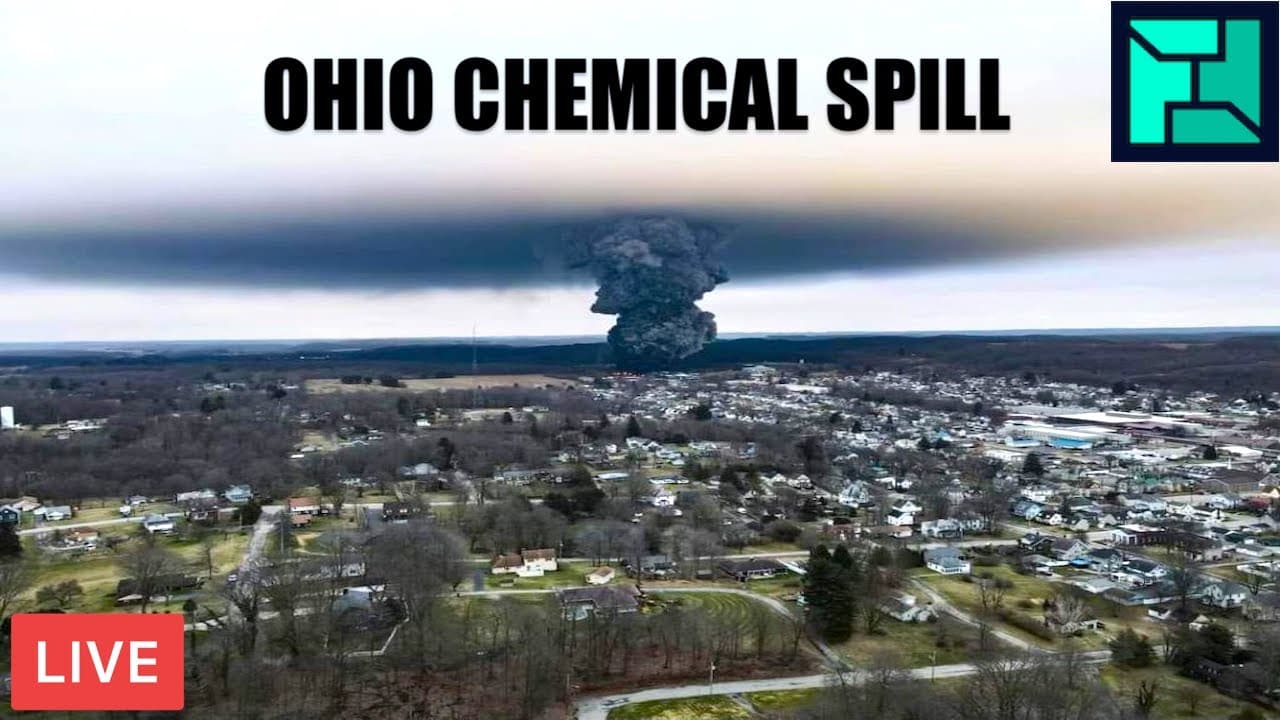
🔴 Is Ohio's Train Derailment a "Mini-Chernobyl"? | [OFFICE HOURS] Podcast 106
TL;DR
Train derailment in Ohio leads to concerns about environmental and health impacts, but scientific data suggests no immediate danger.
Transcript
thank you foreign thank you [Applause] foreign foreign chat that's right no intro today I want to get right into things hello everyone um I've been sent over the last couple of days last week or so this news about a trained derailment in Ohio and it's being sent to me because uh it's been paired in the media by people on social media America's mini... Read More
Key Insights
- 🤨 The train derailment incident in Ohio raised concerns about environmental contamination and health risks.
- 💀 Concentrations of hazardous chemicals released during the incident were below actionable levels, suggesting limited immediate danger to the public.
- 🌥️ The controlled burn of the chemicals was carried out to prevent a larger explosion and further dispersion.
- 🧑⚕️ Long-term health effects are unlikely due to the volatility and degradation of the chemicals involved.
- 🌥️ Comparisons to larger-scale disasters like Chernobyl are misleading and exaggerate the potential risks of this incident.
- *️⃣ Proper communication of risk and ensuring accurate information is key in addressing public concerns during such incidents.
Install to Summarize YouTube Videos and Get Transcripts
Explore YouTube Video Summarizer or Get YouTube Transcript Extractor
Questions & Answers
Q: Was the train derailment in Ohio comparable to the Chernobyl disaster?
No, the scale and impact of the Ohio incident are significantly smaller when compared to Chernobyl, which had a massive explosion and released large amounts of radioactive material.
Q: Are the chemicals released in the derailment carcinogenic?
While some of the chemicals may have carcinogenic properties, the concentrations detected were significantly below the levels known to cause harm. Short-term exposure is unlikely to lead to adverse health effects, and long-term effects are unlikely due to the volatility and degradation of the chemicals.
Q: How far did the contamination from the incident spread?
The contamination from the train derailment was expected to affect an area of approximately 10 miles. However, the concentrations detected in the air and water were below actionable levels, suggesting limited contamination within the affected area.
Q: Did the company responsible for the incident take any actions to mitigate the effects?
The company responsible, Norfolk Southern, donated financial aid to affected families, fire departments, and the Red Cross. They also cooperated with environmental agencies to monitor air and water quality and facilitate the cleanup.
Summary & Key Takeaways
-
A train derailment in Ohio resulted in a fire and release of hazardous chemicals, causing concerns about potential health and environmental impacts.
-
The Environmental Protection Agency (EPA) monitored air quality and found no actionable levels of airborne chemicals in homes or at the site.
-
The controlled burn of the chemicals was the safest option to prevent a larger explosion and dispersion of the chemicals, despite its alarming appearance.
-
Long-term health effects from the incident are unlikely, as the volatile chemicals will dissipate and degrade in the environment.
Read in Other Languages (beta)
Share This Summary 📚
Summarize YouTube Videos and Get Video Transcripts with 1-Click
Try YouTube Summary with ChatGPT & Claude or YouTube Transcript Generator
Explore More Summaries from [OFFICE HOURS] 📚
![🔴 Viral "Hanger Reflex" Explained! | [OFFICE HOURS] Podcast 090 thumbnail](/_next/image?url=https%3A%2F%2Fi.ytimg.com%2Fvi%2F-GQPNu0erKc%2Fhqdefault.jpg&w=750&q=75)





Summarize YouTube Videos and Get Video Transcripts with 1-Click
Try YouTube Summary with ChatGPT & Claude or YouTube Transcript Generator