What Did Trump Experience as President?
TL;DR
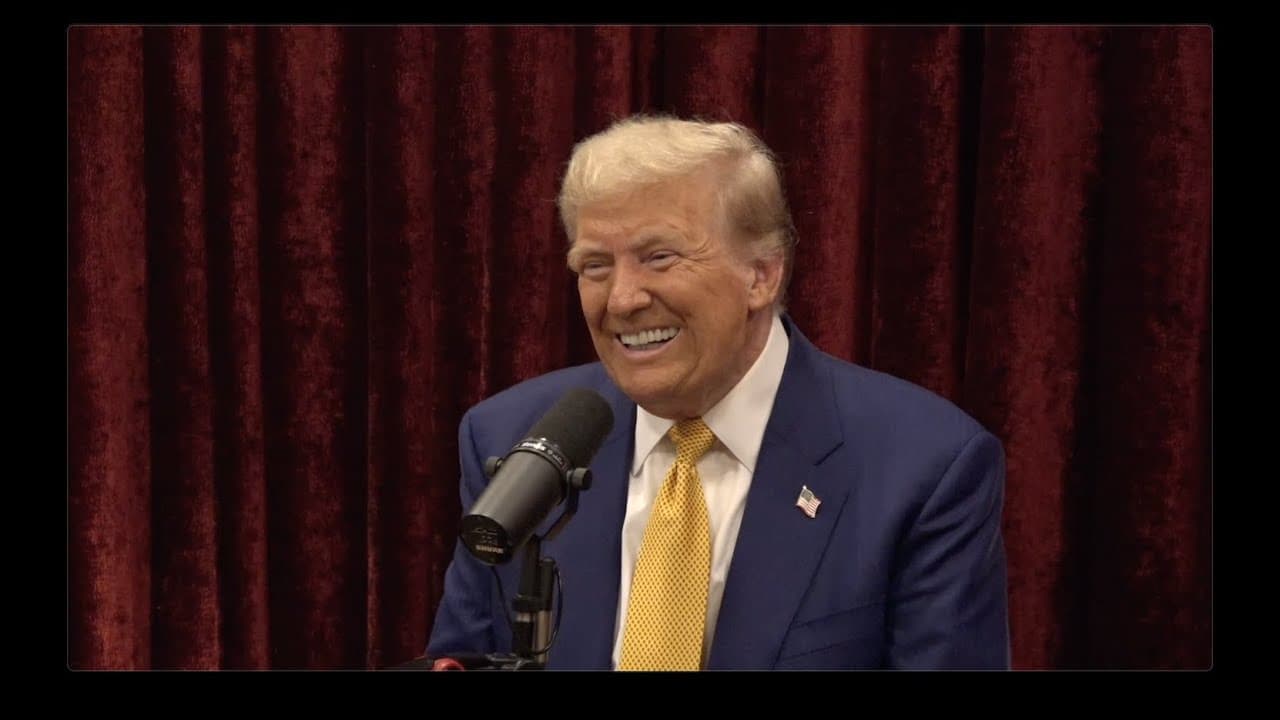
Trump describes his transition from celebrity to president as surreal and challenging, emphasizing his outsider status. He reflects on accomplishments like economic growth while navigating fierce opposition, including impeachment attempts. The former president also critiques media biases and discusses the significance of tariffs over income tax.
Transcript
Joe Rogan podcast check it out The Joe Rogan Experience Train by day Joe Rogan podcast by night all day all right we're rolling good to see you sir here we go um one of the things I wanted to talk to you about I wanted to play this but we decided we shouldn't play it because uh it could get copyright strike and we don't want... Read More
Key Insights
- Trump recalls his early support from media figures and how it shifted once he became a serious presidential contender, highlighting the coordinated nature of the opposition he faced.
- He describes the surreal experience of entering the White House for the first time, comparing it to his previous life and emphasizing the historical significance of the Lincoln Bedroom.
- Trump discusses the challenges of appointing government officials, noting his reliance on recommendations due to his outsider status and the pitfalls of choosing non-politicians.
- He reflects on the attacks and impeachment efforts he faced, asserting that his presidency was marked by significant achievements despite constant opposition.
- Trump emphasizes the importance of tariffs and suggests they could replace income tax, citing historical examples of economic success through tariffs.
- He criticizes environmental regulations as tools for stifling growth and discusses how they are manipulated for financial gain by consultants and lawyers.
- Trump expresses skepticism about the effectiveness of wind energy and advocates for nuclear power, citing France's success with small nuclear plants.
- He shares his views on election interference, media bias, and the impact of social media censorship on election outcomes, defending his stance on the 2020 election results.
Install to Summarize YouTube Videos and Get Transcripts
Explore YouTube Video Summarizer or Get YouTube Transcript Extractor
Questions & Answers
Q: What was Trump's experience like when he first entered the White House?
Trump describes his first entry into the White House as a surreal experience, akin to stepping into a different life. He was struck by the beauty and historical significance of the building, particularly the Lincoln Bedroom, which he had never seen before. The experience was both awe-inspiring and humbling, marking a significant transition from his previous life as a businessman and media personality.
Q: How does Trump view the media's shift in perception towards him?
Trump recalls that media figures were initially supportive and friendly, but their perception shifted dramatically as he became a serious presidential contender. He attributes this change to a coordinated effort by the media and political establishment to undermine his candidacy and presidency. Trump believes that this shift was systematic and unprecedented in its intensity and coordination.
Q: What are Trump's views on tariffs and taxes?
Trump advocates for the use of tariffs as a means to strengthen the American economy, suggesting they could even replace income tax. He cites historical examples, such as the economic success during President McKinley's era, to support his argument. Trump believes that tariffs can protect American jobs and industries from foreign competition, making the country economically prosperous.
Q: What challenges did Trump face in appointing government officials?
Trump faced significant challenges in appointing government officials due to his outsider status and lack of political connections. He relied heavily on recommendations from people he respected, but this sometimes led to appointments that he later regretted. Trump acknowledges the difficulty of choosing non-politicians, who are often unvetted and can pose risks due to their lack of political experience.
Q: How does Trump view environmental regulations?
Trump is critical of environmental regulations, viewing them as tools used to stifle economic growth and development. He argues that these regulations are often manipulated by consultants and lawyers for financial gain, making it difficult for businesses to operate efficiently. Trump believes that while environmental protection is important, regulations should not be used to hinder economic progress.
Q: What are Trump's thoughts on wind energy and nuclear power?
Trump is skeptical about the effectiveness of wind energy, criticizing it as an expensive and inefficient form of electricity generation. He points out the environmental impact of windmills, such as bird deaths and landscape disruption. In contrast, Trump advocates for nuclear power, citing France's success with small nuclear plants as an example of clean and efficient energy production.
Q: How does Trump defend his stance on the 2020 election results?
Trump defends his stance on the 2020 election results by pointing to media bias and social media censorship as factors that influenced the outcome. He argues that the suppression of the Hunter Biden laptop story and other forms of election interference had a significant impact on voter perception. Trump maintains that questioning the election results is not about denying the outcome but addressing these underlying issues.
Q: What is Trump's perspective on the international challenges during his presidency?
Trump believes that his presidency was marked by significant international challenges, such as tensions with Russia and China. He claims to have had good relationships with leaders like Vladimir Putin and Xi Jinping, using diplomacy and economic pressure to manage conflicts. Trump asserts that his administration's approach to foreign policy was effective in maintaining stability and preventing conflicts, such as Russia's invasion of Ukraine.
Summary & Key Takeaways
-
Donald Trump reflects on his transition from a media personality to a political figure, detailing the shift in media perception as he became a serious presidential contender. He discusses the surreal nature of entering the White House and the challenges of appointing officials without a political background.
-
Trump highlights his achievements during his presidency, including economic growth and military successes, while facing constant opposition and impeachment efforts. He advocates for tariffs as a means to strengthen the economy and suggests replacing income tax with tariffs.
-
He criticizes environmental regulations for stifling growth and discusses the inefficiency of wind energy compared to nuclear power. Trump also defends his stance on the 2020 election results, citing media bias and social media censorship as factors influencing election outcomes.
Read in Other Languages (beta)
Share This Summary 📚
Summarize YouTube Videos and Get Video Transcripts with 1-Click
Try YouTube Summary with ChatGPT & Claude or YouTube Transcript Generator
Explore More Summaries from PowerfulJRE 📚


Summarize YouTube Videos and Get Video Transcripts with 1-Click
Try YouTube Summary with ChatGPT & Claude or YouTube Transcript Generator