What Can We Learn from Peter's Transformation in the Bible?

TL;DR
Peter's transformation from a flawed disciple to a foundational apostle showcases the power of faith and the importance of a solid spiritual foundation. His journey emphasizes redemption, the potential for growth despite failures, and the significance of Christ's teachings on discipleship, especially during times of suffering and adversity.
Transcript
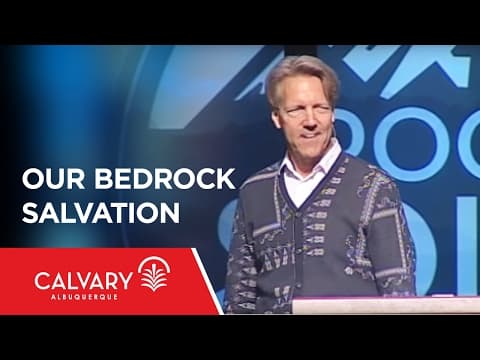
Pastor Skip Heitzig guides us through First and Second Peter in the series Rock Solid. First Peter, chapter 1, let's turn there for our first study in Rock Solid and we'll pray together. Father, we began today with a song that really just says it all: "On Christ the solid rock I stand, all other ground is sinking sand.&... Read More
Key Insights
- Peter's transformation from a fisherman to a foundational apostle illustrates the power of faith and trust in Christ, highlighting the importance of building one's life on a solid foundation.
- The Leaning Tower of Pisa serves as a metaphor for the necessity of a strong foundation, paralleling Jesus' teachings on the importance of a stable spiritual base.
- Peter's life is marked by impulsiveness and mistakes, yet his story is one of redemption and growth, demonstrating that failures can lead to spiritual strength.
- The name change from Simon to Peter signifies a transformation from natural to supernatural potential, emphasizing the transformative power of Christ's vision for individuals.
- Peter's role as a leader among the apostles is underscored by his prominence in the New Testament and his influence in the early church, despite his initial flaws.
- The concept of discipleship is explored through Peter's journey, emphasizing self-denial and the importance of following Christ's teachings to experience spiritual growth.
- Peter's writings focus on themes of suffering, hope, and living a life of faith amidst adversity, offering guidance for believers facing challenges.
- The restoration of Peter after his denial of Christ illustrates the theme of forgiveness and the potential for renewed purpose, encouraging believers to persevere in their faith.
Install to Summarize YouTube Videos and Get Transcripts
Explore YouTube Video Summarizer or Get YouTube Transcript Extractor
Questions & Answers
Q: What is the significance of Peter's name change?
Peter's name change from Simon to Peter signifies a transformation from his natural state to his potential in Christ. It represents the shift from his impulsive and flawed nature to becoming a foundational figure in the early church. This change highlights the transformative power of Christ's vision for individuals, seeing them not only for who they are but for who they can become through faith.
Q: How does the Leaning Tower of Pisa metaphor relate to Peter's teachings?
The Leaning Tower of Pisa serves as a metaphor for the necessity of a strong foundation, paralleling Jesus' teachings about building one's life on solid ground. Just as the tower's instability is due to its weak foundation, Peter's teachings emphasize the importance of a stable spiritual base in Christ. This metaphor underscores the need for believers to build their lives on the 'solid rock' of faith to withstand life's challenges.
Q: What role did Peter play among the apostles?
Peter was a leader among the apostles, often listed first in the New Testament accounts. He was a dominant figure in the early church, taking initiative and leading key events, such as the first sermon at Pentecost. Despite his initial flaws and impulsive nature, Peter's leadership and influence were pivotal in spreading the teachings of Christ and establishing the early Christian community.
Q: How does Peter's life illustrate the concept of discipleship?
Peter's life exemplifies the journey of discipleship, marked by self-denial, learning, and growth in faith. His experiences highlight the importance of following Christ's teachings, embracing challenges, and undergoing personal transformation. Peter's story shows that true discipleship involves a lifelong commitment to spiritual growth and conformity to Christ's will, despite personal failures and struggles.
Q: What themes are prominent in Peter's writings?
Peter's writings prominently feature themes of suffering, hope, and faith. He addresses the challenges believers face, offering guidance on living victoriously amidst hostility without bitterness. His letters discuss God's foreknowledge, election, and the eternal inheritance promised to believers. Peter's teachings encourage steadfastness and faithfulness, emphasizing the importance of a strong spiritual foundation.
Q: How did Peter's restoration after denying Christ impact his ministry?
Peter's restoration after denying Christ was a pivotal moment in his ministry, demonstrating the power of forgiveness and renewal. Jesus' reinstatement of Peter, entrusting him with the care of his flock, marked a profound heart change. This restoration empowered Peter to lead effectively, preach boldly, and spread the Gospel, illustrating the potential for renewed purpose and strength through Christ's grace.
Q: What is the significance of Peter's role in the early church?
Peter's role in the early church was significant due to his leadership and influence in spreading the teachings of Christ. As a key figure in the New Testament, he played a crucial role in establishing the Christian community, preaching at Pentecost, and addressing the Jerusalem council. His transformation from a flawed disciple to a foundational apostle underscores his importance in the church's development.
Q: How does Peter's story relate to modern believers?
Peter's story is relatable to modern believers as it reflects the journey of personal growth, redemption, and faith amidst challenges. His life illustrates that despite weaknesses and failures, individuals can achieve spiritual strength through trust in Christ. Peter's teachings provide guidance on living a life of faith, offering hope and encouragement for believers facing adversity in their spiritual journey.
Summary & Key Takeaways
-
Peter's journey from a flawed disciple to a foundational apostle is a testament to the transformative power of faith in Christ. His life illustrates the importance of building a strong spiritual foundation, akin to the metaphor of the Leaning Tower of Pisa.
-
Despite his impulsive nature and mistakes, Peter's story is one of redemption and growth. His transformation from Simon to Peter highlights the potential for supernatural change through Christ's guidance and vision.
-
Peter's writings, focusing on suffering, hope, and faith, offer valuable insights for believers facing adversity. His restoration after denying Christ underscores themes of forgiveness and renewed purpose, encouraging perseverance in faith.
Read in Other Languages (beta)
Share This Summary 📚
Summarize YouTube Videos and Get Video Transcripts with 1-Click
Try YouTube Summary with ChatGPT & Claude or YouTube Transcript Generator
Explore More Summaries from Calvary Church with Skip Heitzig 📚



Summarize YouTube Videos and Get Video Transcripts with 1-Click
Try YouTube Summary with ChatGPT & Claude or YouTube Transcript Generator