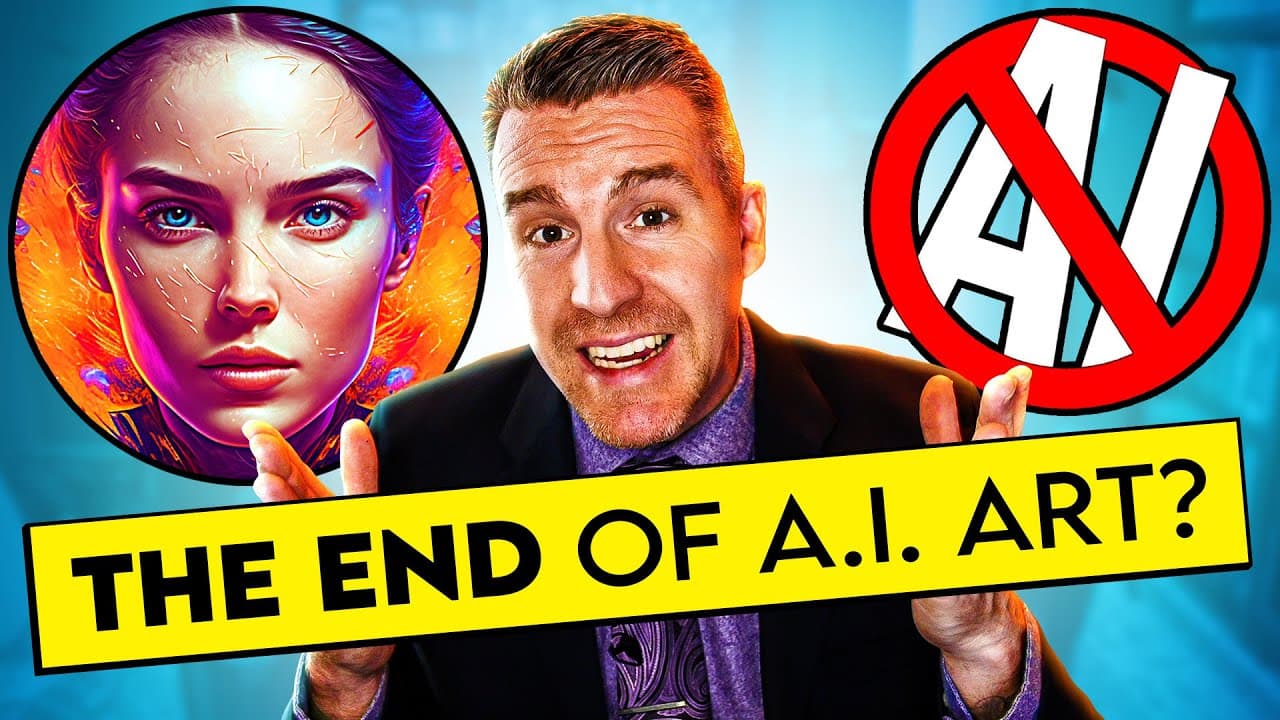
Lawyer Explains Stable Diffusion Lawsuit (Major Implications!)
TL;DR
The lawsuit against stability AI, the creator of stable diffusion and mid-journey, raises concerns about copyright infringement in AI-generated content.
Transcript
artificial intelligence artificial intelligence AI image generators even the least talented of us can create artwork with just a few clicks over the last few months we've seen an incredible surge in AI content generated using AI programs as tools like dollies stable diffusion and mid-journey have become accessible to the general public and as a res... Read More
Key Insights
- 👏 The lawsuit against stability AI raises concerns about the use of copyrighted images in AI-generated content.
- 😫 The lion 5B data set used by stability AI is massive and is largely responsible for the impressive performance of their AI image generators.
- ❓ The case revolves around the question of whether the AI-generated images are derivative works and if stability AI's use constitutes fair use under copyright law.
- 🧑🏭 Fair use is a complex concept that involves factors such as the transformative nature of the new use, the amount of original work used, and the impact on the market for the original work.
- 😒 Precedents like Perfect 10 vs. Google and Authors Guild vs. Google provide insights into fair use arguments for transformative uses of copyrighted materials.
- 👮 The decision in this case may shape the future of AI-generated content and its relationship with copyright law.
- ©️ The outcome of the lawsuit will have far-reaching implications for AI image generators and the rights of copyright owners.
Install to Summarize YouTube Videos and Get Transcripts
Explore YouTube Video Summarizer or Get YouTube Transcript Extractor
Questions & Answers
Q: What is the basis for the lawsuit against stability AI?
The lawsuit alleges that stability AI obtained billions of copyrighted images without consent, which they used to train their AI image generator programs. Using copyrighted images without authorization can be considered copyright infringement.
Q: Is stability AI's defense that their programs are open source and free valid?
No, the argument that stability AI's programs are open source and free does not make their use of copyrighted images legal. Copyright infringement is determined by the use of copyrighted works, not by the availability or price of a product.
Q: What is the difference between a derivative work and a transformative work?
A derivative work is based on or derived from an existing work and requires permission from the copyright owner. On the other hand, a transformative work significantly alters the original work, adds new expression or insights, and serves an entirely new purpose, which may not require permission from the copyright owner.
Q: How does stability AI's use of the latent images relate to copyright infringement?
The lawsuit argues that the latent images generated by stability AI's programs are derived from the copyrighted training images, making them reconstructed copies. While not exact replicas, they are considered derivative works and potentially infringe on the copyright holders' exclusive rights.
Key Insights:
- The lawsuit against stability AI raises concerns about the use of copyrighted images in AI-generated content.
- The lion 5B data set used by stability AI is massive and is largely responsible for the impressive performance of their AI image generators.
- The case revolves around the question of whether the AI-generated images are derivative works and if stability AI's use constitutes fair use under copyright law.
- Fair use is a complex concept that involves factors such as the transformative nature of the new use, the amount of original work used, and the impact on the market for the original work.
- Precedents like Perfect 10 vs. Google and Authors Guild vs. Google provide insights into fair use arguments for transformative uses of copyrighted materials.
- The decision in this case may shape the future of AI-generated content and its relationship with copyright law.
- The outcome of the lawsuit will have far-reaching implications for AI image generators and the rights of copyright owners.
- While the technology continues to evolve, it is important to carefully consider the impact of fair use decisions on both art and computer science.
Summary & Key Takeaways
-
Stability AI is accused of using nearly 6 billion copyrighted images without consent in its AI image generator programs, stable diffusion and mid-journey.
-
The class action lawsuit claims that stability AI's use of copyrighted images constitutes copyright infringement on a massive scale.
-
The lawsuit focuses on whether the AI-generated images are considered derivative works and explores the issue of fair use.
Read in Other Languages (beta)
Share This Summary 📚
Summarize YouTube Videos and Get Video Transcripts with 1-Click
Try YouTube Summary with ChatGPT & Claude or YouTube Transcript Generator
Explore More Summaries from Corridor Crew 📚

Summarize YouTube Videos and Get Video Transcripts with 1-Click
Try YouTube Summary with ChatGPT & Claude or YouTube Transcript Generator