Predicting and Explaining Running Related Injuries Using Case-Based Reasoning - ML Applications
TL;DR
Researchers developed a case-based reasoning method to predict injury risk for marathon runners using wearable sensor data, offering personalized insights and recommendations for injury prevention.
Transcript
hey everyone and welcome back to my channel if you can't tell from my voice i'm a little bit sick at the moment i think i just have a fairly normal cold but i'm waiting for a test result to find out more i'll be posting updates on my instagram if it is anything more sinister so if you want to follow me there but i did have a definitely a very diffe... Read More
Key Insights
- 🏃 Running-related injuries are prevalent among marathon runners, affecting both novice and experienced runners.
- 🧑🏭 Previous research has proposed various risk factors, but no definitive answers have been found.
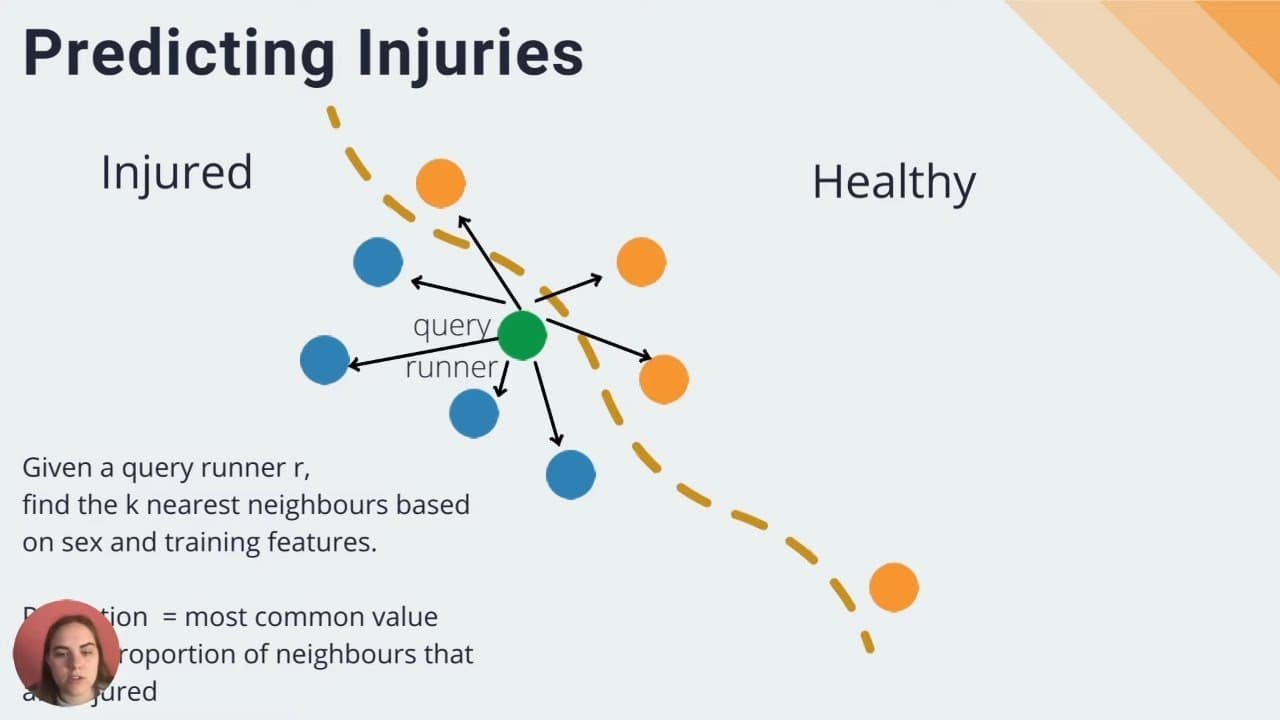
- ⚾ This study offers a novel case-based reasoning approach using wearable sensor data to predict injury risk and provide individualized recommendations for injury prevention.
- 🏃 The prediction model achieved reasonable accuracy and provided insights into significant feature differences between injured and healthy runners.
- 👤 Live user trials would be necessary to evaluate the real impact of the explanations and user behavior changes.
- 🏃 The developed method fills a gap in available resources for marathon runners to understand their injury risk and take preventive measures.
- 🖤 The results are modest but valuable, considering the lack of existing support for runners to assess their injury risk.
Install to Summarize YouTube Videos and Get Transcripts
Explore YouTube Video Summarizer or Get YouTube Transcript Extractor
Questions & Answers
Q: What are the common risk factors for running-related injuries?
Common risk factors include physiological variables related to running gait, such as foot placement and hip motion, training load (either overuse or underuse), experience level, and previous history of injuries.
Q: How was the prediction model trained in this study?
The prediction model was trained using a large cohort of recreational marathon runners' raw training data obtained through a data sharing agreement with Strava. Training breaks of 14 or more days were used as a proxy for injury.
Q: How accurate were the injury risk predictions?
The prediction model achieved modest mean absolute error values, indicating reasonable accuracy. However, the risk score correlation, which measures the correlation between the predicted risk score and the actual risk of injury, was highly correlated with injuries.
Q: What insights were provided by the study's explanations for injury risk?
The explanations highlighted significant feature differences between injured and healthy runners. Load-based variables, such as total distance and active days, were commonly found to be significant. The explanations suggested specific changes in training to lower the injury risk score.
Summary & Key Takeaways
-
Running-related injuries are common, with 50% of regular runners getting injured annually, and 17% of marathon participants not completing the race due to injuries sustained during training or on race day.
-
Previous research has explored potential risk factors for running-related injuries, such as physiological variables, training load, experience, and personality, but without definitive evidence.
-
This study presents a case-based reasoning approach that uses raw training data from wearable sensors to predict injury risk for marathon runners and provides personalized recommendations for injury prevention.
Read in Other Languages (beta)
Share This Summary 📚
Summarize YouTube Videos and Get Video Transcripts with 1-Click
Try YouTube Summary with ChatGPT & Claude or YouTube Transcript Generator
Explore More Summaries from PhD and Productivity 📚






Summarize YouTube Videos and Get Video Transcripts with 1-Click
Try YouTube Summary with ChatGPT & Claude or YouTube Transcript Generator