EXCLUSIVE: Fur Seals Are Back From the Brink on California Islands | National Geographic
TL;DR
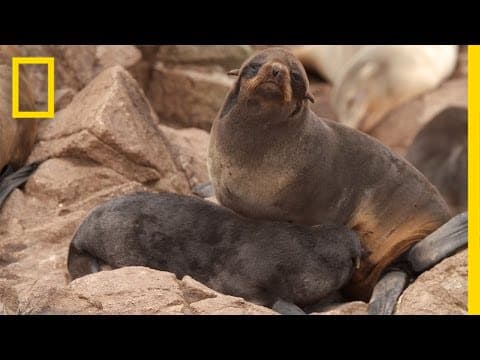
Fur seals were hunted to near extinction but have been seeing a resurgence in population growth.
Transcript
the northern fur seal was a top predator in this area and 150,000 of them were removed from the ecosystem my name is Jim teats and I'm a biologist four-point blue conservation science and I work on southeast Farallon island which is 30 miles west of San Francisco in the eighteen hundred's throw a lot of many sealers that came to the island hunting ... Read More
Key Insights
- 🦭 Fur seals were nearly wiped out from Southeast Farallon Island due to hunting in the 1800s, but their population has been steadily recovering since 1996.
- 🦭 Biologists conduct regular surveys and visitations to monitor the fur seal population growth and behavior accurately.
- 🥶 Fur seals have unique adaptations, including dense fur that helps them stay warm in cold waters.
- 🧡 Tagging studies have revealed the movement and range of fur seals across different regions, including individuals swimming from Russia to Southeast Farallon Island.
- 🧑⚕️ The fur seal population might not fully recover to historical levels due to ecosystem health concerns, with uncertainties about the future population size.
- 😎 Population estimates are likely conservative due to the seals' behavior of spending time hunting or cooling off in the water.
- 🖐️ Conservation efforts and monitoring play a crucial role in ensuring the continued recovery and sustainability of the fur seal population.
Install to Summarize YouTube Videos and Get Transcripts
Explore YouTube Video Summarizer or Get YouTube Transcript Extractor
Questions & Answers
Q: What led to the near extinction of the fur seals on Southeast Farallon Island?
The fur seals were targeted by sealers in the 1800s for their pelts, resulting in the removal of approximately 150,000 individuals from the ecosystem.
Q: How have biologists been monitoring and studying the fur seal population resurgence?
Biologists conduct regular surveys, visiting the island twice a month to count the seals more accurately and track their growth and behavior since 1996.
Q: What challenges do biologists face in studying the fur seals, particularly in the West End of the island?
The main challenge is not being able to see the fur seals at the West End during the regular surveys, prompting biologists to visit the area more frequently for a closer count.
Q: What are some unique characteristics of fur seals that help them thrive in cold waters?
Fur seals have dense fur that keeps them warm and buoyant in cold waters, allowing them to hunt efficiently and survive in chilly ocean environments.
Summary & Key Takeaways
-
In the 1800s, the northern fur seals were heavily hunted, leading to a near extinction on Southeast Farallon Island.
-
Since 1996, fur seals have shown signs of recovery with over 1,000 individuals and 300-400 pups in the colony.
-
Biologists conduct surveys to accurately count the growing population and monitor their behavior and distribution.
Read in Other Languages (beta)
Share This Summary 📚
Summarize YouTube Videos and Get Video Transcripts with 1-Click
Try YouTube Summary with ChatGPT & Claude or YouTube Transcript Generator
Explore More Summaries from National Geographic 📚



Summarize YouTube Videos and Get Video Transcripts with 1-Click
Try YouTube Summary with ChatGPT & Claude or YouTube Transcript Generator