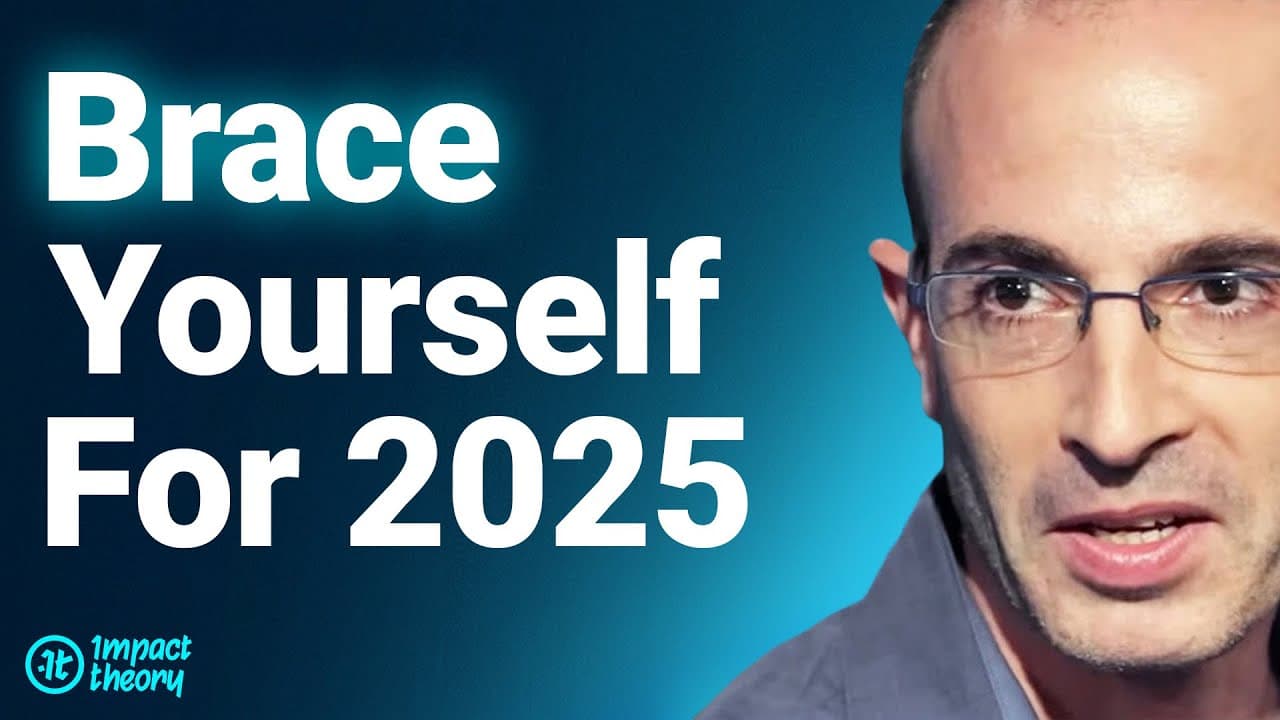
5 Lessons For The 21st Century: How To SURVIVE & THRIVE In The New World | Yuval Noah Harari
TL;DR
Bioengineering, AI, and nationalism pose both significant dangers and potential benefits to humanity, impacting areas such as healthcare, personal identity, and societal cohesion.
Transcript
if you're a Chinese emperor like 2000 years ago one of your biggest problems in life is that if you give too much power to your ministers and Generals they might rebel against you the will to power and want to kill you and your family and establish their Dynasty and I found a solution which is based on bioengineering now you can ask bioengineering ... Read More
Key Insights
- 🪡 Bioengineering and AI have the potential to revolutionize healthcare, but caution is needed to ensure privacy and prevent misuse.
- 😨 Nationalism, when understood as caring for a larger community, can be a force for unity and progress.
- ✊ However, nationalism can also be manipulated by leaders to gain and consolidate power.
- 🤙 The current political climate calls for reflection on the stories and narratives that shape our society and the potential consequences they may have.
Install to Summarize YouTube Videos and Get Transcripts
Explore YouTube Video Summarizer or Get YouTube Transcript Extractor
Questions & Answers
Q: How did ancient Chinese emperors prevent rebellion from ministers and generals?
Ancient Chinese emperors used castration as a form of bioengineering to create eunuchs who posed less of a threat to their power and couldn't establish their own dynasty.
Q: How can bioengineering and AI improve healthcare?
Bioengineering and AI can lead to significant advancements in healthcare, allowing for personalized treatments, early disease detection, and improved patient outcomes.
Q: What are the dangers associated with bioengineering and AI?
Ethical concerns arise with bioengineering and the potential creation of a new species. AI can threaten individual privacy and potentially lead to job displacement if misused by those in power.
Q: Can nationalism be a positive force for society?
Nationalism, when focused on building a sense of community and shared responsibility, can unite people and promote progress. However, it can also be used as a tool for divisiveness and exclusion.
Key Insights:
- Bioengineering and AI have the potential to revolutionize healthcare, but caution is needed to ensure privacy and prevent misuse.
- Nationalism, when understood as caring for a larger community, can be a force for unity and progress.
- However, nationalism can also be manipulated by leaders to gain and consolidate power.
- The current political climate calls for reflection on the stories and narratives that shape our society and the potential consequences they may have.
- The world is at a critical juncture, with the potential for significant advancements or dangers in the realms of bioengineering, AI, and nationalism.
Summary & Key Takeaways
-
Bioengineering, such as castration in ancient China, was a solution to prevent the threat of rebellion from ministers and generals who could establish their own dynasty, while AI can make decisions independent of human control in the present day.
-
Bioengineering and AI have the potential to transform healthcare, allowing for personalized treatments and diagnostics, but also raise concerns about privacy and ethical implications.
-
Nationalism, when understood as a sense of caring for a larger community, can be a force for unity and progress, but it can also be exploited by leaders who use divisive issues to gain power.
Read in Other Languages (beta)
Share This Summary 📚
Summarize YouTube Videos and Get Video Transcripts with 1-Click
Try YouTube Summary with ChatGPT & Claude or YouTube Transcript Generator
Explore More Summaries from Tom Bilyeu 📚



Summarize YouTube Videos and Get Video Transcripts with 1-Click
Try YouTube Summary with ChatGPT & Claude or YouTube Transcript Generator