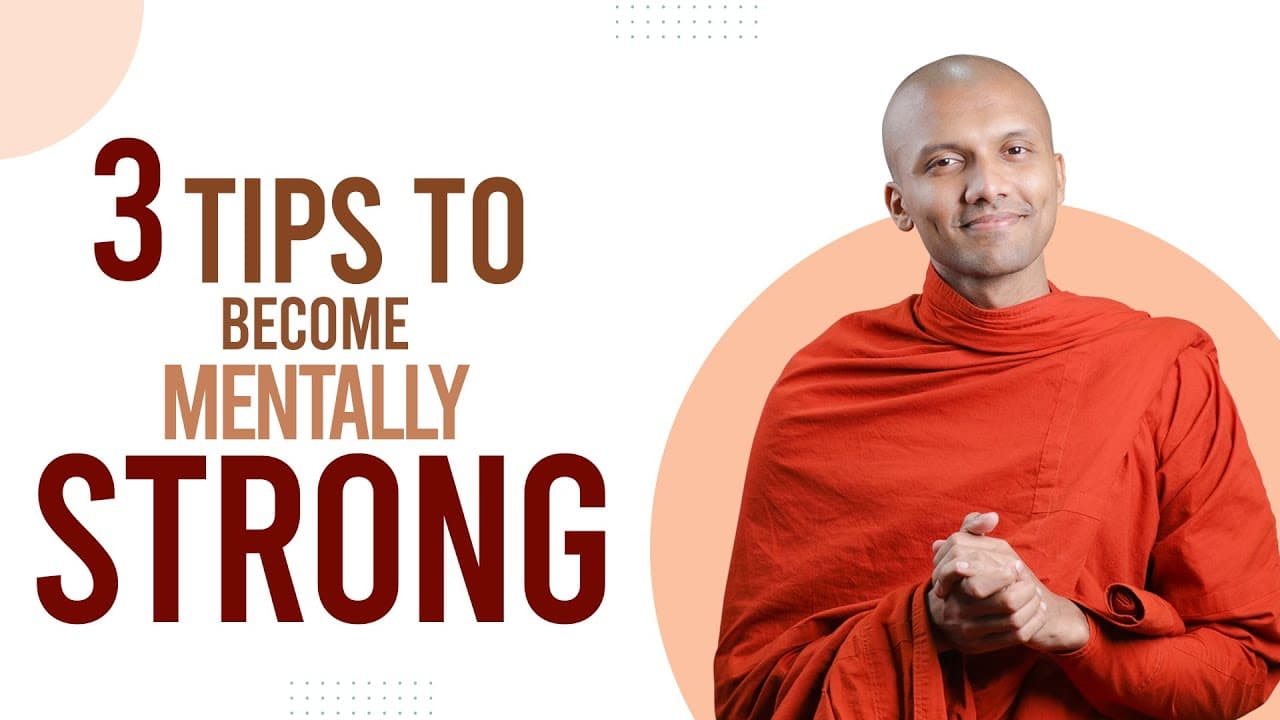
3 Tips to Become Mentally Strong | Buddhism In English
TL;DR
Learn three Buddhist tips to develop mental resilience.
Transcript
welcome to another video in today's video I'm gonna be answering a question from the comments so the question is please tell us how to be mentally strong we need it very much so let's talk about this today how to be mentally strong and how to develop a strong mindset well first of all let's take a look at what is a s... Read More
Key Insights
- The Buddha compares a strong mindset to a rock unshaken by storms, emphasizing resilience against praise and blame.
- Life's ups and downs are inevitable, and maintaining emotional balance through mindfulness and self-awareness is crucial.
- Understanding what is within your control and what is not helps in developing resilience and managing reactions.
- Resilience involves bouncing back quickly from adversity by focusing on internal control rather than external opinions.
- A problem-solving mindset requires calmness and the ability to analyze problems without personalizing them.
- Self-love and self-compassion prevent the acceptance of external negativity and foster inner peace.
- Practicing daily self-love affirmations can reinforce mental strength and emotional stability.
- True mental strength is not about aggression or anger but about maintaining composure amidst life's challenges.
Install to Summarize YouTube Videos and Get Transcripts
Explore YouTube Video Summarizer or Get YouTube Transcript Extractor
Questions & Answers
Q: What is the main analogy used to describe a strong mindset?
The main analogy used is that of a rock unshaken by storms, as described by the Buddha. This symbolizes a mindset that remains stable and unaffected by external praise or blame, reflecting the inner resilience and emotional strength necessary to navigate life's challenges.
Q: How does the video suggest handling life's ups and downs?
The video suggests handling life's ups and downs by maintaining emotional balance through mindfulness and self-awareness. Recognizing the Eight worldly conditions, such as praise and blame, and practicing acceptance and non-reactivity helps in managing emotions and maintaining stability during challenging times.
Q: What role does control play in building resilience?
Control plays a crucial role in building resilience by distinguishing between what is within one's control and what is not. By focusing on internal reactions rather than external opinions, individuals can exercise choice in how they respond to criticism and adversity, thereby strengthening their mental resilience.
Q: What is the suggested approach to problem-solving?
The suggested approach to problem-solving involves maintaining calmness and not personalizing problems. By keeping emotions in check and analyzing the root causes of issues, individuals can address problems more effectively and avoid being overwhelmed, fostering a resilient and solution-oriented mindset.
Q: How can self-love and self-compassion impact mental strength?
Self-love and self-compassion impact mental strength by preventing the acceptance of external negativity and fostering inner peace. By loving oneself and rejecting negativity, individuals can maintain emotional stability and resilience, ensuring that they are not easily disturbed by others' criticisms or adverse situations.
Q: What daily practice is recommended to reinforce mental strength?
A recommended daily practice to reinforce mental strength is affirming self-love each morning. By committing to love oneself and reject negativity, individuals can start the day with a positive mindset, reinforcing their emotional stability and resilience against external challenges and criticisms.
Q: How does the video redefine the concept of a strong mindset?
The video redefines a strong mindset not as one characterized by aggression or anger, but as one marked by composure and emotional stability. True mental strength involves maintaining calmness and resilience amidst life's challenges, rather than being easily triggered by external factors.
Q: What is the ultimate goal of practicing these mental strength tips?
The ultimate goal of practicing these mental strength tips is to develop a mindset that is unshaken by life's ups and downs, leading to lasting happiness and peace. By cultivating resilience, emotional balance, and self-love, individuals can navigate life's challenges with grace and maintain inner tranquility.
Summary & Key Takeaways
-
The video discusses how to develop a strong mindset using Buddhist principles, focusing on resilience and emotional stability. It highlights the importance of understanding what is within one's control and practicing self-love to avoid negativity.
-
The speaker emphasizes the Buddha's teachings on maintaining a stable mindset through life's ups and downs by practicing mindfulness, self-awareness, and resilience. These practices help in managing emotions and reactions to external criticism.
-
Developing a problem-solving mindset and practicing self-compassion are key to mental strength. The video suggests daily self-love practices to reinforce inner peace and prevent being affected by external negativity, promoting a resilient and composed mindset.
Read in Other Languages (beta)
Share This Summary 📚
Summarize YouTube Videos and Get Video Transcripts with 1-Click
Try YouTube Summary with ChatGPT & Claude or YouTube Transcript Generator
Explore More Summaries from Buddhism 📚




Summarize YouTube Videos and Get Video Transcripts with 1-Click
Try YouTube Summary with ChatGPT & Claude or YouTube Transcript Generator