Problem 1 TM Modes In Circular Waveguides - Microwave Transmission with Rectangular Waveguide
TL;DR
This video explains the analysis of microwave transmission using circular waveguides and discusses the possible modes of propagation.
Transcript
click the Bell icon to get latest videos from akira hello friends i welcome you all to this video we are with the chapter to see the microwave transmission with the help of this circular type of the waveguide here so i hope now it is very very clear that circular wave where is nothing but a hollow metallic tube that is having a cross-section of cir... Read More
Key Insights
- 🌸 Circular waveguides are commonly used for microwave transmission due to their efficient and low-loss characteristics.
- 📳 The possible modes of propagation in a circular waveguide include TE and TM modes.
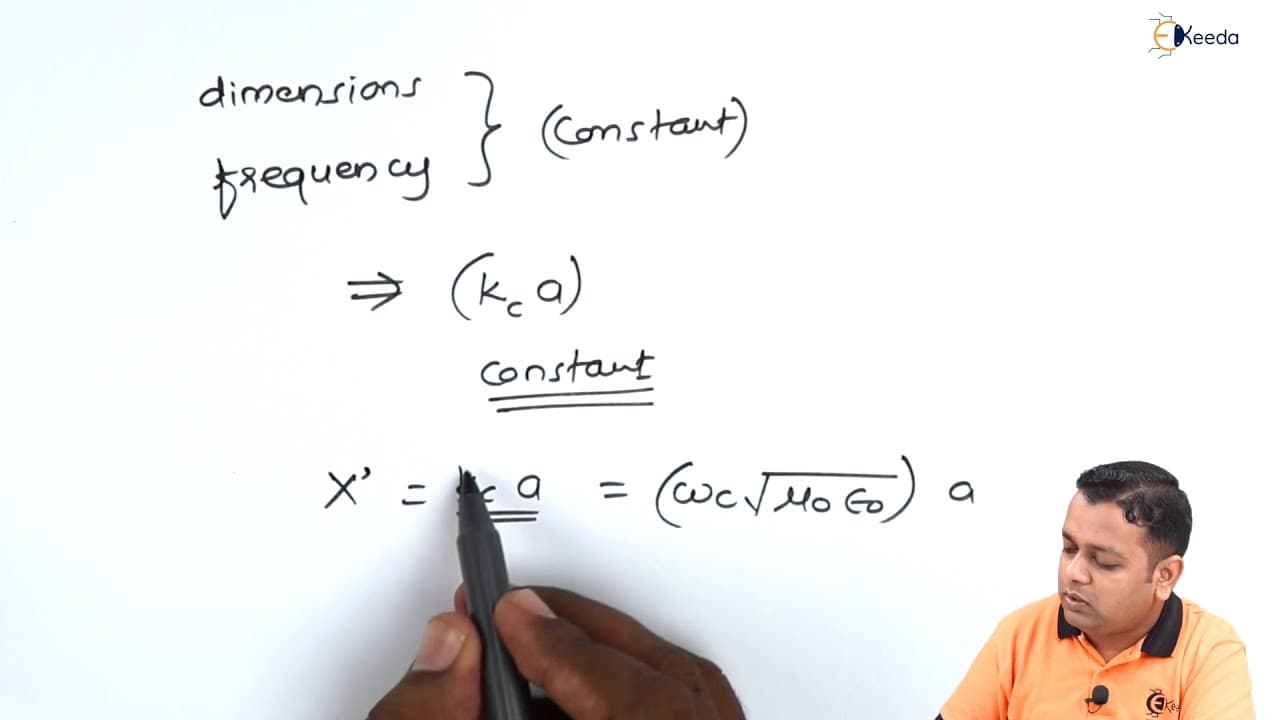
- 👋 The modes are determined based on the product of the cutoff wave number (KC) and the radius (a) of the waveguide.
- 🛩️ The modes with KC*a values smaller than a certain cutoff are considered feasible for energy transmission.
- 🏑 Different modes have different electric and magnetic field configurations.
- 📳 The analysis of microwave transmission in circular waveguides involves solving problems to determine the possible modes for a given frequency and waveguide dimensions.
- 📳 The TE11 mode is usually the dominant mode in circular waveguides.
Install to Summarize YouTube Videos and Get Transcripts
Explore YouTube Video Summarizer or Get YouTube Transcript Extractor
Questions & Answers
Q: What is a circular waveguide and how is it used in microwave transmission?
A circular waveguide is a hollow metallic tube with a circular cross-section, used to guide microwave signals. It allows for efficient transmission of electromagnetic waves with minimal loss.
Q: What are the possible modes of propagation in a circular waveguide?
In a circular waveguide, the possible modes of propagation are TE (transverse electric) and TM (transverse magnetic). Each mode has different electric and magnetic field configurations.
Q: How are the modes of propagation determined in a circular waveguide?
The modes of propagation in a circular waveguide are determined by the product of the cutoff wave number (KC) and the radius of the waveguide (a). Different values of KC*a correspond to different modes, such as TE11, TE21, TM01, TM11, etc.
Q: How is the problem of energy transmission solved in a circular waveguide?
The problem of energy transmission in a circular waveguide is solved by determining the possible TE and TM modes for a given frequency and dimensions of the waveguide. The modes with KC*a values less than a certain cutoff value are considered feasible for energy transmission.
Summary & Key Takeaways
-
The video discusses the concept of circular waveguides and their use in microwave transmission.
-
It explains the different modes of propagation, including transverse electromagnetic (TEM), transverse electric (TE), and transverse magnetic (TM).
-
The video presents a problem statement involving an air-filled circular waveguide and calculates the possible TE and TM modes for energy transmission.
Read in Other Languages (beta)
Share This Summary 📚
Summarize YouTube Videos and Get Video Transcripts with 1-Click
Try YouTube Summary with ChatGPT & Claude or YouTube Transcript Generator
Explore More Summaries from Ekeeda 📚

Summarize YouTube Videos and Get Video Transcripts with 1-Click
Try YouTube Summary with ChatGPT & Claude or YouTube Transcript Generator