Heat-Seekers: Harnessing the Infrared Senses of Animals
TL;DR
Animals with an exceptional sense of infrared radiation are inspiring new technology, such as wildfire sensors and search and rescue robots. Researchers are also studying their abilities to improve neuroscience techniques.
Transcript
Thanks to CuriosityStream for supporting this episode of SciShow. Go to CuriosityStream.com/scishow to start streaming thousands of documentaries and nonfiction TV shows. [♪ INTRO] All creatures have some way of sensing infrared radiation — the low-frequency light waves that we feel as heat. But some dial this sense up to 11. Like, they can... Read More
Key Insights
- 🔥 Jewel beetles have evolved sophisticated heat sensors in their "armpits" to detect fires and find burnt wood for reproduction.
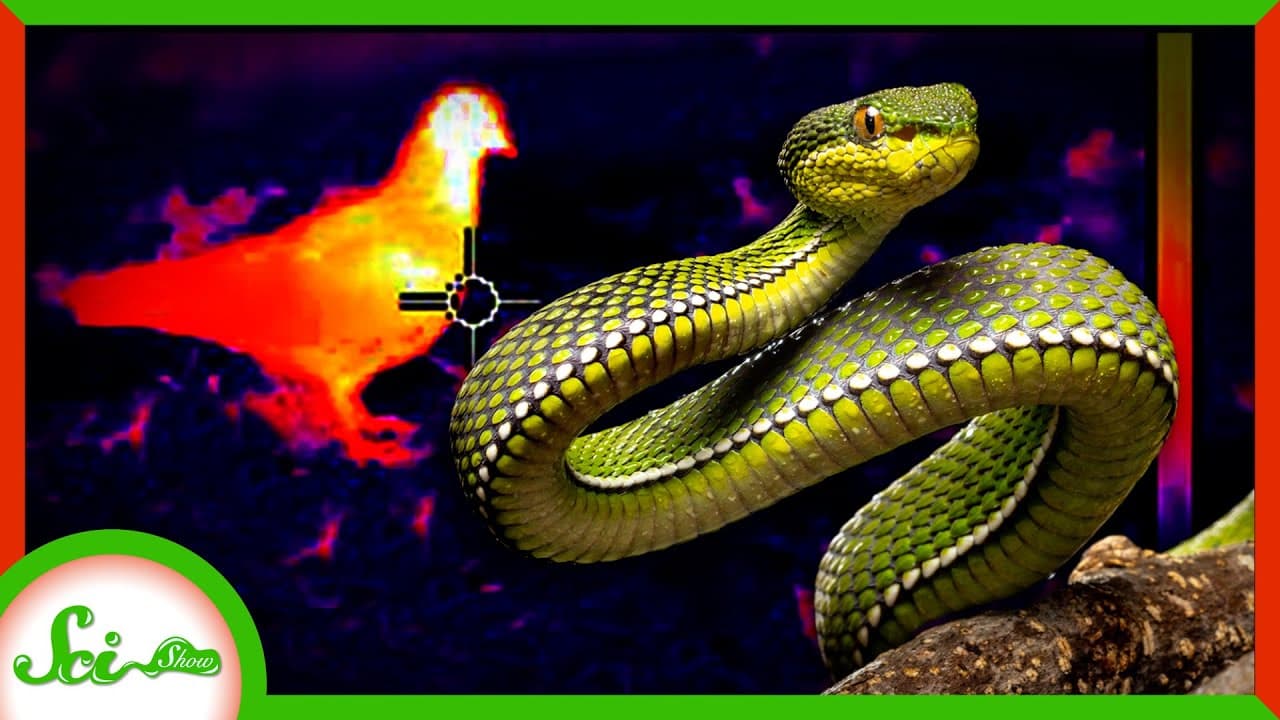
- 🏥 Pit vipers can create an infrared image using heat-sensitive pit organs, aiding in hunting prey effectively.
- ⛑️ Researchers are working on using pyroelectric materials inspired by pit vipers to develop flexible sensors for search and rescue robots.
- 😒 Pit vipers and vampire bats possess similar heat-sensing abilities but use different protein channels to detect infrared radiation.
- 🥵 Vampire bats' heat-sensing abilities may offer insights into improving neuroscience techniques using thermogenetics.
- 💝 Infrared-sensing animals provide evolutionary gifts that inspire technological advancements.
- 🛀 CuriosityStream offers a streaming service with thousands of documentaries and nonfiction TV shows, including content on animals and science.
Install to Summarize YouTube Videos and Get Transcripts
Explore YouTube Video Summarizer or Get YouTube Transcript Extractor
Questions & Answers
Q: How do jewel beetles detect fires from kilometers away?
Jewel beetles have specialized heat sensors in their "armpits," which contain dome-shaped sensors that expand and send a signal to the beetle's brain when they absorb infrared radiation.
Q: What is the potential application of beetle-inspired sensors in wildfire detection?
The development of inexpensive and sensitive wildfire sensors inspired by jewel beetles' heat sensors could greatly improve existing early-warning systems for forest fires, especially with the increasing intensity and frequency of fires due to climate change.
Q: How do pit vipers create an image using infrared radiation?
Pit vipers have heat-sensitive pit organs below their eyes that contain thousands of heat-sensitive protein channels. The pattern of signals from these channels forms an image in the snake's brain, helping them accurately strike at prey in low-light conditions.
Q: How can the infrared-sensing abilities of pit vipers benefit search and rescue robots?
Engineers are working on developing flexible pyroelectric materials, inspired by pit vipers' pit organs, to improve the infrared sensing capabilities of search and rescue robots. This would enable them to locate people even when their heat signature is obscured by snow or smoke.
Summary & Key Takeaways
-
Some jewel beetles can detect fires from kilometers away using heat sensors in their "armpits," aiding their survival and reproduction.
-
Pit vipers have heat-sensitive pit organs below their eyes that create an infrared image, helping them locate prey, especially at night.
-
Researchers are developing pyroelectric materials inspired by pit vipers to create flexible sensors for search and rescue robots.
Read in Other Languages (beta)
Share This Summary 📚
Summarize YouTube Videos and Get Video Transcripts with 1-Click
Try YouTube Summary with ChatGPT & Claude or YouTube Transcript Generator
Explore More Summaries from SciShow 📚


Summarize YouTube Videos and Get Video Transcripts with 1-Click
Try YouTube Summary with ChatGPT & Claude or YouTube Transcript Generator