How Does CCP Influence US Investments?
TL;DR
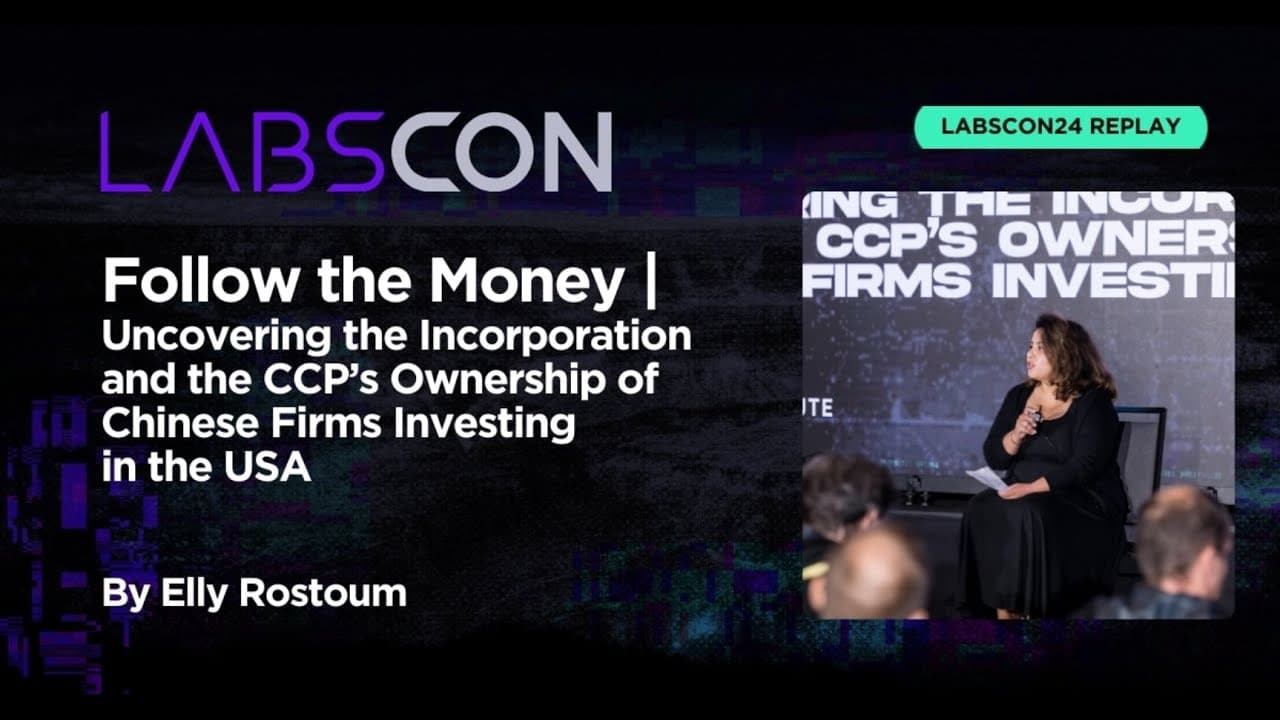
Chinese foreign direct investment (FDI) poses a national security concern due to opaque ownership structures. Many Chinese firms use complex incorporation layers to obscure ties to the Chinese government, allowing them to bypass U.S. security reviews. The real threat lies in these covert structures rather than state-owned enterprises.
Transcript
so my name is Ellie I'm the managing director of The alperovich Institute and a lecturer in strategic studies at Johns Hopkins University uh this talk is TLP red uh simply because we're working on a roll out uh that involves a congressional briefing and so we're going to be sharing that those findings uh with Congress and I ... Read More
Key Insights
- Chinese FDI is over $2.5 trillion, with 83% from state-owned enterprises.
- U.S. focuses too much on state-owned enterprises, ignoring sector importance.
- Complex incorporation structures help Chinese firms evade U.S. security scrutiny.
- Chinese firms use private equity and silent ownership to mask government ties.
- Reverse IPOs and niche market investments are tactics to bypass security reviews.
- Huawei's incorporation structure shows market influence but not covert threats.
- BGI Genomics and similar firms are distractions; real threats are less visible.
- Transparency in firm ownership and incorporation is crucial for security.
Install to Summarize YouTube Videos and Get Transcripts
Explore YouTube Video Summarizer or Get YouTube Transcript Extractor
Questions & Answers
Q: How does Chinese FDI pose a national security risk?
Chinese foreign direct investment (FDI) poses a national security risk due to its opaque ownership structures. Many Chinese firms use complex incorporation layers, subsidiaries, and private equity to obscure their ties to the Chinese government. This allows them to bypass U.S. security reviews, masking Chinese ownership under seemingly American businesses and potentially influencing critical sectors.
Q: What are the key tactics used by Chinese firms to bypass U.S. security reviews?
Chinese firms employ several tactics to bypass U.S. security reviews, including restructuring state-owned entities into LLCs and LTDs, using private equity and silent ownership, reverse IPOs, and investing in niche markets. These methods obscure the true ownership and control of the firms, allowing them to operate under the radar of security scrutiny.
Q: Why is the focus on state-owned enterprises a distraction?
Focusing solely on state-owned enterprises is a distraction because the true threat lies in the complex and covert incorporation structures used by many Chinese firms. These structures allow private and seemingly independent companies to mask their ties to the Chinese government, thus evading security reviews and regulations that typically target state-owned enterprises.
Q: How can transparency in firm ownership improve security reviews?
Transparency in firm ownership can improve security reviews by revealing the true ownership and control structures of companies. This would help authorities identify and flag potentially risky investments linked to foreign governments, particularly those using opaque incorporation layers to mask their involvement, thus enabling more effective preemptive security measures.
Q: What role does CFIUS play in regulating foreign investments?
The Committee on Foreign Investment in the United States (CFIUS) plays a critical role in regulating foreign investments by reviewing transactions that could affect national security. CFIUS has the authority to recommend blocking or unwinding deals that pose security risks. However, its effectiveness is limited by current regulations focusing on state ownership rather than sector-specific threats.
Q: How do reverse IPOs and niche market investments help Chinese firms?
Reverse IPOs and niche market investments help Chinese firms by allowing them to integrate into the U.S. market without disclosing their ownership structures. A reverse IPO occurs when a public company buys a private company, making it listed without disclosure. Investing in niche markets involves acquiring small, seemingly innocuous American companies, which can mask Chinese control.
Q: What are the implications of Chinese firms owning critical U.S. sectors?
Chinese firms owning critical U.S. sectors can pose significant national security risks, as these sectors are integral to the country's infrastructure and technological advancements. Ownership can lead to potential espionage, data breaches, and influence over essential services, highlighting the need for stringent security reviews and transparency in ownership structures.
Q: What is the Bull Dragon Project, and how does it address security concerns?
The Bull Dragon Project is an initiative aimed at mapping the incorporation structures of Chinese firms engaged in foreign direct investment. By developing a methodology and rules specific to geography and sector, the project seeks to preemptively flag suspicious transactions, providing CFIUS with the tools needed to address security concerns more effectively and avoid reactionary measures.
Summary & Key Takeaways
-
Chinese foreign direct investment (FDI) is a significant concern for U.S. national security due to the complex and opaque ownership structures of many Chinese firms. These firms often use intricate incorporation layers and private equity to obscure their ties to the Chinese government, allowing them to bypass U.S. security reviews.
-
Elly Rostoum's research highlights that the real threat lies not in the state-owned enterprises but in these covert structures that enable Chinese firms to operate under the guise of being American. This understanding calls for a shift in focus from ownership to the sectors and incorporation structures of these firms.
-
To effectively address these security concerns, there is a need for greater transparency in the incorporation and ownership of firms. Empowering the Committee on Foreign Investment in the United States (CFIUS) with more precise and preemptive rules can help flag suspicious transactions before they occur.
Read in Other Languages (beta)
Share This Summary 📚
Summarize YouTube Videos and Get Video Transcripts with 1-Click
Try YouTube Summary with ChatGPT & Claude or YouTube Transcript Generator